
 close
close


 LOGIN
LOGINRugby Coach Weekly is the largest digital resource for youth coaches, trusted by 15,000+ coaches, teachers and parents every month.
-
Coach with confidence
-
Improve your teams faster
-
Run great sessions with less effort
- Expert coaching advice from TOP Coaches
- Training sessions for players from U6 to U17+.
Reactive footwork


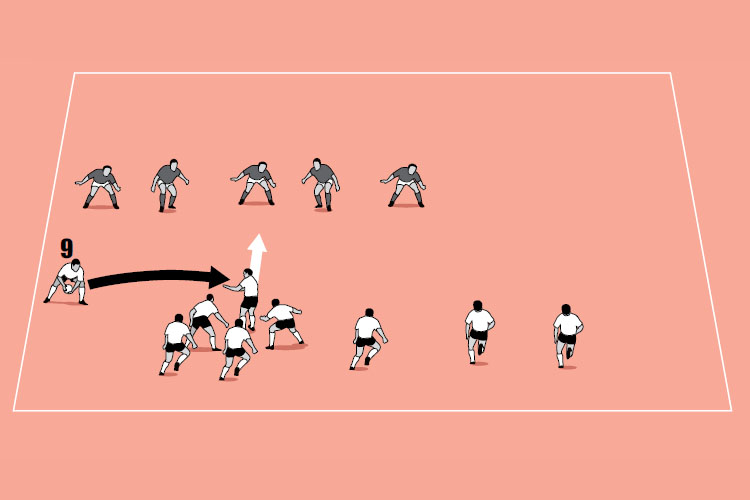
Footwork in defence is often a poor relative of attacking footwork. A well balanced defender can react to changes in attacking lines, close down the space and make more effective tackles. This session builds on individual defensive footwork before putting the skill into a simple defensive system.
Warm up time: 5-7
Session time: 10-15
Development time: 5-7
Game time: 10-15
Warm down time: 7-10
What to think about
The triggers or visual clues that defenders can use to work out which way to move.- Defenders should look ahead and if they are one-on-one, focus on the ball carrier’s core.
- They should remain upright until the last moment.
- They must keep their eyes open right through the tackle.
- If part of a system, they should move up in line with their inside and outside player (though this might be different for more sophisticated systems).
- In a system, the triggers to shift are based on the inside player telling the defensive line to move.
set-up
- Move quickly to close down the space in front of the attacking team, balanced as individual and in balance with the defensive unit.
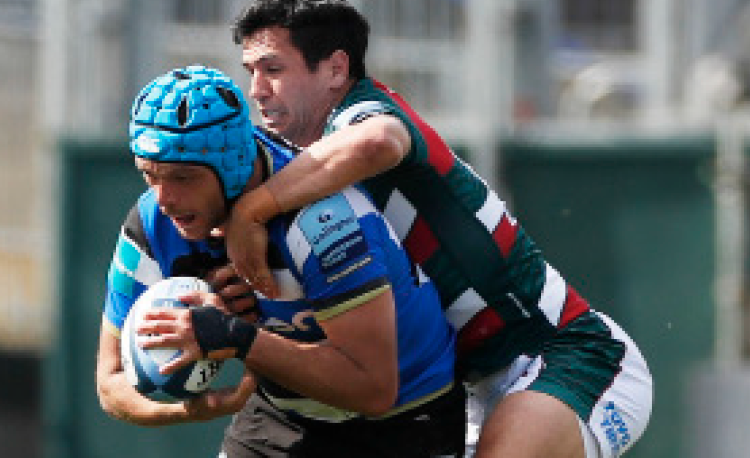
- Drive into the ball carrier, staying on your feet to show you are balanced, and that you are commanding the tackle situation.
- Be aware of the attackers’ movements and your own team either side of you.
What you get your players to do
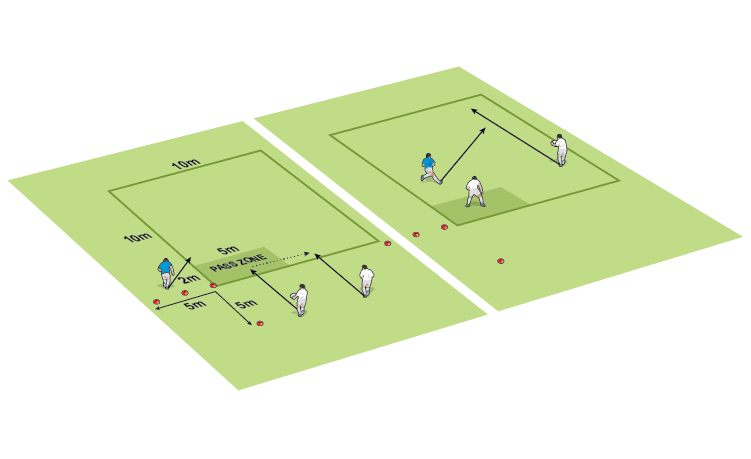
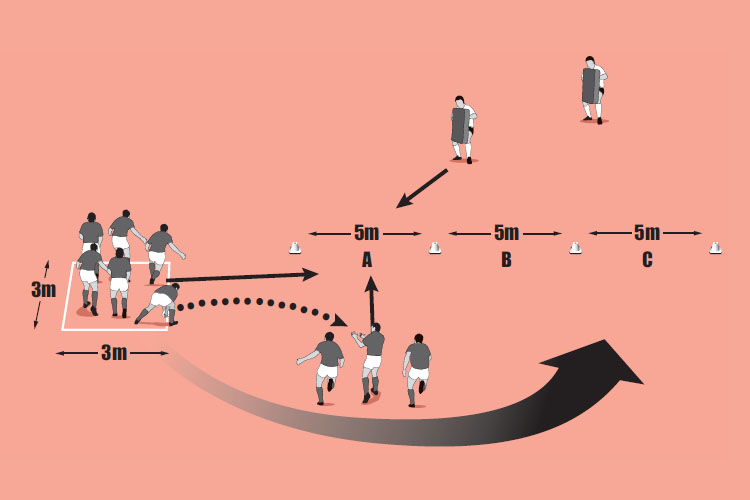
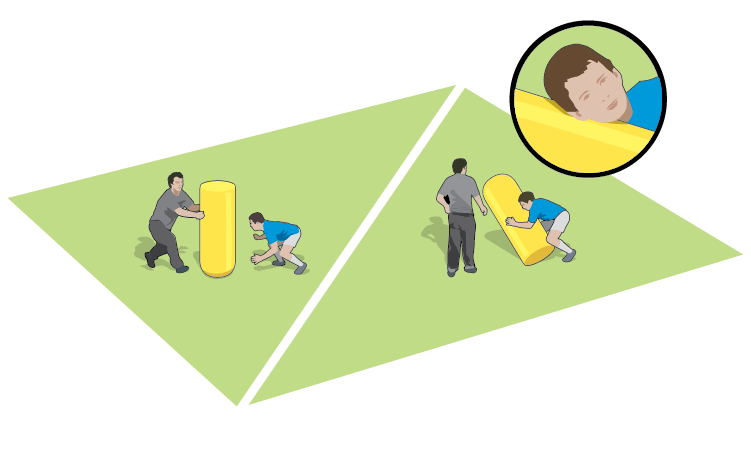
Start one player at the end of the longer corridor. He runs through the corridor using very short steps (don’t use ladders because it makes players look down). When he comes out at the end of the corridor he drives into a shield carrier who is jogging through the other corridor and out to the side. The tackler must drive at hip height or below, and stay on his feet. You can take away the shield and have the “attacker” carry a ball as a development. Also increase the speed of the “attacker”.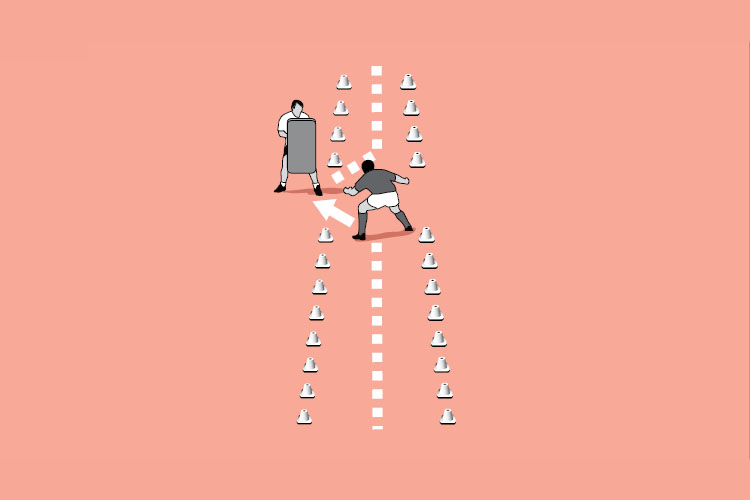
Development
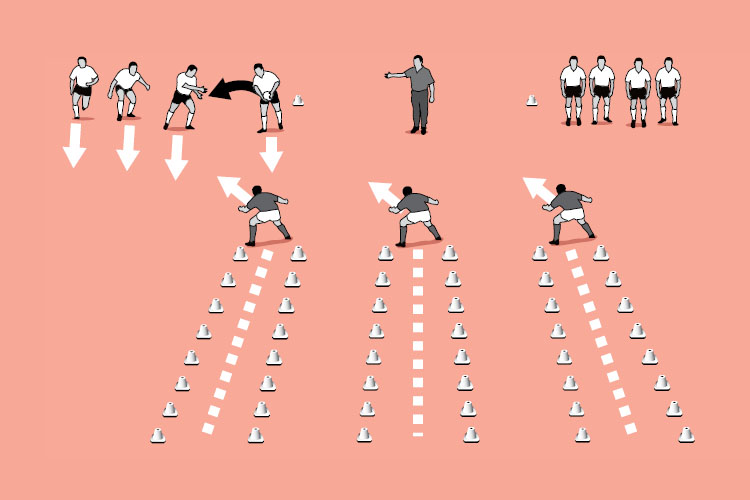
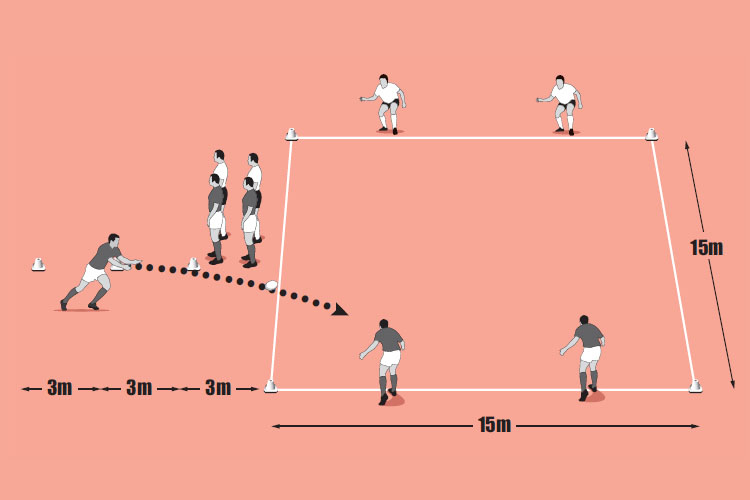
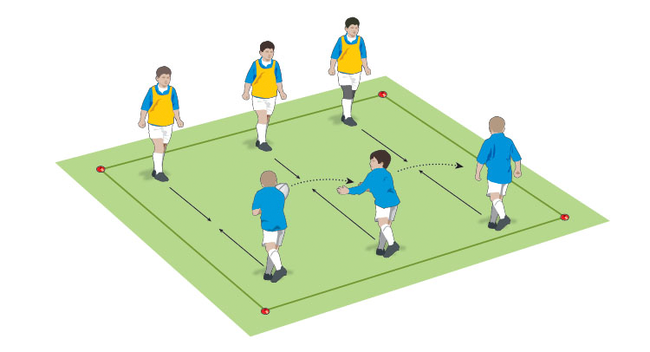
Put three defenders at the end of three corridors. Either side of you, place a group of four players with a ball carrier nearest to you. The defenders run forward, with fast feet through the corridors. When they reach the end, they set quickly and react to tackle the attacking group you tell to go. Set the attacks off at any stage to keep the defenders guessing.Related Files
Game situation
In a larger box, put three defenders in the middle of their try line, and two groups of four attackers each spread about 10 metres from the corners of their end. You indicate which attacking group to go. The ball carrier throws up the ball to himself high in the air and then the defenders run through a gate opposite this group and defend as the attackers move forward.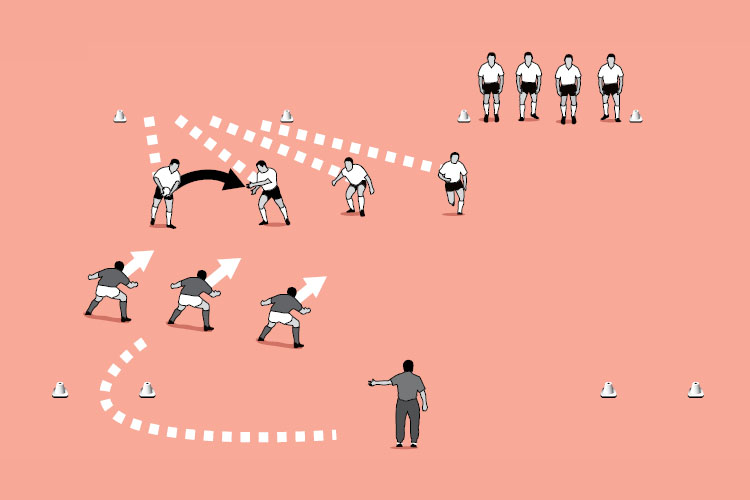
What to call out
- “Look ahead and keep square (shoulders and hips ahead)”
- "Close down the space quickly, but don’t leave other defenders behind”
- “Don’t confuse talk for action”

Dan Cottrell
Latest Issue

Subscribe Today
Subscribe Today
Newsletter Sign Up
Coaches Testimonials

Colin Shaw

Gary Lee Heavner
Subscribe Today
Latest Issue
Be a more effective, more successful rugby coach
In a recent survey 89% of subscribers said Rugby Coach Weekly makes them more confident, 91% said Rugby Coach Weekly makes them a more effective coach and 93% said Rugby Coach Weekly makes them more inspired.
Get Weekly Inspiration
All the latest techniques and approaches


Rugby Coach Weekly offers proven and easy to use rugby drills, coaching sessions, practice plans, small-sided games, warm-ups, training tips and advice.
We've been at the cutting edge of rugby coaching since we launched in 2005, creating resources for the grassroots youth coach, following best practice from around the world and insights from the professional game.
