
 close
close


 LOGIN
LOGINRugby Coach Weekly is the largest digital resource for youth coaches, trusted by 15,000+ coaches, teachers and parents every month.
-
Coach with confidence
-
Improve your teams faster
-
Run great sessions with less effort
- Expert coaching advice from TOP Coaches
- Training sessions for players from U6 to U17+.
Rapido ruck


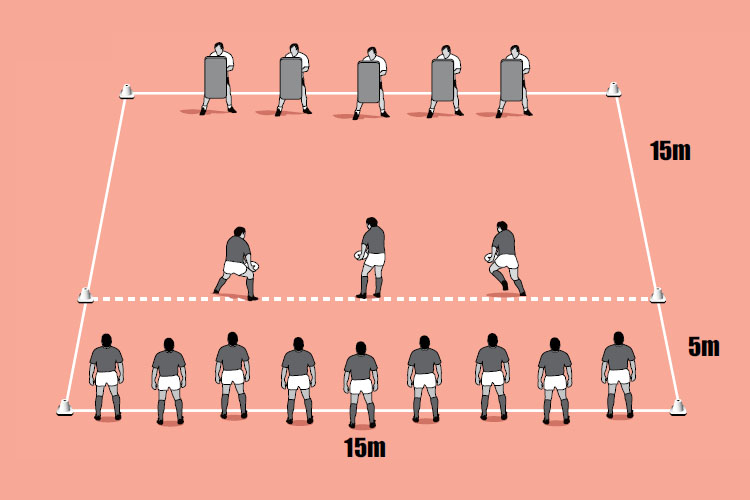
Rucking is a fundamental part of the game. This practice will help you pinpoint your players’ effectiveness at rucking, both in terms of their skills and techniques to produce quick, clean ball, but also their reading of the game – their understanding of when and where the breakdown will occur.
Warm up time: 7-10
Session time: 5-10
Development time: 5-10
Game time: 10-15
Warm down time: 7-10
What to think about
Are your players rucking “through the gate”? Players must join the ruck from behind the hindmost feet of their own team, “through the gate”. Not only is it legal, it is also good practice because they are likely to be in the best positon to drive out opposition players and protect the ball. Do you want you players to “ruck beyond the ball”? If you are rucking in numbers then players should “ruck beyond the ball” to allow the support players the clearest view and route to the ball. However, if there is little support, then the rucking player should stop over the ball to protect it from the opposition.set-up
- Decide how many of you are needed to win a quick ruck.
- Use good technique in the rucks, staying on your feet.
What you get your players to do
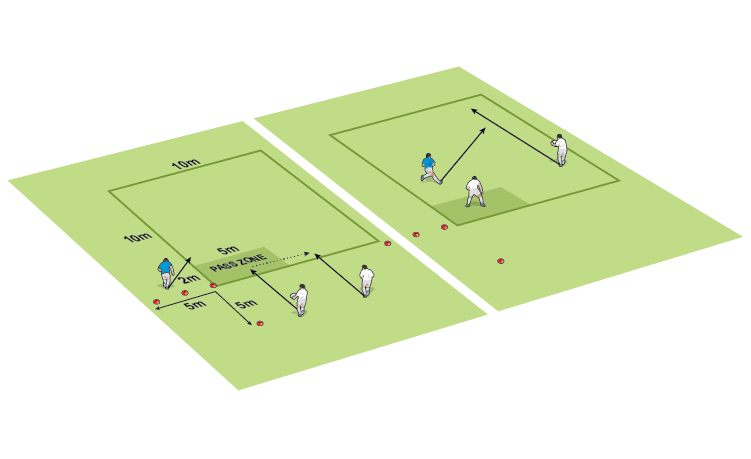
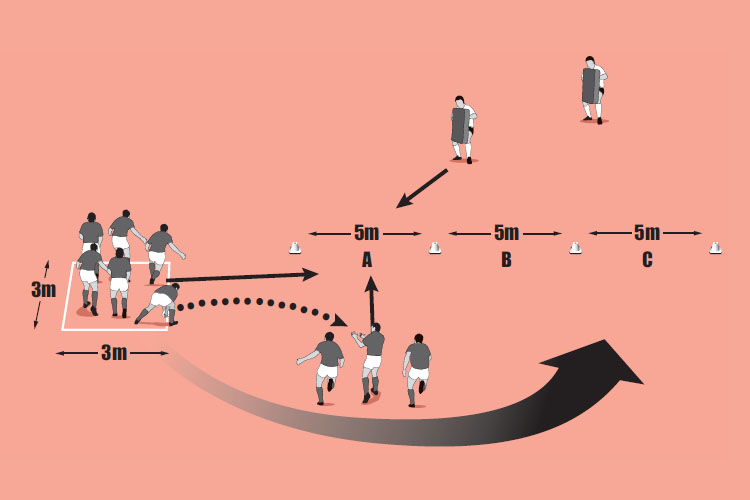
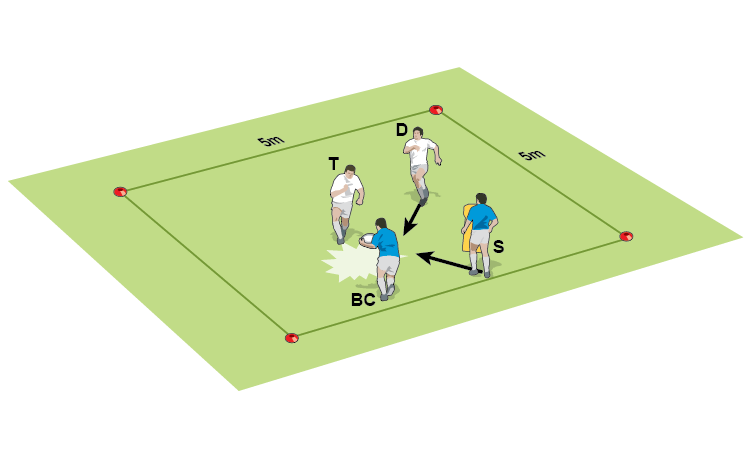
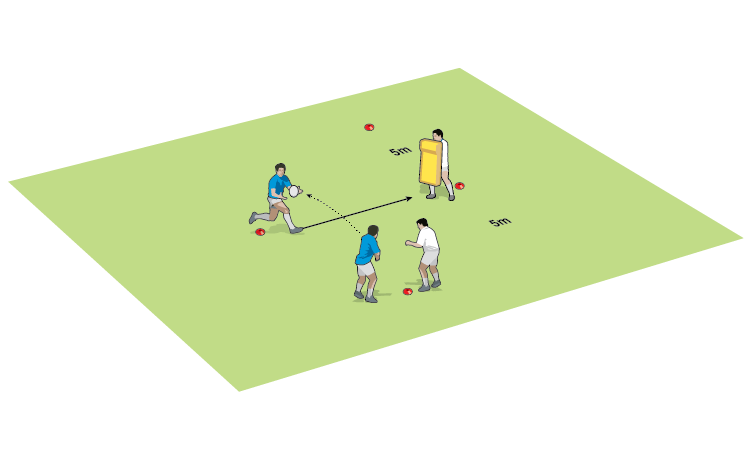
Set up as the “Rapido ruck” diagram. Name the three ball players, each with a different colour. When you call out a colour, that ball carrier attacks the try line. The attackers, starting 5 metres back, move in support, and the pad men, standing 15 metres ahead, move to defend. Any contact with a pad represents a tackle, causing the ball carrier to go down and place the ball. The attackers have to assess the situation, allocate players to support the ball carrier and ruck over to secure the ball. The scrum half passes the ball back to an attacker not involved in the ruck, to take on the original ball carrier’s position and colour. Repeat the exercise for a total of 90 seconds, counting the number of successful rucks completed.Development
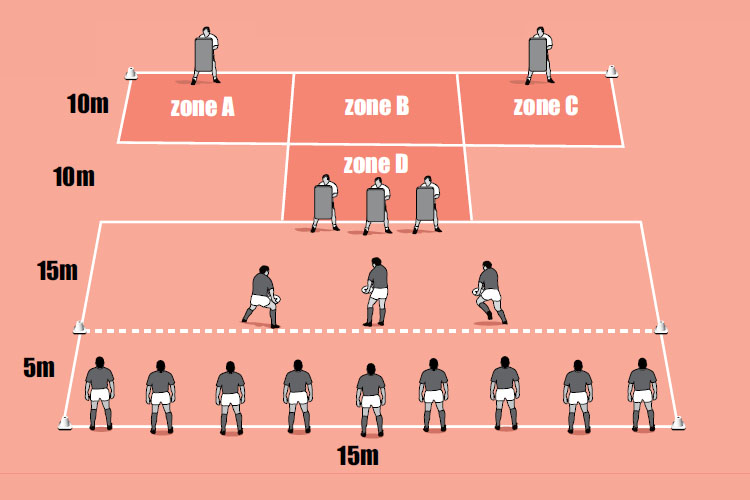
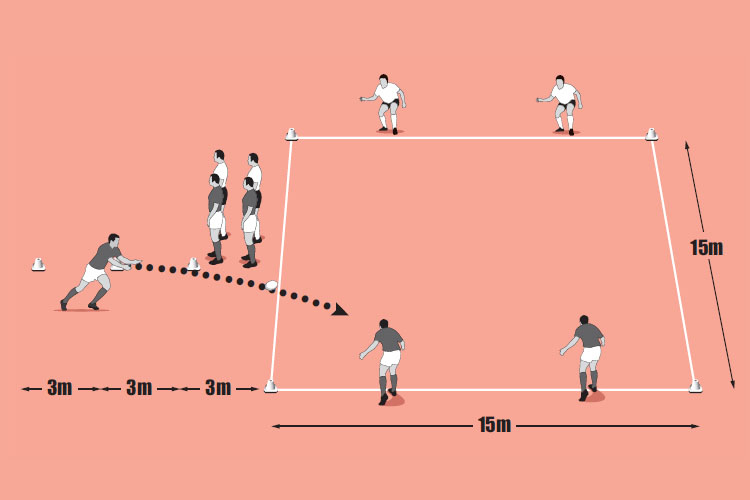
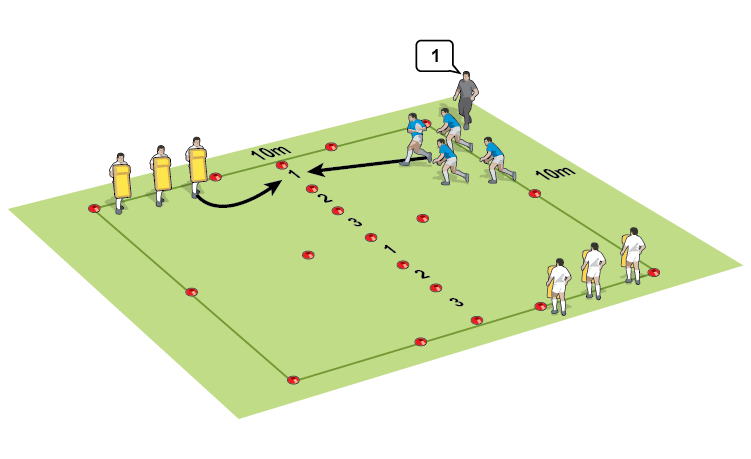
Set up as the “Attack beyond” diagram.
Using the same colours for the ball carriers’ now call a sequence of rucks (like “red, red, blue”). The last ball carrier “named” must get through zone D to score beyond zones A, B or C.
Develop this again by nominating one or two zones for the score. For instance, “only tries scored in zones A or C count”. Stipulate the scoring zones as the players work through zone D.
Related Files
Game situation
Place five balls at the end of a box. Set up at least 8 attackers against 6 defenders. The objective for the attacking team is to score five tries, one with each of the five balls. Once a try is scored take away that ball. If a mistake is made, replace that ball at the back of the box and introduce a new ball into play. The game is full contact with normal open play and rucking rules. Make sure the defending team remain on side.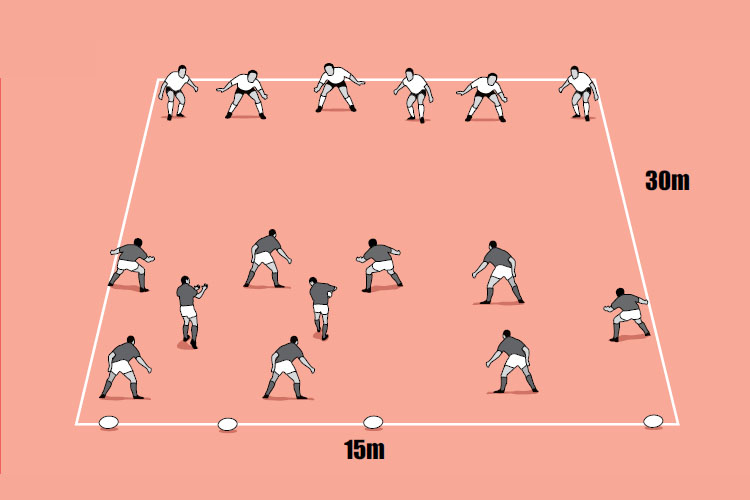
What to call out
- “Read where the contact point will be”
- “Power step in to contact”
- “Same foot, same shoulder”

Dan Cottrell
Latest Issue
Subscribe Today
Subscribe Today
Newsletter Sign Up
Coaches Testimonials

Colin Shaw

Gary Lee Heavner
Subscribe Today
Latest Issue
Be a more effective, more successful rugby coach
In a recent survey 89% of subscribers said Rugby Coach Weekly makes them more confident, 91% said Rugby Coach Weekly makes them a more effective coach and 93% said Rugby Coach Weekly makes them more inspired.
Get Weekly Inspiration
All the latest techniques and approaches


Rugby Coach Weekly offers proven and easy to use rugby drills, coaching sessions, practice plans, small-sided games, warm-ups, training tips and advice.
We've been at the cutting edge of rugby coaching since we launched in 2005, creating resources for the grassroots youth coach, following best practice from around the world and insights from the professional game.
