
 close
close


 LOGIN
LOGINRugby Coach Weekly is the largest digital resource for youth coaches, trusted by 15,000+ coaches, teachers and parents every month.
-
Coach with confidence
-
Improve your teams faster
-
Run great sessions with less effort
- Expert coaching advice from TOP Coaches
- Training sessions for players from U6 to U17+.
Pull back passing


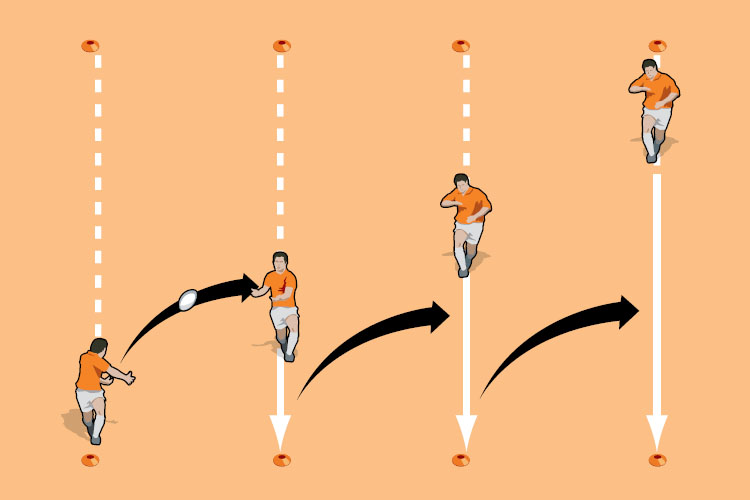
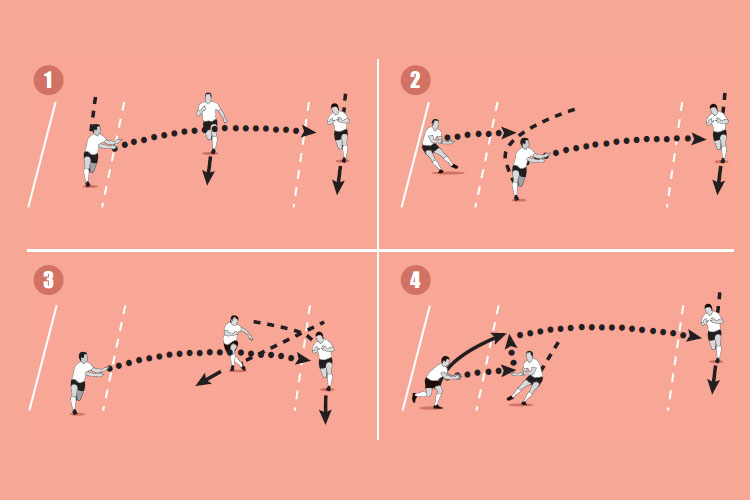
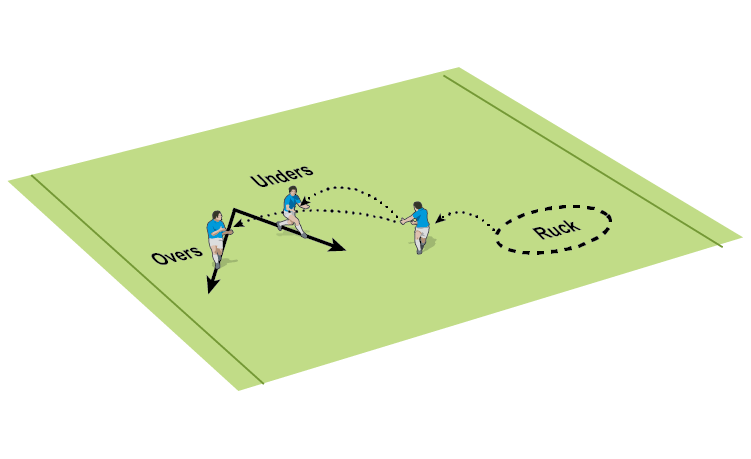
Pull back passing is a development of normal passing because it creates more space for the receiver. Since the ball carrier is fixing the defender, the gap between defence and attack is tighter. Pull back passing can exploit more gaps wider out because it gives the receiver more time to take and give the pass.
Warm up time: 5-7
Session time: 10-12
Development time: 8-10
Game time: 10-15
Warm down time: 5-7
What to think about
- My attacking players are all too flat, how can I get depth in the attack? Get each player to count to two before starting their run. When the initial ball carrier sets off, the next player counts to two and then sets off, the third player starts counting when the second player sets off and so on. This creates depth in the attack without players having to run further.
- How can I get my players to catch the ball in their hands and not hug it into their chests?Get six players to stand in a circle and pass the ball randomly to each other as hard as they can. The receiver has to catch the ball in their hands and keep it away from their chest. This will improve their catching and ultimately their passing skills.
set-up
- Run straight at the defender.
- Delay the pass until the defender is totally committed.
- Pull the pass back for the next player to run onto.
What you get your players to do
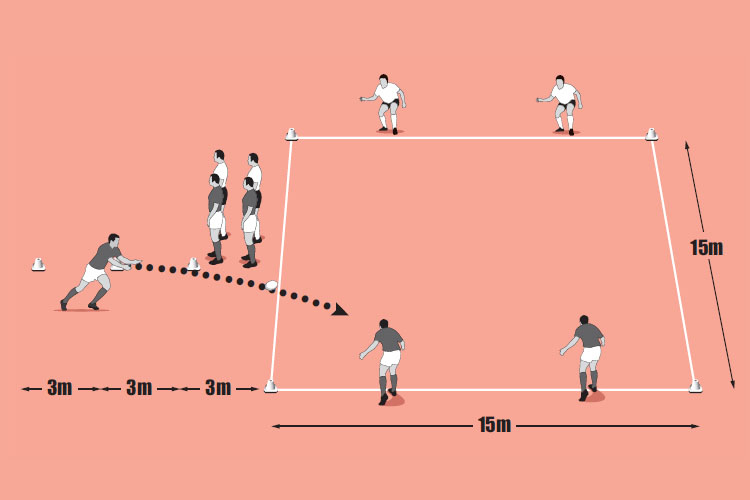
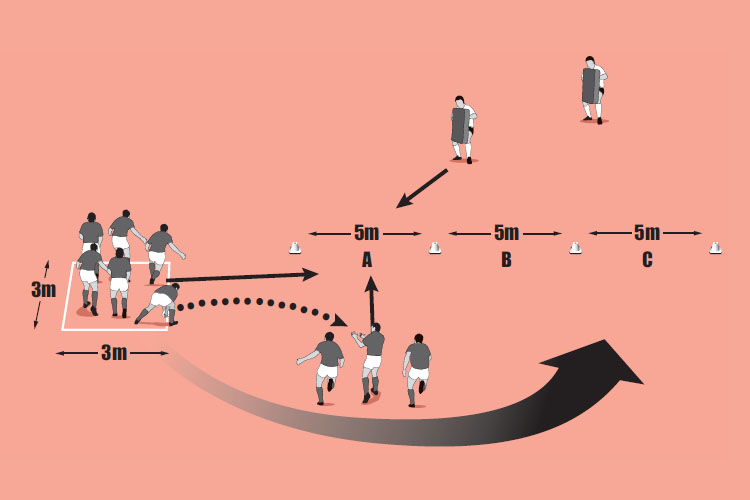
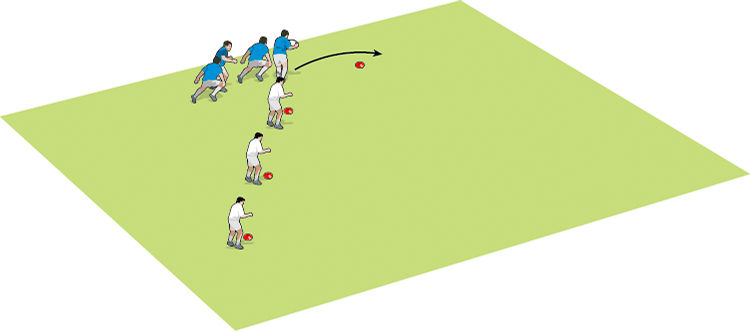
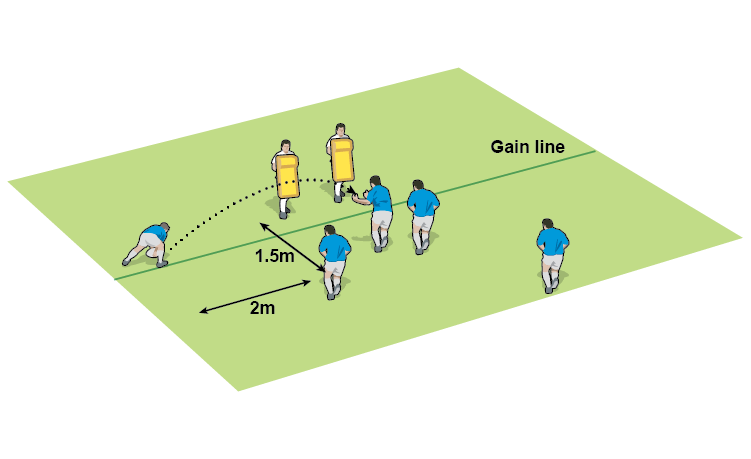
Set up groups of four to run straight at four cones opposite them. When each player reaches the cone in front of them, they pull the pass back to the next player who accelerates onto it from deep. Passes must be accurate and the ball must be kept away from the ball carrier’s body. Make sure your players practise the pass in both directions.Development
Replace the cones with static defenders. Gradually build up the pressure getting the defenders to walk and then jog forwards.Related Files
Game situation
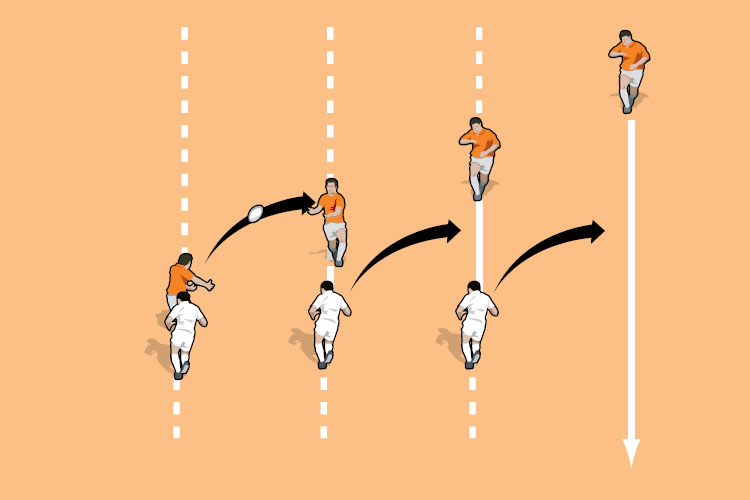
“Attack the line” Four attackers have to beat three defenders by only using normal passing (no miss passes, switches or loops), to score on the line. The defenders can only move sideways along the line. Defenders can stop the attack with a one handed touch. When the attack is stopped or a try is scored the ball has to be passed back and the next attack starts immediately. Attack for one minute and see how many tries are scored.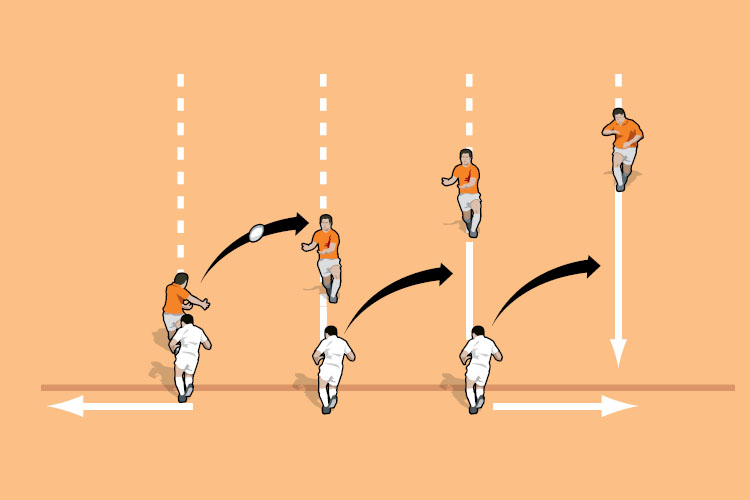
What to call out
- “Pass sympathetically for the receiver to run onto”
- “Support player: stay deep and receive the pass deep”
- “Accelerate onto the pass and then slow down to give the pass”

Dan Cottrell

Latest Issue

Subscribe Today
Subscribe Today
Newsletter Sign Up

Coaches Testimonials

Colin Shaw

Gary Lee Heavner
Subscribe Today
Latest Issue
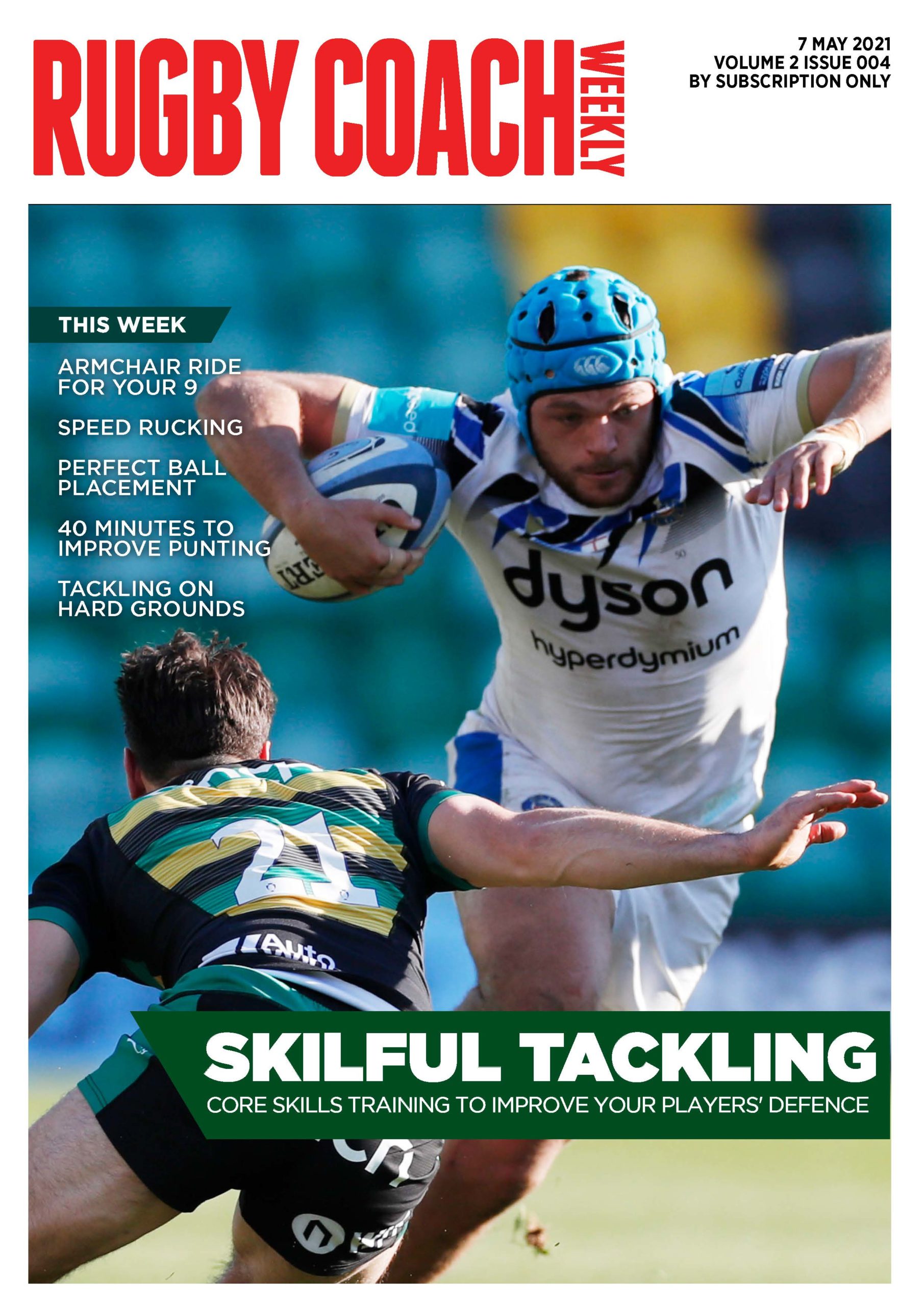
Be a more effective, more successful rugby coach
In a recent survey 89% of subscribers said Rugby Coach Weekly makes them more confident, 91% said Rugby Coach Weekly makes them a more effective coach and 93% said Rugby Coach Weekly makes them more inspired.
Get Weekly Inspiration
All the latest techniques and approaches


Rugby Coach Weekly offers proven and easy to use rugby drills, coaching sessions, practice plans, small-sided games, warm-ups, training tips and advice.
We've been at the cutting edge of rugby coaching since we launched in 2005, creating resources for the grassroots youth coach, following best practice from around the world and insights from the professional game.
