
 close
close


 LOGIN
LOGINRugby Coach Weekly is the largest digital resource for youth coaches, trusted by 15,000+ coaches, teachers and parents every month.
Get access to
- 2000+ drills and games
- 350+ ready-made practice plans
- Expert coaching advice
- Training sessions for players from U6 to U17+.
Problem solving


Problem solving in rugby is not always a drawn out process of reflection then action, it sometimes happens very quickly. Players need to be prepared in advance so they can recognise the problems and be able to react in the best possible way. Here are some “gaps” problems to look at.
Warm up time: 5-7
Session time: 10-15
Development time: 10-15
Game time: 10-15
Warm down time: 5-7
What to think about
- My players panic when they make a wrong decision and tend to throw risky passes to try and get out of trouble. This usually leads to us being knocked backwards or losing the ball. What can I do to improve their reaction to poor decisions?Players should always remember the two basic attacking principles – go forward and retain the ball.A poor decision can still have a good outcome if players execute it with conviction. Encourage your players to be decisive in every decision they make.
set-up
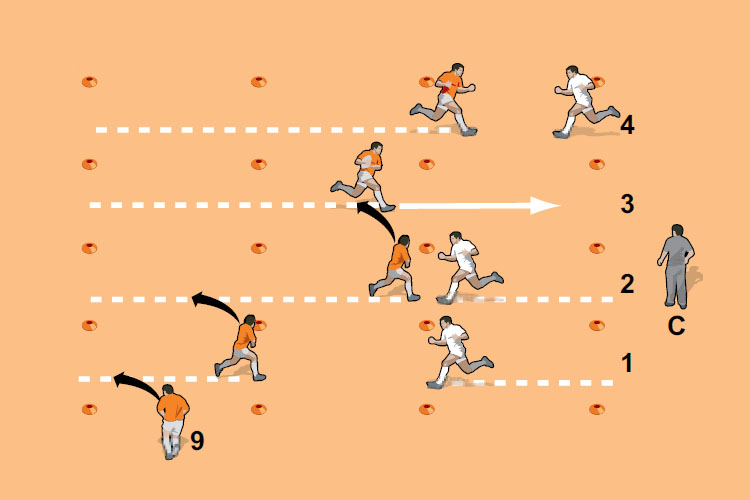
- Look at the situation in front of you and identify the weakest point.
- Communicate where the weakness is and exploit it.
- Follow through with the decision even if there was a better option.
What you get your players to do
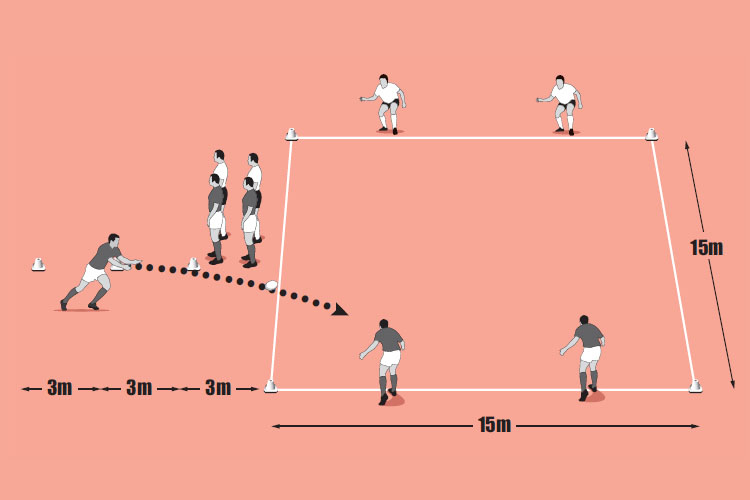
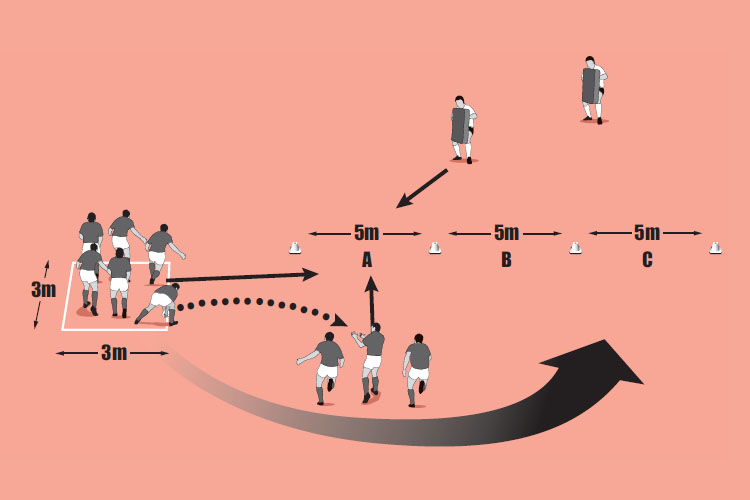
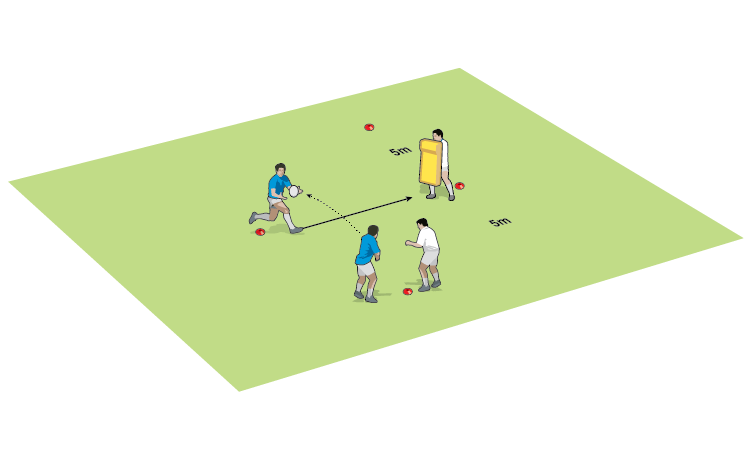
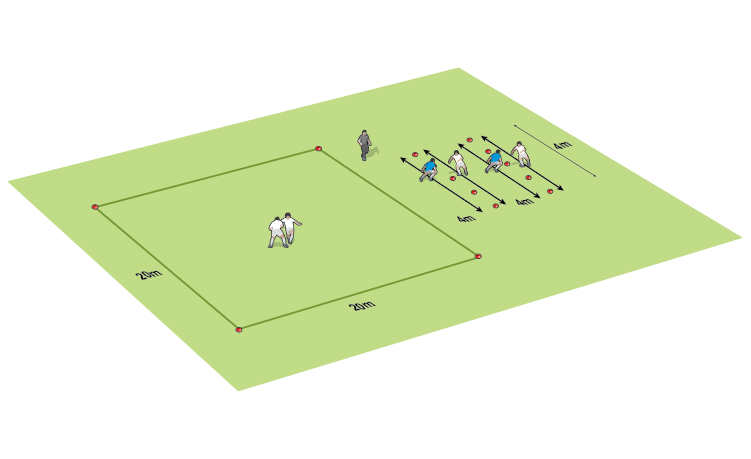
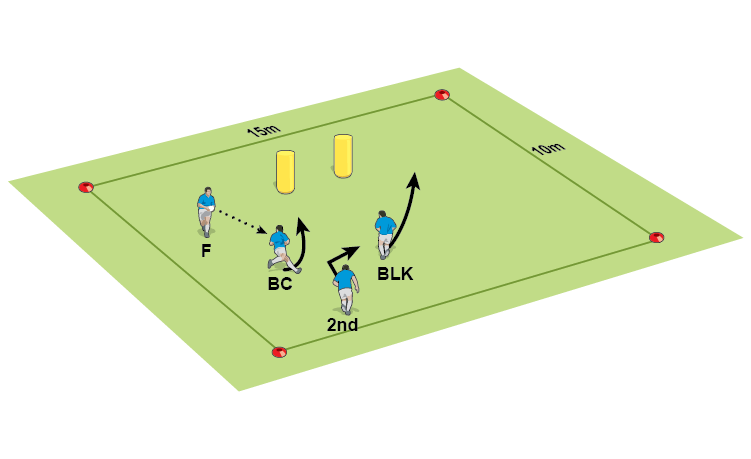
Put an attacker in each channel, with one of the attackers being fed a pass by a scrum half. Tell the three defenders to leave one channel “open” as they move forward. The attackers have to get the ball into the undefended channel and score. Keep varying the “open” channel and changing the side the attackers start from. As players improve reduce the distance between the attackers and defenders so they have less time to react.Development
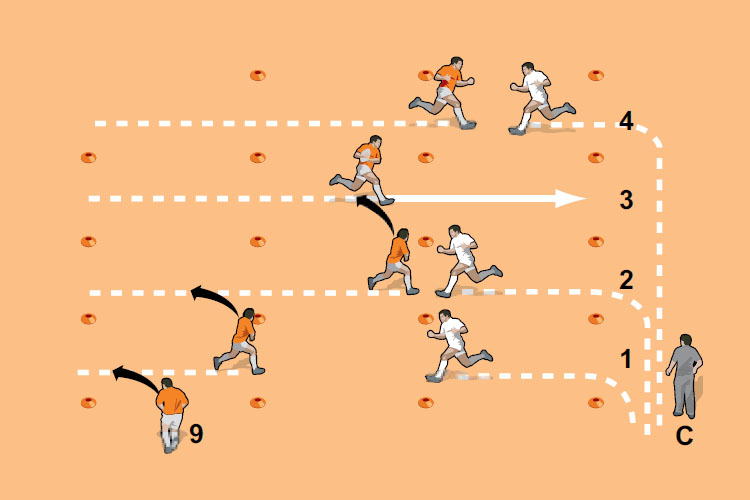
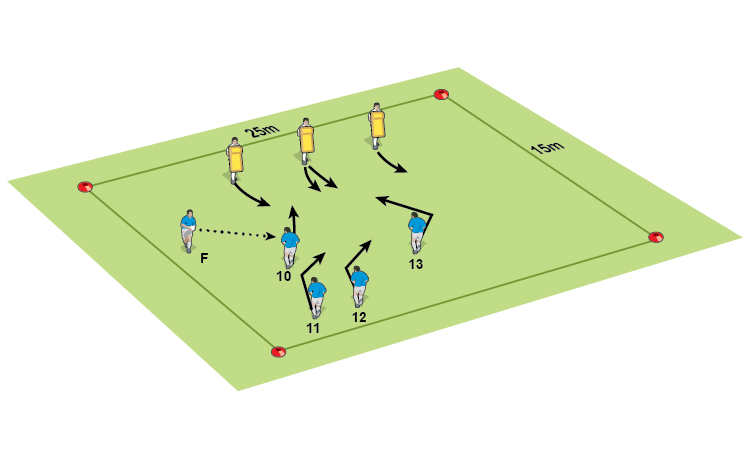
The attacking players start by facing away from the defenders. On your call they turn and start the attack. The defenders start at one side of the box. As the attackers move they fan out and fill three of the channels.Related Files
Game situation
Play a four against four touch game using the same channels. You direct the defence so there is always a weak spot for the attack to exploit. You might ask one defender to rush up while the others hold back, or one defender to walk or simply stop. The attacking players have to identify and exploit the weakness.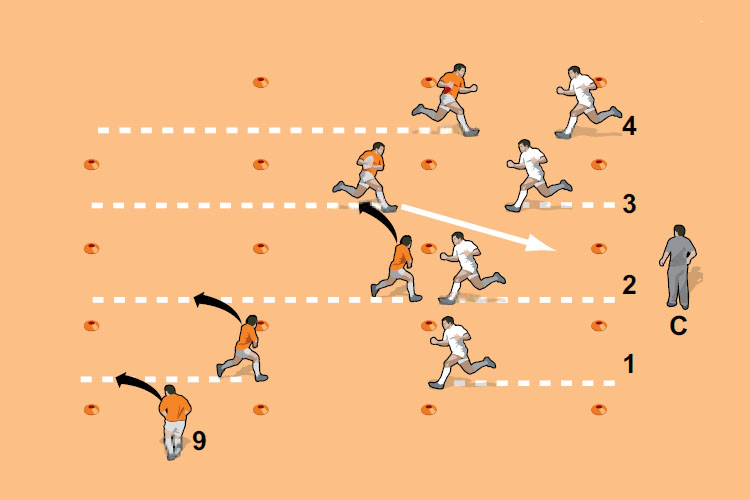
What to call out
- “Heads up and scan in front of you”
- “Communicate where the space is”
- “Pass the ball into the space early and support the ball carrier”

Dan Cottrell

Latest Issue

Subscribe Today
Subscribe Today
Newsletter Sign Up

Coaches Testimonials

Gerald Kearney, Downtown Las Vegas Soccer Club

Paul Butler, Florida, USA

Rick Shields, Springboro, USA

Tony Green, Pierrefonds Titans, Quebec, Canada
Subscribe Today
Latest Issue

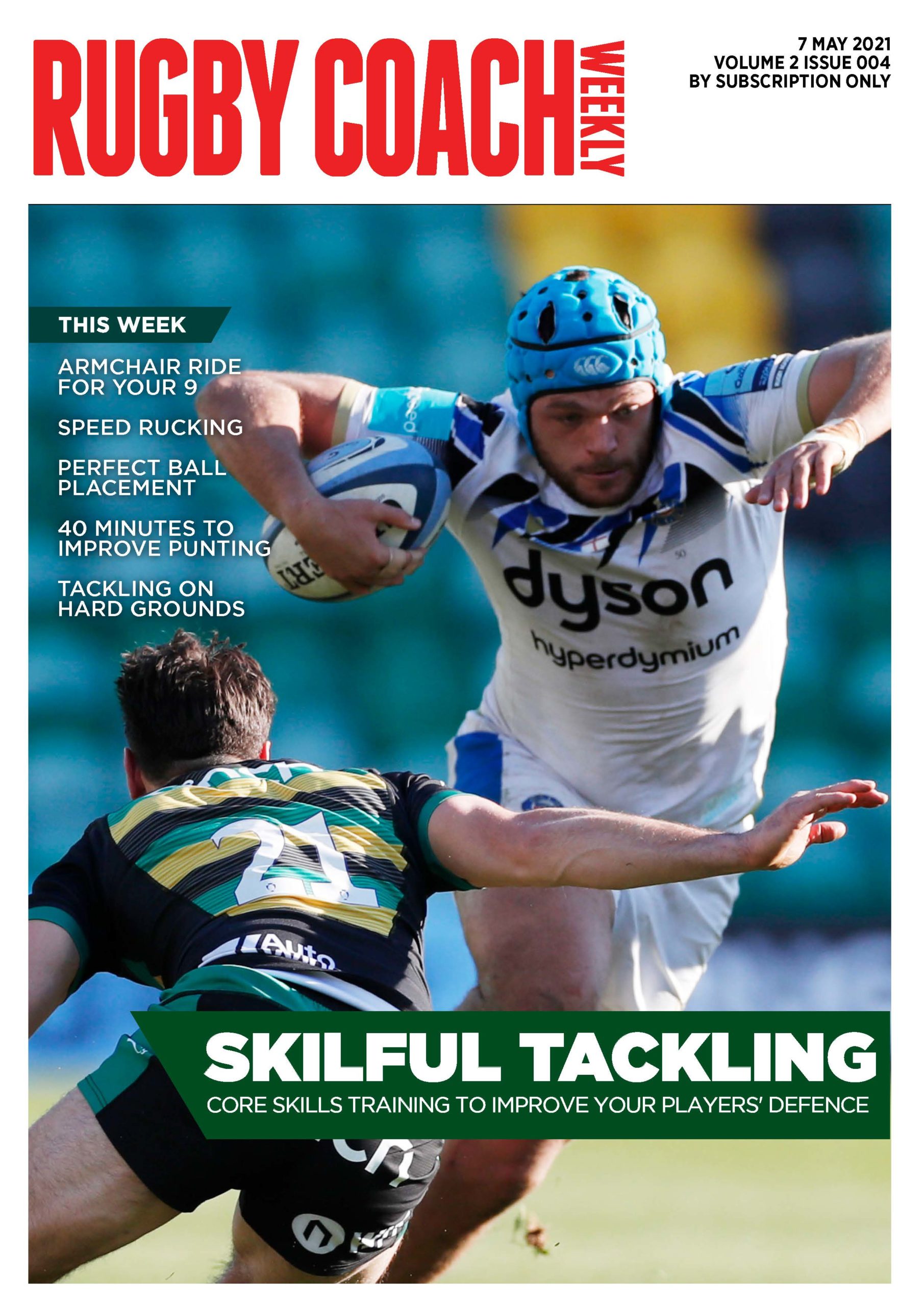
Be a more effective, more successful rugby coach
In a recent survey 89% of subscribers said Rugby Coach Weekly makes them more confident, 91% said Rugby Coach Weekly makes them a more effective coach and 93% said Rugby Coach Weekly makes them more inspired.
Get Weekly Inspiration
All the latest techniques and approaches


Rugby Coach Weekly offers proven and easy to use rugby drills, coaching sessions, practice plans, small-sided games, warm-ups, training tips and advice.
We've been at the cutting edge of rugby coaching since we launched in 2005, creating resources for the grassroots youth coach, following best practice from around the world and insights from the professional game.
