
 close
close


 LOGIN
LOGINPod attack
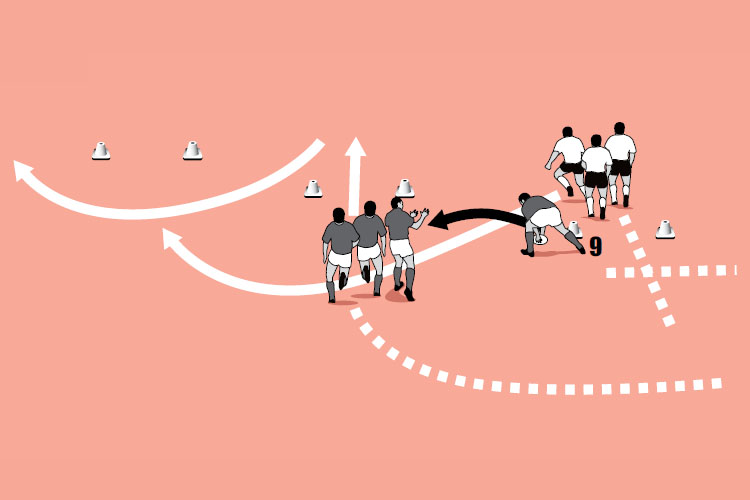
In the multi-phase game it is essential that forwards are used in small groups. Each group wins the next breakdown in turn, avoiding forwards aimless shifting from one ruck to the next. Normally these groups are called “pods”. This session develops a pod system.
Warm up time: 5-7
Session time: 7-10
Development time: 10-15
Game time: 10-15
Warm down time: 5-7
What to think about
What triggers can you use to coordinate attacks by each pod? Pods need to time their runs to meet the pass at full pace. The players should use “triggers” to begin their runs based on the movements of the scrum half before he passes the ball. For instance, he might bend his knees before he passes. How many phases should the pods be used for? Pods are aimed at producing quick ball to disorganise the defence. Three quick phases with the pods should be sufficient. Otherwise players may not be able to get back into position quick enough. However your set plays should mix the number of phases pods are used for. Your team should be flexible enough to allow the ball to be passed away if there are glaring gaps in the defence.set-up
- In your “pod” (group), beat the defence in front of you first and then recycle the ball.
- As the supporting pod, run around the back of the breakdown with enough depth to take a pass moving forward.
- Communicate to your team mates where you are and what you are going to do.
What you get your players to do
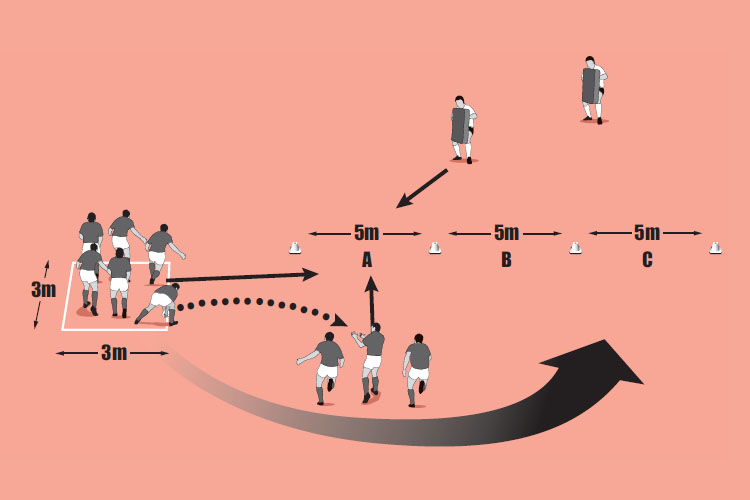
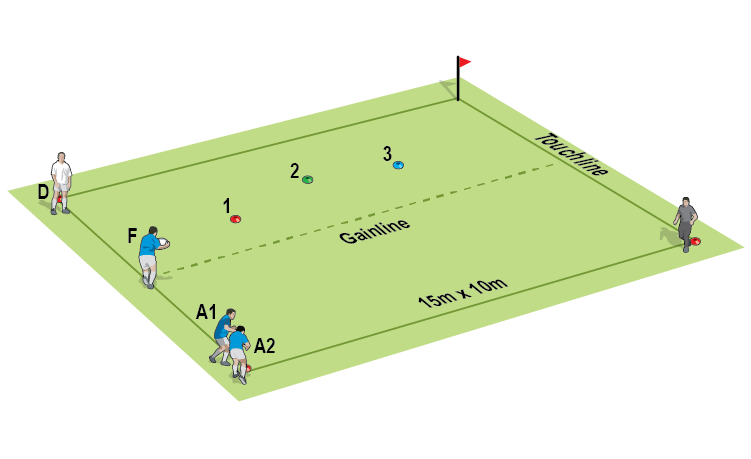
Split your forwards into two pods of three plus one player to act as scrum half (9). Start the two pods together at the side of at least four gates of cones. The 9 pops the ball to a player in the first pod. They run through the nearest gate, present the ball for 9 to pass to the next pod who are arcing around to attack the second gate. Repeat for the first pod to attach through the third gate and so on. Keep the exercise slow to make it more game realistic.Be a more effective, more successful youth rugby coach
- Win more games, without sacrificing the crucial element of fun
- Develop every player, regardless of vast differences in ability
- Run a respected, professional programme - even with a full-time job and limited time
Subscribe for full access
Or register and unlock 2 free articles,
receive our weekly newsletter, and
get a FREE coaching e-book.
Or if you are already a subscriber login for full access.

Dan Cottrell

Latest Issue

Subscribe Today
Subscribe Today
Newsletter Sign Up


Coaches Testimonials

Colin Shaw

Gary Lee Heavner
Subscribe Today
Latest Issue
Be a more effective, more successful rugby coach
In a recent survey 89% of subscribers said Rugby Coach Weekly makes them more confident, 91% said Rugby Coach Weekly makes them a more effective coach and 93% said Rugby Coach Weekly makes them more inspired.
Get Weekly Inspiration
All the latest techniques and approaches


Rugby Coach Weekly offers proven and easy to use rugby drills, coaching sessions, practice plans, small-sided games, warm-ups, training tips and advice.
We've been at the cutting edge of rugby coaching since we launched in 2005, creating resources for the grassroots youth coach, following best practice from around the world and insights from the professional game.
