
 close
close


 LOGIN
LOGINRugby Coach Weekly is the largest digital resource for youth coaches, trusted by 15,000+ coaches, teachers and parents every month.
-
Coach with confidence
-
Improve your teams faster
-
Run great sessions with less effort
- Expert coaching advice from TOP Coaches
- Training sessions for players from U6 to U17+.
Pick up and run


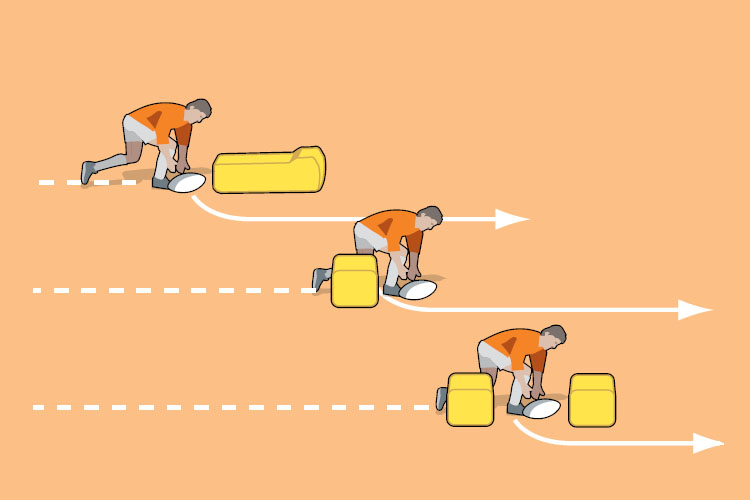
Straight after the tackle, once the ball is placed on the ground, players often have the chance to pick up and run with the ball. With the defence moving backwards, this can exploit their disorganisation. It can be used as part of your game plan to play a quick-tempo game.
Warm up time: 5-7
Session time: 8-10
Development time: 8-10
Game time: 15-20
Warm down time: 5-7
What to think about
The pick up and run needs good ball placement by the tackled player. Your players should work hard to put the ball back towards your goal line, preferably with a long or “pencil” placement, where the body is stretched out in a line parallel to the touch line. The support player arriving at the tackle should not stop and stoop to pick up the ball. If they do, they can become a target for the defending team. They can either pick up and move forward, or they can protect the ball and let another player clear the ball from the ground.set-up
- Bend at the knees and hips, and swoop in to take the ball.
- Step out and to the side before moving forward with the ball.
- Listen for your supporting player – you will be a target for the defence and will need to pass soon.
What you get your players to do
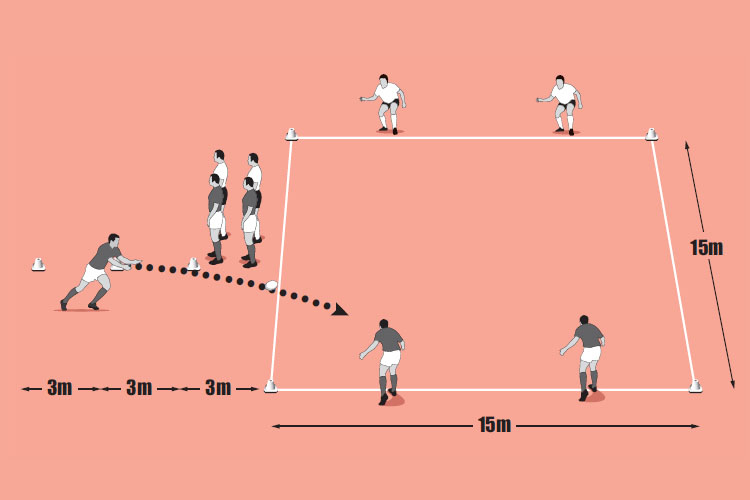
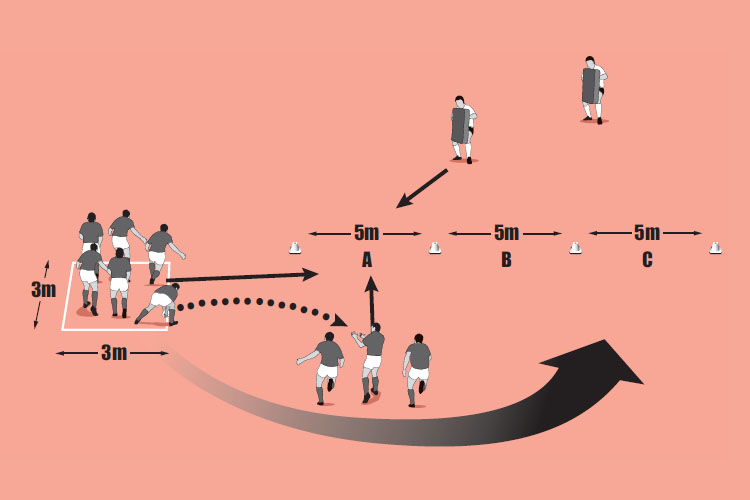
Put a ruck pad on the ground in front of player, with a ball next to it on the nearside. Have the player run towards the ball, pick it up smoothly and without stopping, run out from the pad and then forwards. Repeat with the ball on the other side of the pad. Next, with the ball between two pads set up about half a metre apart. Develop by having two players, one picking up and running before passing to the other.Development
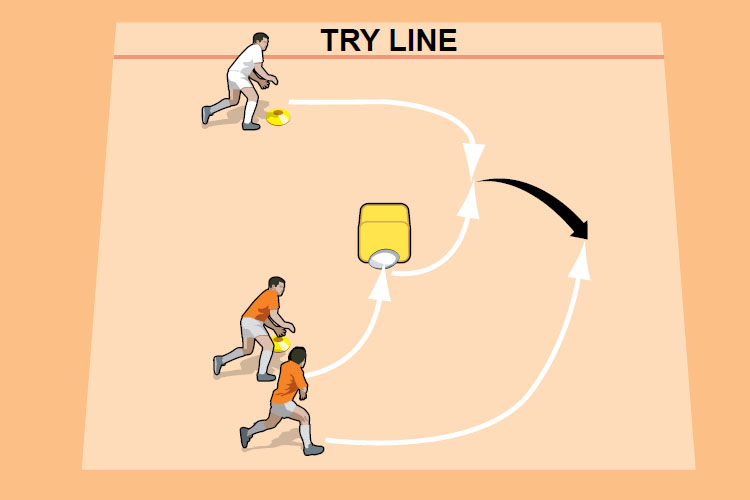
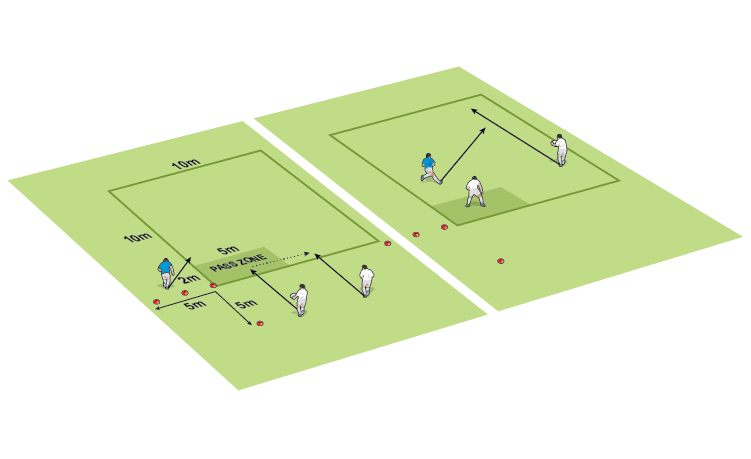
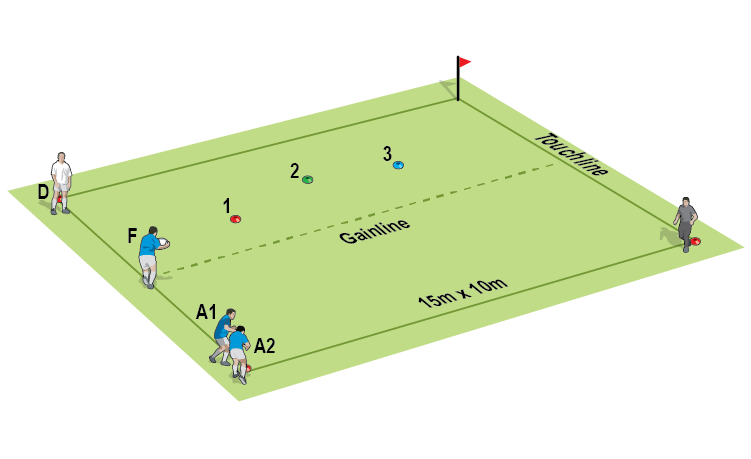
Put two attackers at one corner and a defender at the other. Put a ruck pad about 3m away from the attackers with a ball next to it and nearest to them. When you shout “GO”, all three players run out, with the attackers’ objective being to pick up the ball, pass and score at the far end of the box. Start with touch tackling before developing into full contact.Related Files
Game situation
Split into teams of five or six-a-side. Play a game of touch rugby where, if there is a tackle, both tackler and tackled player must go to ground. The defence must then retreat 2m. The next attacker picks up the ball, runs two steps before passing. Any infringements lead to a turnover. Play for two minutes. It is high intensity, so the players will need rest periods.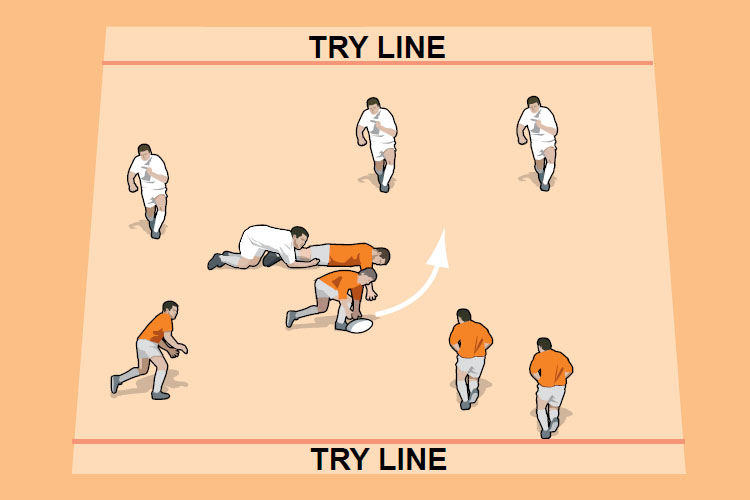
What to call out
- “Get your front foot in line with the ball”
- “Sit to pick up, not stoop”
- “Don’t stop at the ball”

Dan Cottrell
Latest Issue
Subscribe Today
Subscribe Today
Newsletter Sign Up
Coaches Testimonials

Colin Shaw

Gary Lee Heavner
Subscribe Today
Latest Issue
Be a more effective, more successful rugby coach
In a recent survey 89% of subscribers said Rugby Coach Weekly makes them more confident, 91% said Rugby Coach Weekly makes them a more effective coach and 93% said Rugby Coach Weekly makes them more inspired.
Get Weekly Inspiration
All the latest techniques and approaches


Rugby Coach Weekly offers proven and easy to use rugby drills, coaching sessions, practice plans, small-sided games, warm-ups, training tips and advice.
We've been at the cutting edge of rugby coaching since we launched in 2005, creating resources for the grassroots youth coach, following best practice from around the world and insights from the professional game.
