
 close
close


 LOGIN
LOGINRugby Coach Weekly is the largest digital resource for youth coaches, trusted by 15,000+ coaches, teachers and parents every month.
-
Coach with confidence
-
Improve your teams faster
-
Run great sessions with less effort
- Expert coaching advice from TOP Coaches
- Training sessions for players from U6 to U17+.
One on rucks


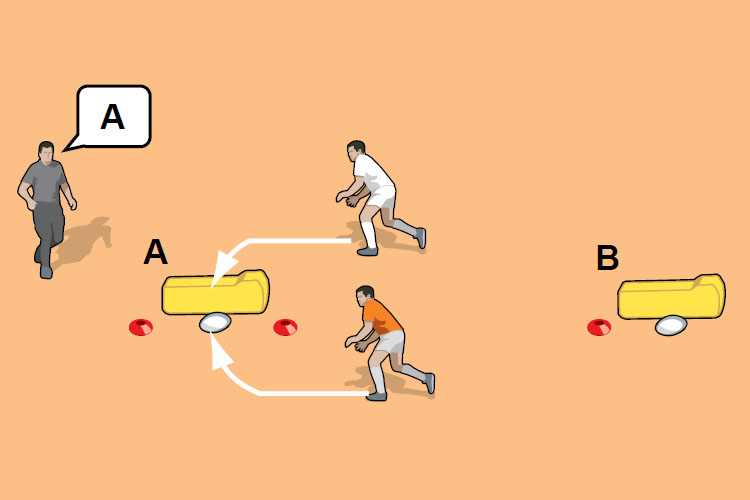
The first attacking player to the tackle contest can ensure quick ball but only if he can protect the tackled player. Especially with less experienced and younger players, one player can dominate the ruck with a good body position, either until the ball is cleared or further support arrives.
Warm up time: 5-7
Session time: 8-10
Development time: 8-10
Game time: 15-20
Warm down time: 5-7
What to think about
The first attacker to the tackle contest must enter through the “gate”. Ths is directly behind the back foot of the tackle situation. Once through the gate, he must stay on his feet. He has to make three choices, based on the nearest defensive threat.- Threat is close or over the ball. Clear the threat.
- Threat is arriving, but at least two steps away. Drive over the ball and take the space beyond the ruck.
- Threat is not there. Either pick up the ball, pass and run. Or crouch with ball under the hips, in the position of a front row forward just before contact.
set-up
- Put yourself in a great driving position at the ruck.
- Aim to get your shoulders under the threat at the ruck, and still be in a position to drive forward.
- Arrive from behind the back foot of the ruck and square.
What you get your players to do
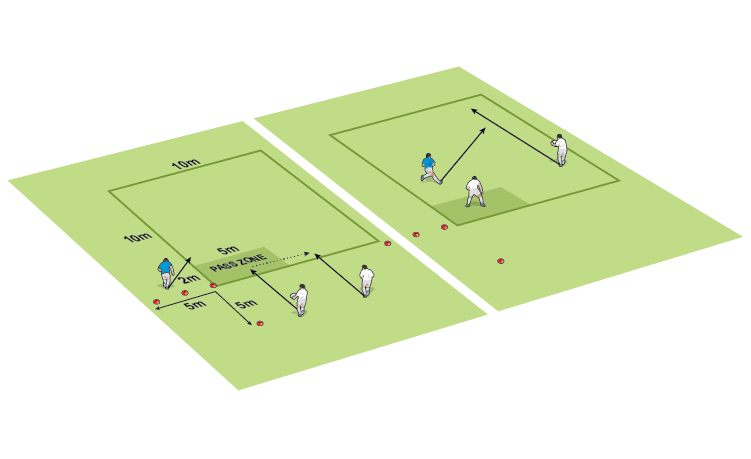
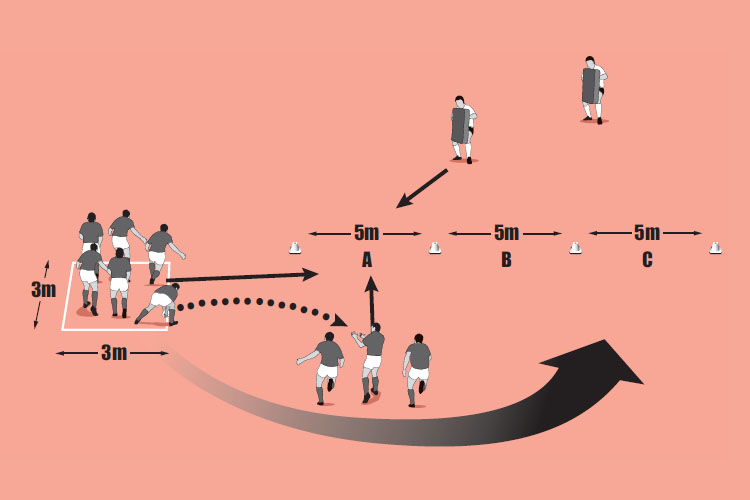
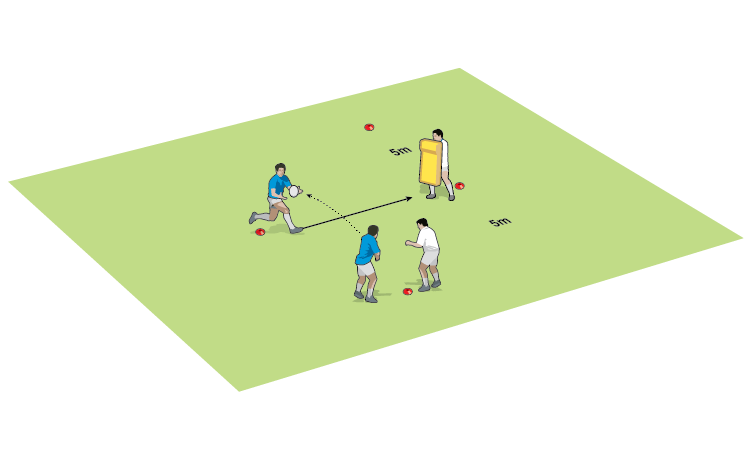
Lay out two ruck pads, balls and four cones as in the top picture, with the cones representing the hindmost feet of a ruck. Put two players opposite each other. Shout out which pad represents the ruck and the players race to drive over the pad.Development
Start the players in different positions. They can be opposite each other but to the sides of the pads, or one in one gap and one in another. Change the distances between the pads. Start one of the players further back.Related Files
Game situation
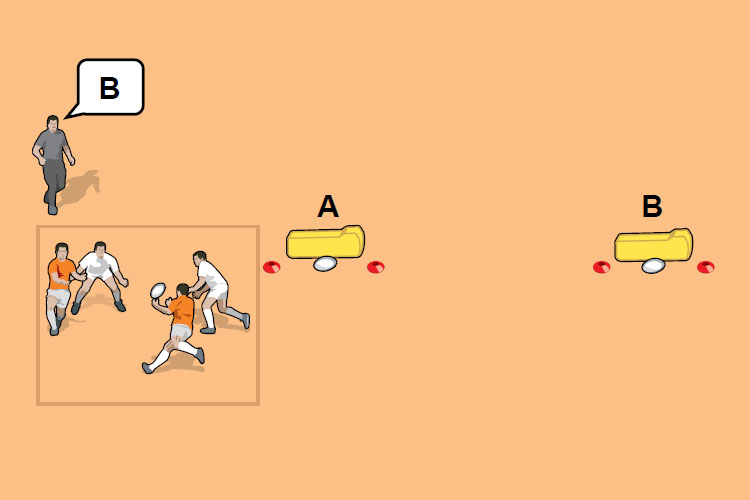
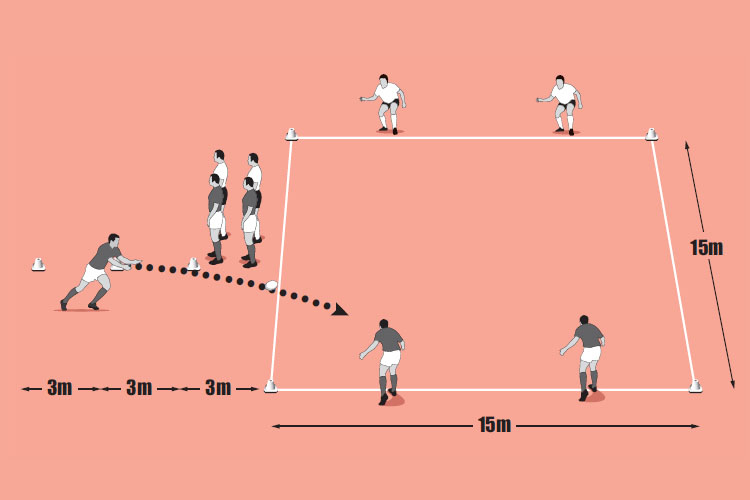
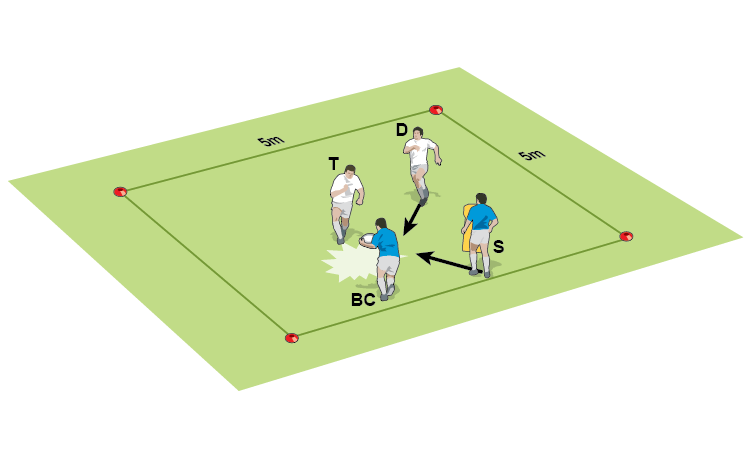
Set up the pads, cones and balls and a small box as in the middle picture. Put two pairs of players in the box. Have one pair pass the ball around, with the other pair trying to intercept or wrestle the ball away. When you shout a letter, the pair in possession of the ball run around and attack towards the try line gathering the ball from the pad indicated. The other pair defend the line. The ball can only be touched once one player has stepped over the ball.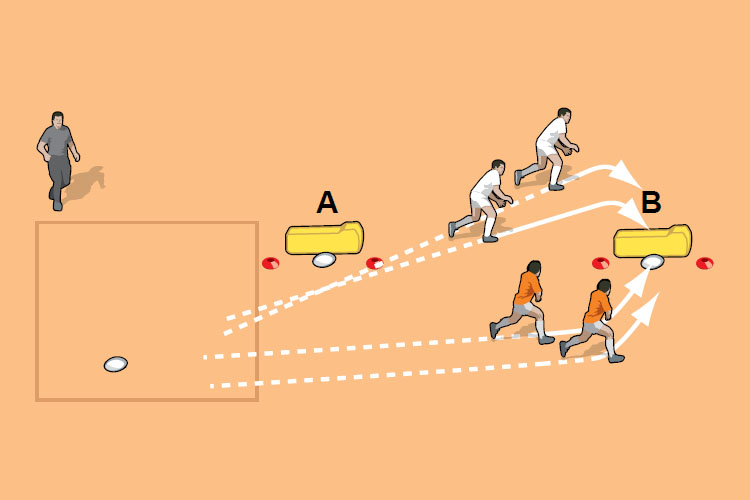
What to call out
- “Don’t come in from the sides, win through the middle”
- “Drop the hips before contact and drive up”
- “Look ahead, to see where to impact”

Dan Cottrell
Latest Issue
Subscribe Today
Subscribe Today
Newsletter Sign Up

Coaches Testimonials

Colin Shaw

Gary Lee Heavner
Subscribe Today
Latest Issue
Be a more effective, more successful rugby coach
In a recent survey 89% of subscribers said Rugby Coach Weekly makes them more confident, 91% said Rugby Coach Weekly makes them a more effective coach and 93% said Rugby Coach Weekly makes them more inspired.
Get Weekly Inspiration
All the latest techniques and approaches


Rugby Coach Weekly offers proven and easy to use rugby drills, coaching sessions, practice plans, small-sided games, warm-ups, training tips and advice.
We've been at the cutting edge of rugby coaching since we launched in 2005, creating resources for the grassroots youth coach, following best practice from around the world and insights from the professional game.
