
 close
close


 LOGIN
LOGINLower collisions
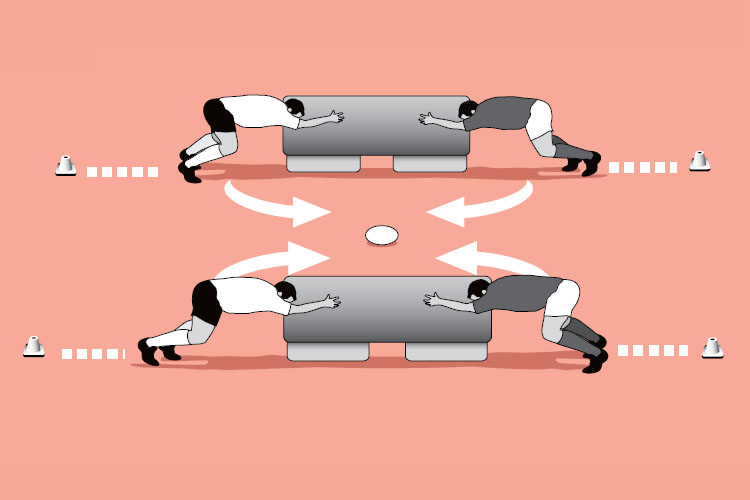
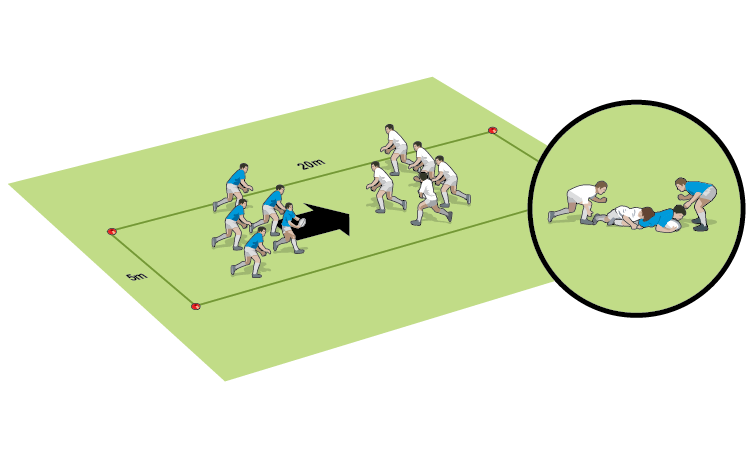
Your team can win more ruck ball if the players get lower, earlier in the collision contest. Then, once at the “correct” height, they must stay on their feet. The game situation in this session isolates the decision on the “correct” height and angle required to win the ball, and win it quickly.
Warm up time: 5-7
Session time: 8-10
Development time: 8-10
Game time: 10-15
Warm down time: 5-7
What to think about
The vertical targets in rucks are very small. Perhaps the would-be rucker can see a shoulder and a bit of the chest of the opponent he wants to clear away. There is little room for error if the player wants to make the biggest impact. We therefore have to be more inventive with the equipment we use to replicate a true ruck situation. We need to change the shapes and heights of the pads and tubes. In this session, the tackle tubes might well fall off the pads as they are driven. This is not a problem and may be more realistic, because if the players are not balanced and fall over with the tubes, then they will be out of the game for longer. You may want to increase the height of the tackle tubes, in which case stack two ruck pads on top of each other.set-up
- Get low early so you are driving up from a balanced position.
- Keep your hips and shoulders in line through the contact area to maximise your effort.
- Drive hard, but with balance, ready to react to different situations.
What you get your players to do
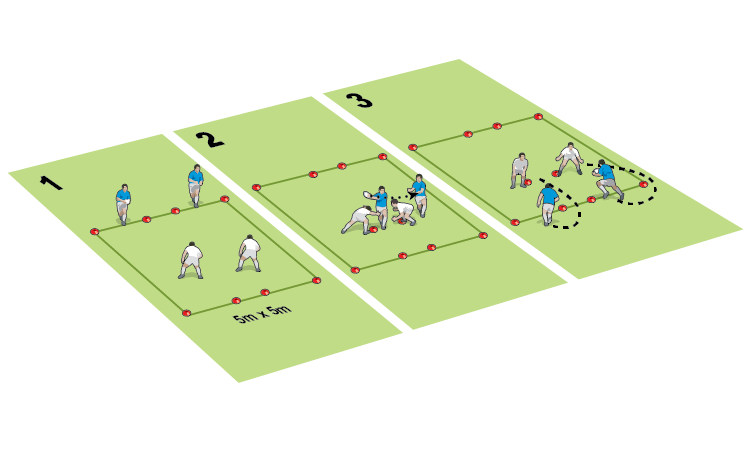
Set up two tackle tubes, each resting on two ruck pads, and with a ball between them (as in the top picture). Put a player two metres away from each end of the tubes. On your first signal, the players drive into the tubes, attempting to drive them over the ruck pad in front of them. On your second signal, the players break off and, in pairs, compete for the ball, perhaps with the added problem of the tubes lying in the way. The pair that has driven most effectively will be in the best position to win this contest.Be a more effective, more successful youth rugby coach
- Win more games, without sacrificing the crucial element of fun
- Develop every player, regardless of vast differences in ability
- Run a respected, professional programme - even with a full-time job and limited time
Subscribe for full access
Or register and unlock 2 free articles,
receive our weekly newsletter, and
get a FREE coaching e-book.
Or if you are already a subscriber login for full access.

Dan Cottrell
Latest Issue

Subscribe Today
Subscribe Today
Newsletter Sign Up

Coaches Testimonials

Colin Shaw

Gary Lee Heavner
Subscribe Today
Latest Issue
Be a more effective, more successful rugby coach
In a recent survey 89% of subscribers said Rugby Coach Weekly makes them more confident, 91% said Rugby Coach Weekly makes them a more effective coach and 93% said Rugby Coach Weekly makes them more inspired.
Get Weekly Inspiration
All the latest techniques and approaches


Rugby Coach Weekly offers proven and easy to use rugby drills, coaching sessions, practice plans, small-sided games, warm-ups, training tips and advice.
We've been at the cutting edge of rugby coaching since we launched in 2005, creating resources for the grassroots youth coach, following best practice from around the world and insights from the professional game.
