
 close
close


 LOGIN
LOGINRugby Coach Weekly is the largest digital resource for youth coaches, trusted by 15,000+ coaches, teachers and parents every month.
-
Coach with confidence
-
Improve your teams faster
-
Run great sessions with less effort
- Expert coaching advice from TOP Coaches
- Training sessions for players from U6 to U17+.
Loop for the extra man


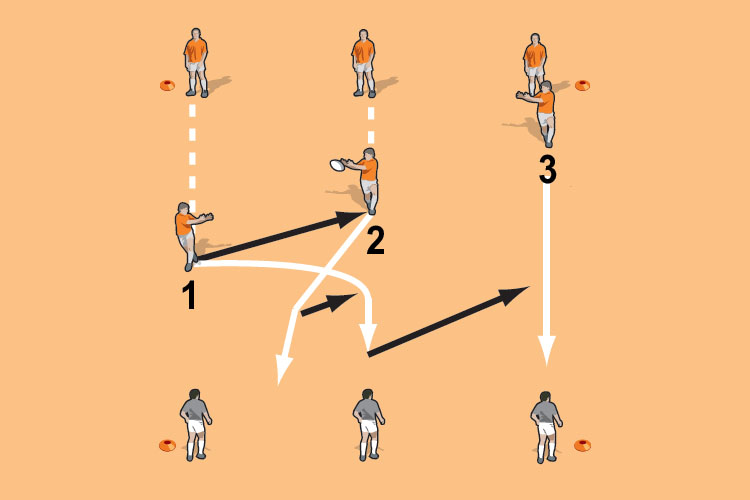
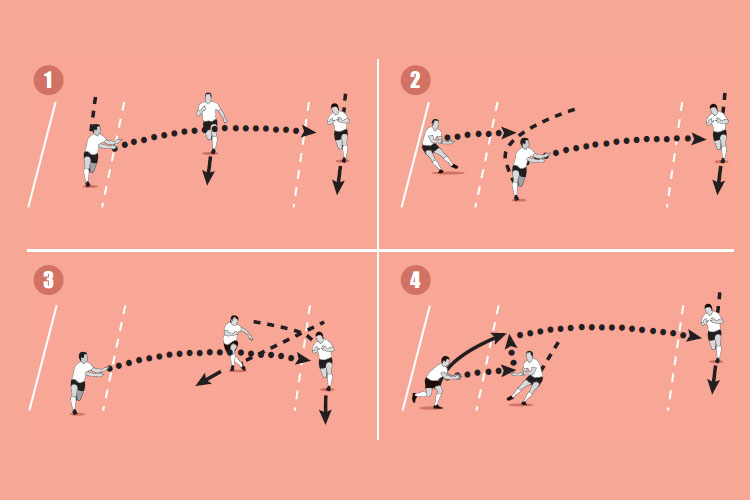
The loop pulls in defenders and creates space for your runners. The passer follows his pass and takes a return pass on the outside of the receiver, thus creating an extra player in attack. It can be used in isolation or as part of a set piece move.
Warm up time: 7-10
Session time: 10-15
Development time: 10-15
Game time: 15-20
Warm down time: 7-10
What to think about
- When is it most effective to use a loop in a game?It doesn’t need to be a pre-planned move and players should naturally aim to pass and loop. However any loop requires confidence and communication.
- What simple set moves can you come up with using a loop?Any move where you want the ball to go wide. A loop will tie in the opposition’s midfield defenders who are covering the extra man.
- During a game who should call the loop – the player looping or the passer?It’s best called by the player looping, although as long as your players are consistent it can be either.
set-up
- Pass accurately then follow the ball, running behind the receiver.
- Receiver: give a soft pop pass to the looping player.
- Both players: accelerate onto the pass and straighten up.
What you get your players to do
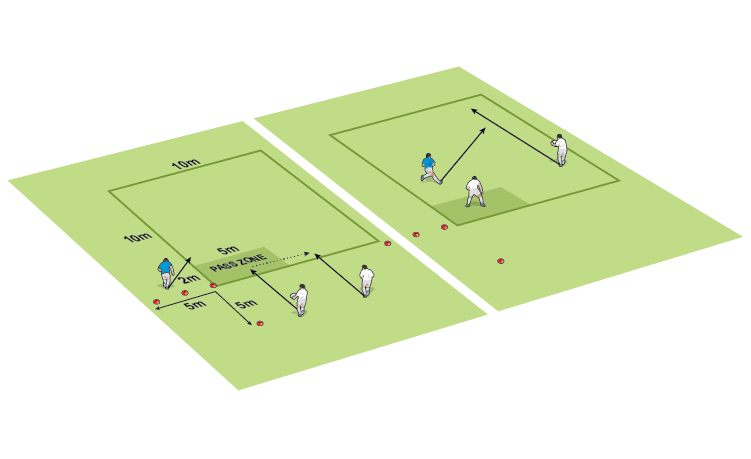
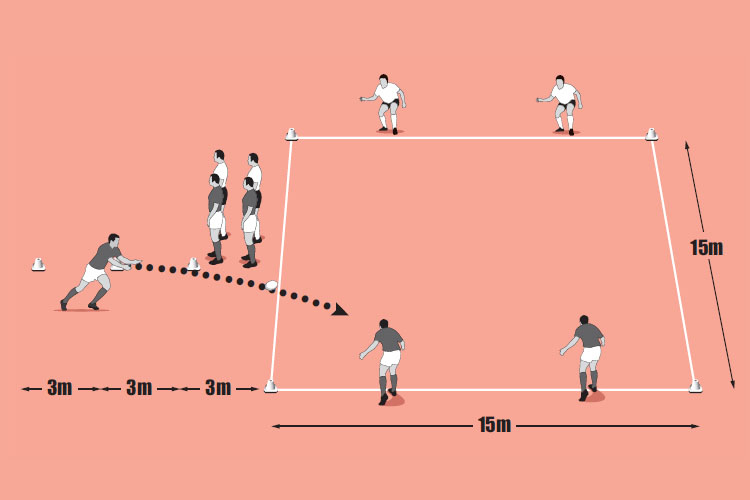
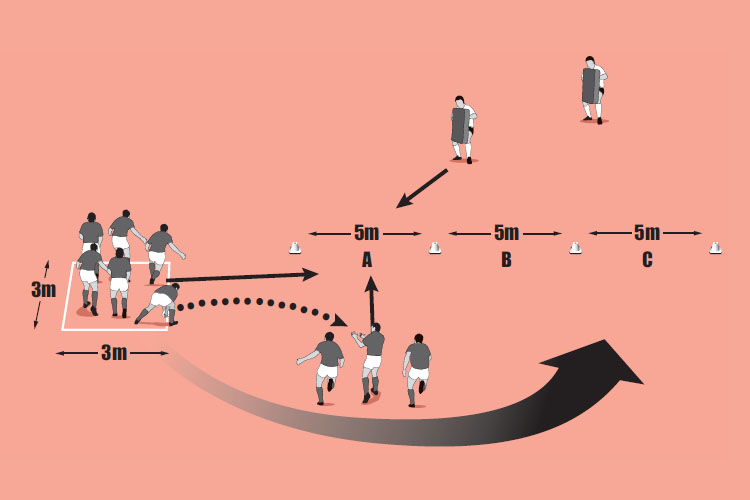
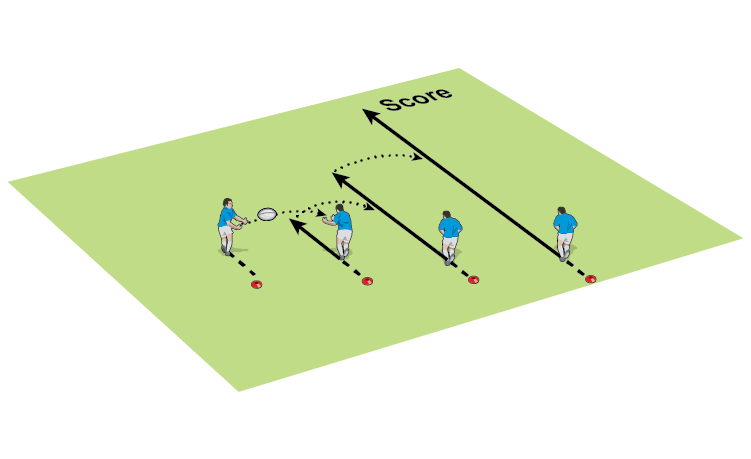
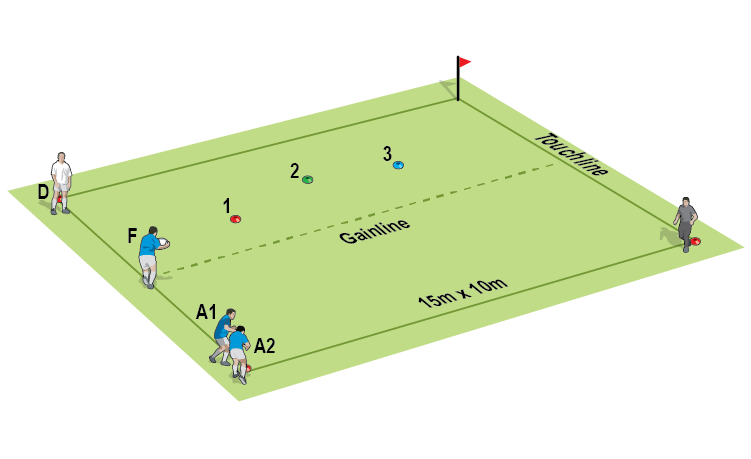
Work three players across the square. The ball carrier runs out and gives a pass to the second player who accelerates onto the ball. The first player loops round and runs onto a pop pass straightening up after receiving the ball. The final player runs at pace onto a short pass before popping the ball to the first player in the next group. Continue in a cyclical fashion with the players experiencing all three roles.Development
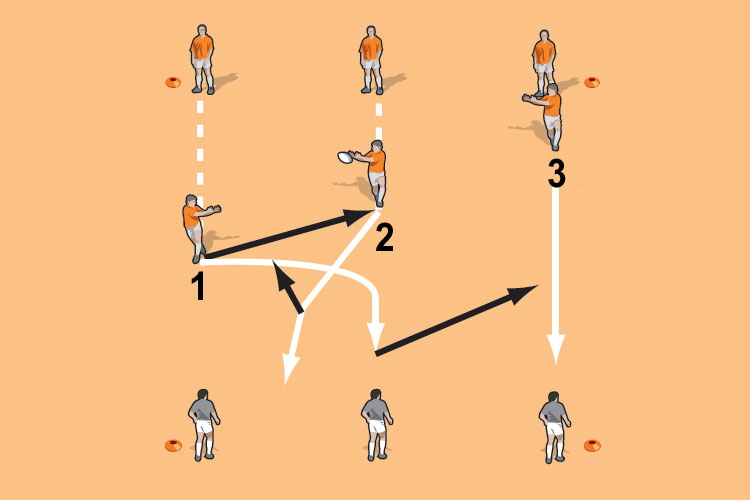
- The first player receives the pop pass from the second player before looping and then runs behind him before straightening up.
- Add three defenders and get the attacking players to use loops to create the overlap.
Related Files
Game situation
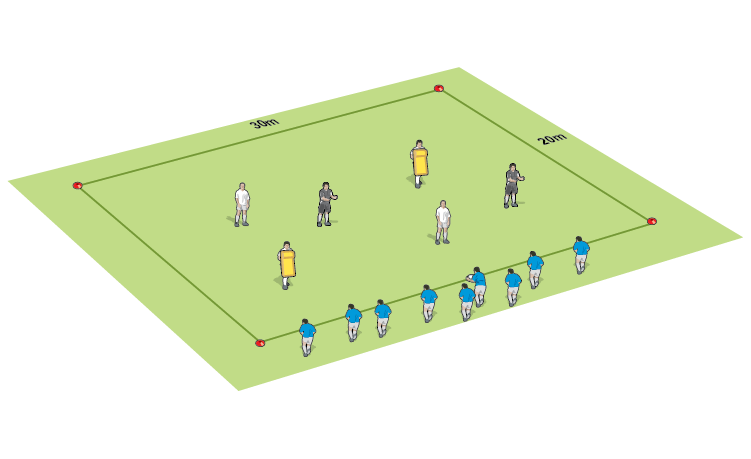
Set up a 4 versus 4 in a 10 metre wide channel using two-handed touch tackles. The attacking team have five attacks and get a point for every try they score using a loop. Each attack ends as soon as the ball carrier is touched. After five attacks the teams swap over. The new attackers try to beat the first team’s score. If you have more players you can have a team watching and analysing each attack to see what tactics work best.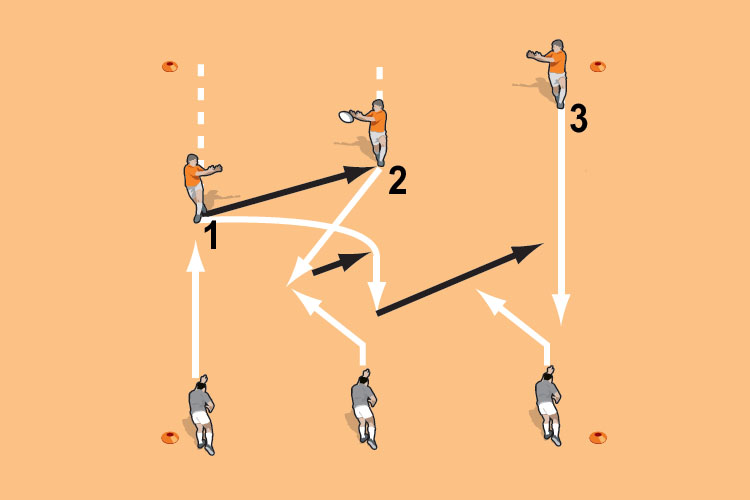
What to call out
- “Run onto the ball at pace”
- “Straighten up after looping”
- “Pass then loop, not the other way round”

Dan Cottrell
Latest Issue
Subscribe Today
Subscribe Today
Newsletter Sign Up
Coaches Testimonials

Colin Shaw

Gary Lee Heavner
Subscribe Today
Latest Issue
Be a more effective, more successful rugby coach
In a recent survey 89% of subscribers said Rugby Coach Weekly makes them more confident, 91% said Rugby Coach Weekly makes them a more effective coach and 93% said Rugby Coach Weekly makes them more inspired.
Get Weekly Inspiration
All the latest techniques and approaches


Rugby Coach Weekly offers proven and easy to use rugby drills, coaching sessions, practice plans, small-sided games, warm-ups, training tips and advice.
We've been at the cutting edge of rugby coaching since we launched in 2005, creating resources for the grassroots youth coach, following best practice from around the world and insights from the professional game.
