
 close
close


 LOGIN
LOGINKings of the counter ruck
Counter rucking spoils the attacking team’s quick ball. Either your players win back the ball or, at worst, disrupt the opposition scrum half’s attempt to clear it. Once techniques have been embedded, this session progresses to the decision-making process for counter rucking.
Counter rucking spoils the attacking team’s quick ball. Either your players win back the ball or, at worst, disrupt the opposition scrum half’s attempt to clear it. Once techniques have been embedded, this session progresses to the decision-making process for counter rucking.
Warm up time: 5-7
Session time: 8-11
Development time: 10-15
Game time: 15-20
Warm down time: 5-7
What to think about
What is the difference between rucking and counter rucking? Normal rucking happens when two players are bound over the ball on the ground. Once the ball has been worked to the back of one team’s ruck, then any attempt to drive in and join the ruck by the other team is regarded as counter rucking. How many players do you want to commit to slowing down the ruck ball? Normally, teams only want one player counter rucking. Otherwise there are gaps in the defence. This is why decision-making processes in this session are important.
set-up
- Use short steps, drive in and up into the contact situation with your eyes open.
- Concentrate on staying on your feet.
- Target a player to counter ruck and aim to get under his shoulders with your shoulders.
- Don’t counter ruck unless you have a target.
What you get your players to do
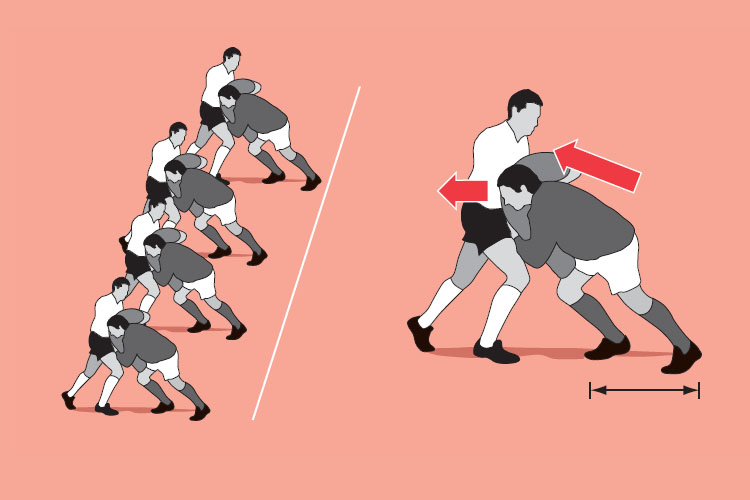
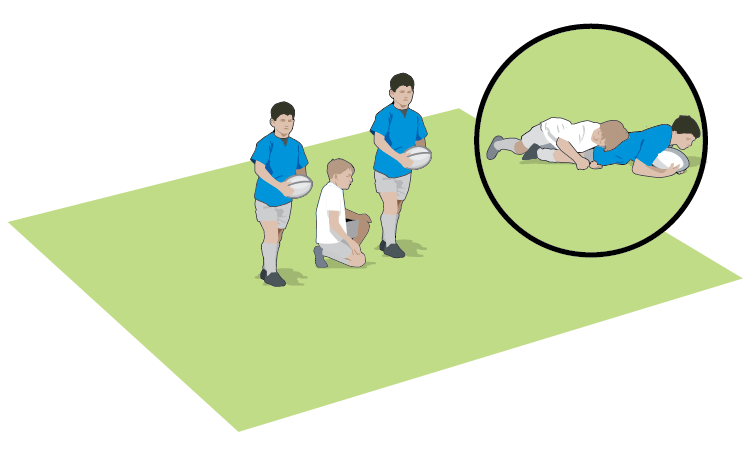
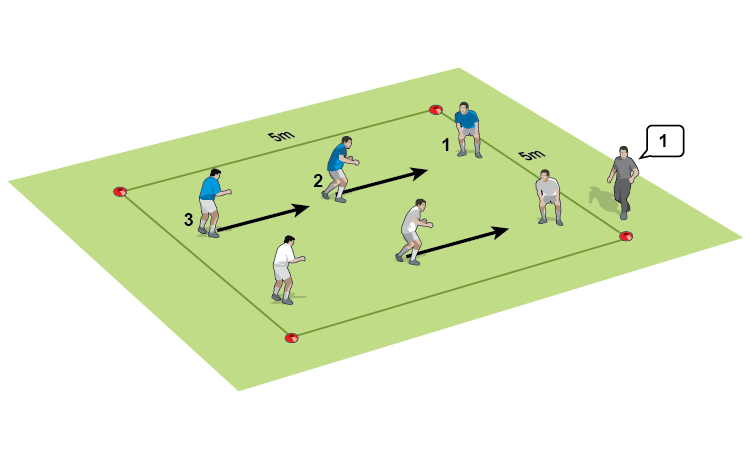
Put four players each with a ruck pad 2m from a line (like a touchline). Place four more on the line opposite each bag. When you shout “NOW”, they step and drive the bag back one step only (to help maintain balance - see picture 1). Check carefully for the right technique. Swap players around. As a development, start the “drivers” facing away from the bags or lying on the ground.
Be a more effective, more successful youth rugby coach
- Win more games, without sacrificing the crucial element of fun
- Develop every player, regardless of vast differences in ability
- Run a respected, professional programme - even with a full-time job and limited time
Subscribe for full access
Or register and unlock 2 free articles,
receive our weekly newsletter, and
get a FREE coaching e-book.
Or if you are already a subscriber login for full access.

Dan Cottrell

Latest Issue

Subscribe Today
Subscribe Today
Newsletter Sign Up

Coaches Testimonials

Colin Shaw

Gary Lee Heavner
Subscribe Today
Latest Issue
Be a more effective, more successful rugby coach
In a recent survey 89% of subscribers said Rugby Coach Weekly makes them more confident, 91% said Rugby Coach Weekly makes them a more effective coach and 93% said Rugby Coach Weekly makes them more inspired.
Get Weekly Inspiration
All the latest techniques and approaches


Rugby Coach Weekly offers proven and easy to use rugby drills, coaching sessions, practice plans, small-sided games, warm-ups, training tips and advice.
We've been at the cutting edge of rugby coaching since we launched in 2005, creating resources for the grassroots youth coach, following best practice from around the world and insights from the professional game.
