
 close
close


 LOGIN
LOGINIns and outs
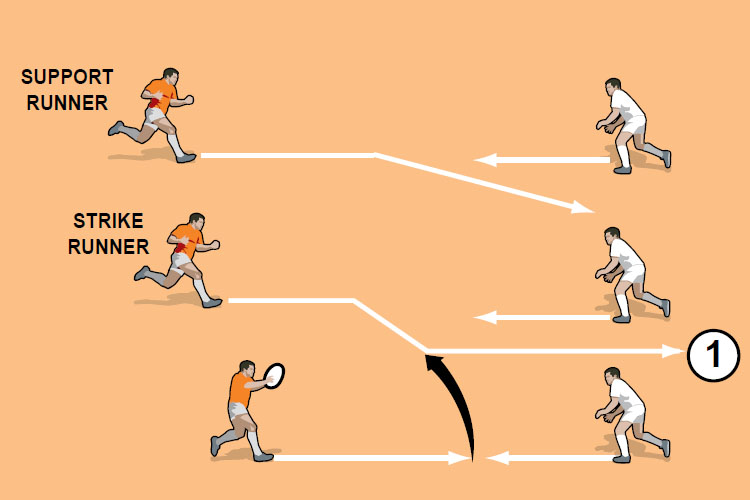
Running complex attack patterns to break the tackle line often doesn’t succeed. The same outcome can be achieved by the late movement of a strike runner into space and a well delivered pass. Running lines known as “ins” and “outs” can be used at any level of the game and, if well executed, will lead to more clean breaks.
Warm up time: 7-10
Session time: 8-10
Development time: 8-10
Game time: 15-20
Warm down time: 7-10
What to think about
To improve the success rate of breaking the tackle line, it is important to have two or three option runners in each move. They distract the defence from the real purpose of the attack and allow your playmaker to adjust the move if he sees the defence change. Encourage your players to work hard off the ball to create realistic options for the playmaker, and open space for the strike runners. The option runners are not just decoys. They must be in a position to receive a pass at the same time as the other options. They also need to arrive from depth, at pace and make plenty of noise.set-up
- Run straight at your opposite man to fix him.
- Change direction sharply before receiving the ball and attack the space.
- Deliver accurate passes in front of the strike runner.
What you get your players to do
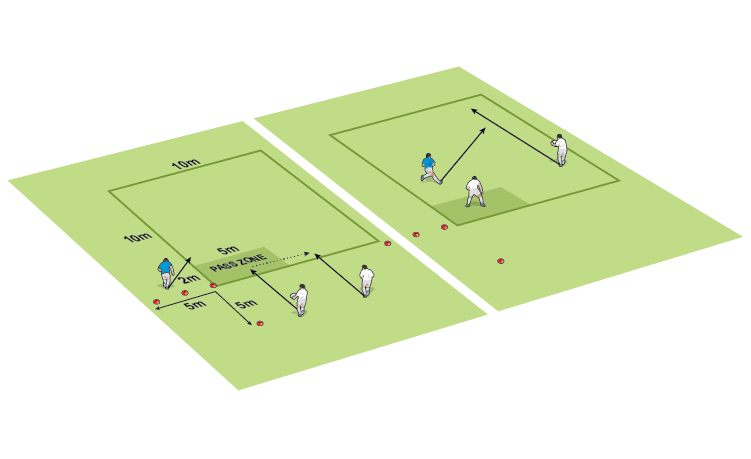
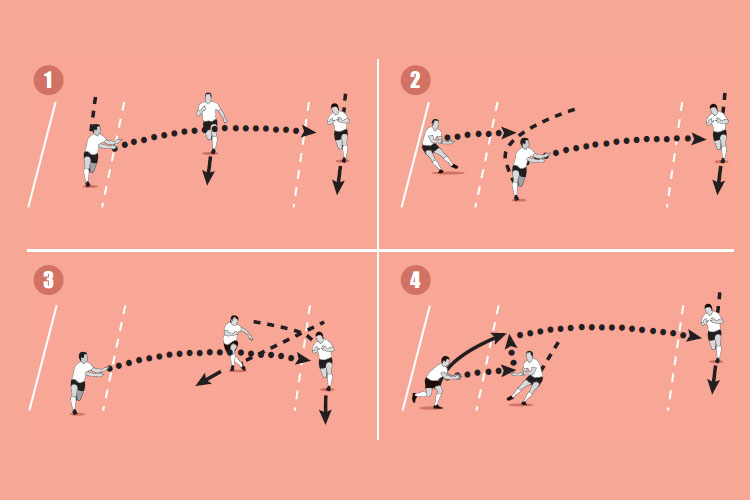
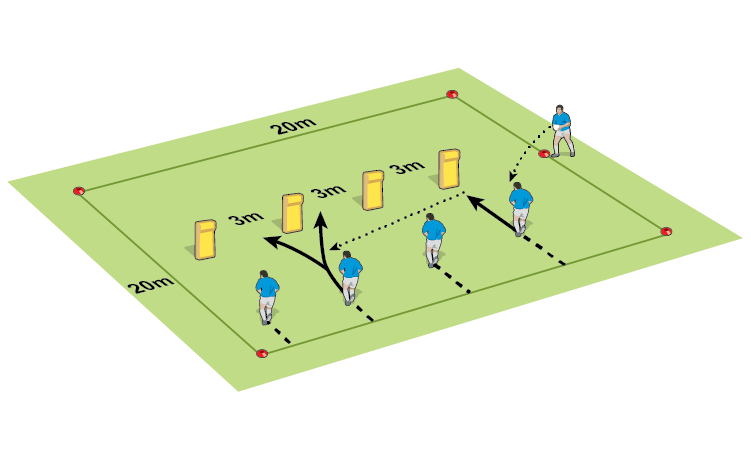
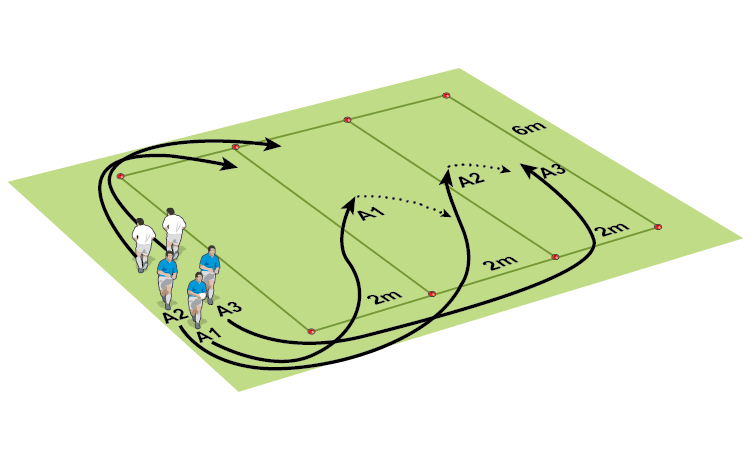
Set up three attacking players opposite three defenders. Walk through the ins and outs. Have a ball carrier attack his defender and fix him. For an “in” ball, a strike runner runs straight at the defender, then changes direction and accelerates at space 1 (see the top picture). He receives a short pop pass and straightens up into the space. For an “out” ball, the strike runner fixes the defender, then steps and accelerates into the space (2) on the outside, receiving a flat pass (see the middle picture).Be a more effective, more successful youth rugby coach
- Win more games, without sacrificing the crucial element of fun
- Develop every player, regardless of vast differences in ability
- Run a respected, professional programme - even with a full-time job and limited time
Subscribe for full access
Or register and unlock 2 free articles,
receive our weekly newsletter, and
get a FREE coaching e-book.
Or if you are already a subscriber login for full access.

Dan Cottrell

Latest Issue

Subscribe Today
Subscribe Today
Newsletter Sign Up

Coaches Testimonials

Colin Shaw

Gary Lee Heavner
Subscribe Today
Latest Issue

Be a more effective, more successful rugby coach
In a recent survey 89% of subscribers said Rugby Coach Weekly makes them more confident, 91% said Rugby Coach Weekly makes them a more effective coach and 93% said Rugby Coach Weekly makes them more inspired.
Get Weekly Inspiration
All the latest techniques and approaches


Rugby Coach Weekly offers proven and easy to use rugby drills, coaching sessions, practice plans, small-sided games, warm-ups, training tips and advice.
We've been at the cutting edge of rugby coaching since we launched in 2005, creating resources for the grassroots youth coach, following best practice from around the world and insights from the professional game.
