
 close
close


 LOGIN
LOGINRugby Coach Weekly is the largest digital resource for youth coaches, trusted by 15,000+ coaches, teachers and parents every month.
-
Coach with confidence
-
Improve your teams faster
-
Run great sessions with less effort
- Expert coaching advice from TOP Coaches
- Training sessions for players from U6 to U17+.
Getting the ball to the wing


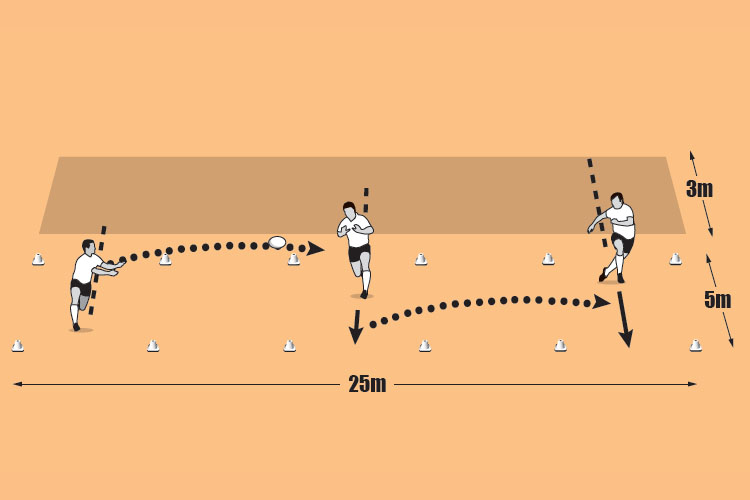
This simple session works on moving the ball wide while maintaining space and time for the winger. It aims to promote speed and accuracy of passing while fixing the inside defenders.
Warm up time: 5-7
Session time: 8-10
Development time: 10-15
Game time: 10-15
Warm down time: 5-8
What to think about
Though simple in set-up and potential outcomes, actual passing and running at speed will be difficult to achieve under pressure. You need to adjust distances and timings to suit the skills of your players before they find success. Only then do you apply the pressure. This is a great session to return to later in the season to see if your team has progressed. Inside players should be encouraged to use pull-back passes (not necessarily flat passes) so there is enough space for the winger to receive the ball. Note: This is only a couple of passes, not a long line of passes which would be slow and cumbersome, even at a high level.set-up
1. Take the pass, run, fix your defender, look at the receiver and pass in front of him - but pull back the pass. 2. Receivers: Hold your run so you have enough time and space to pass and release players wide out.What you get your players to do
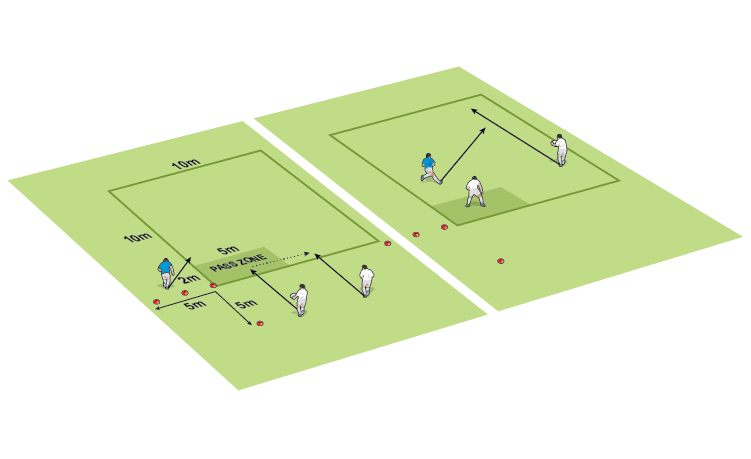
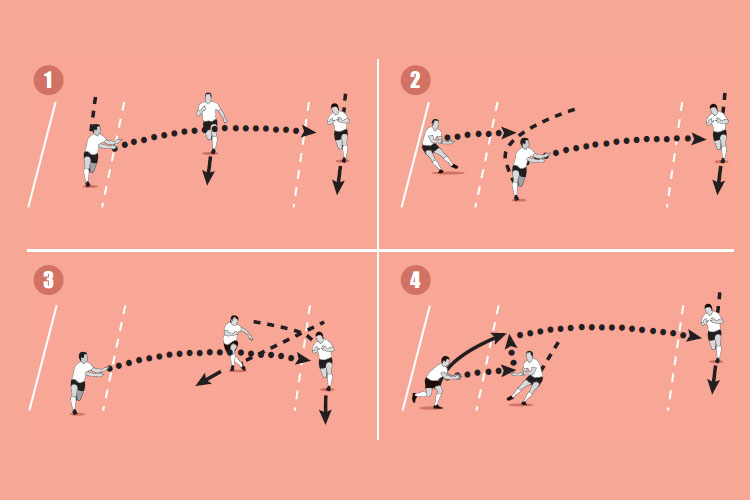
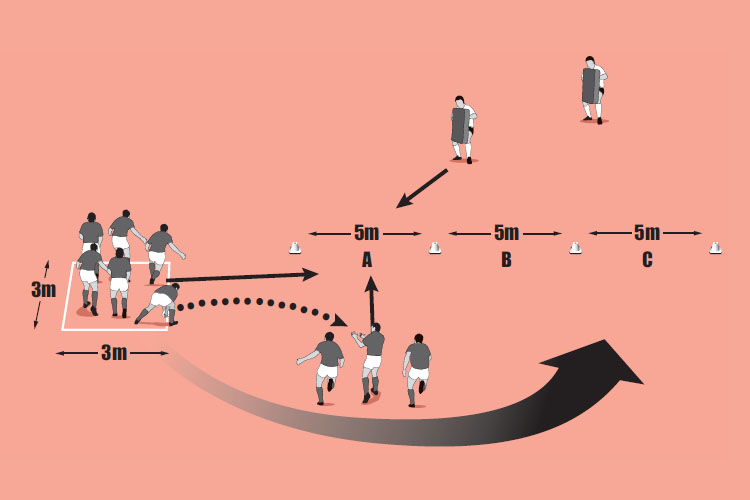
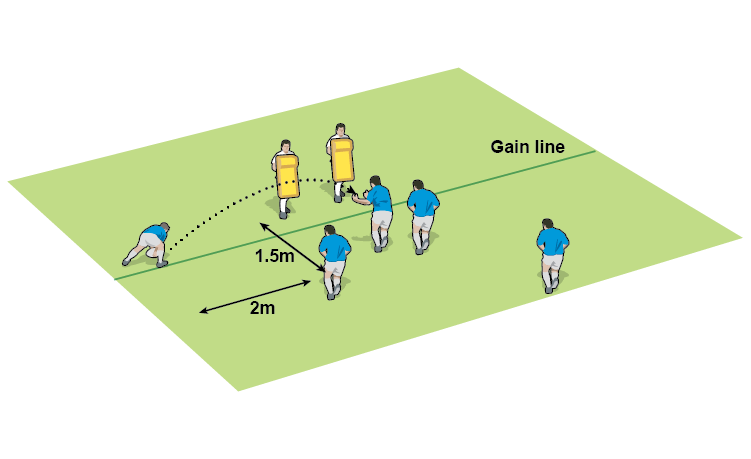
Put three players inside the 25m x3m channel. This forces them to have a little bit of depth but hold and time their runs. Get the first player to run into the cone box in front of him and deliver a pass into the next cone box. The second player does the same so the last player takes the ball on the run in the final cone box (see picture 1).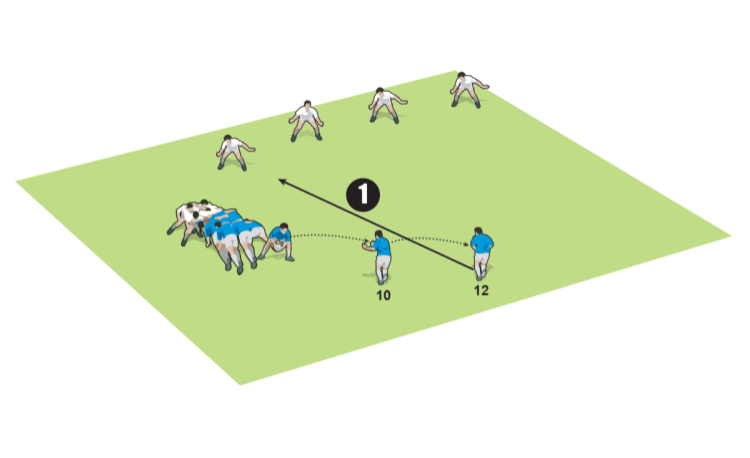
Development
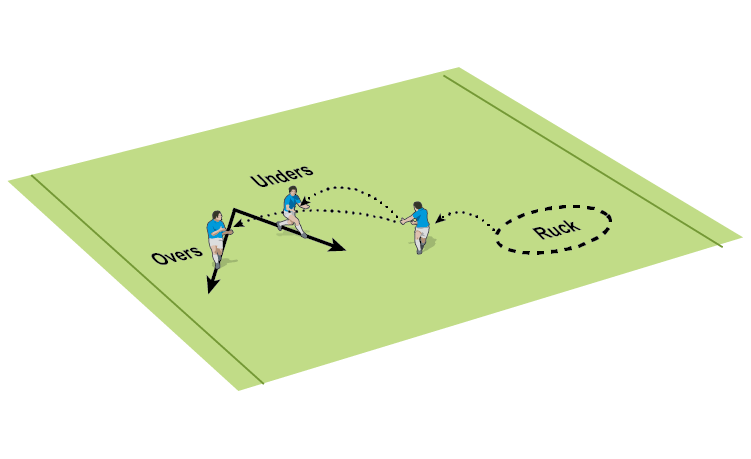
Get players running further with the ball. The first player passes as before but the second can pass just before he reaches the end of a second cone box, allowing the final player to sprint to the try line. At the same time, set off a defender who tries to intercept (and touch) the final ball carrier before he makes the try line. He runs at an angle across the area. Adjust this distance to challenge your players (see picture 2).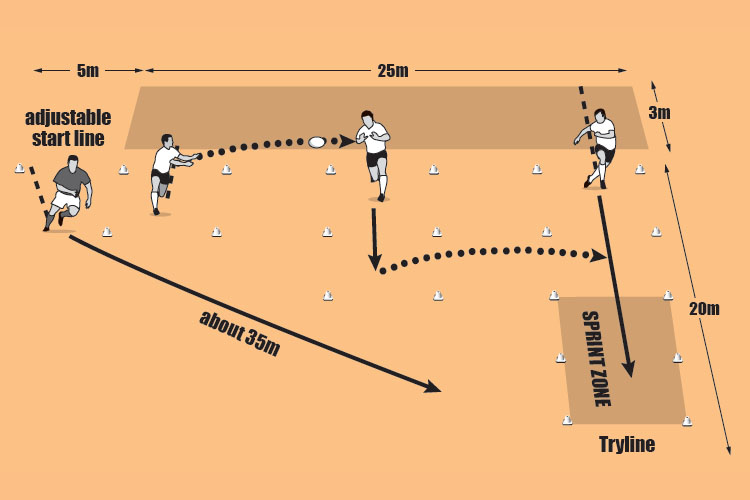
Game situation
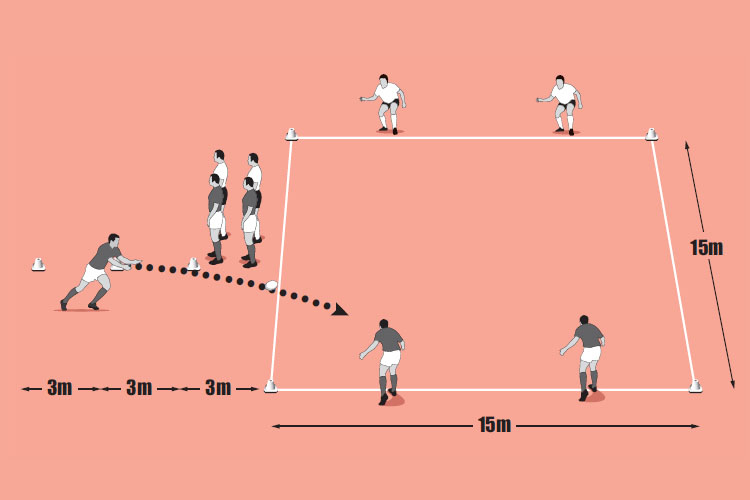
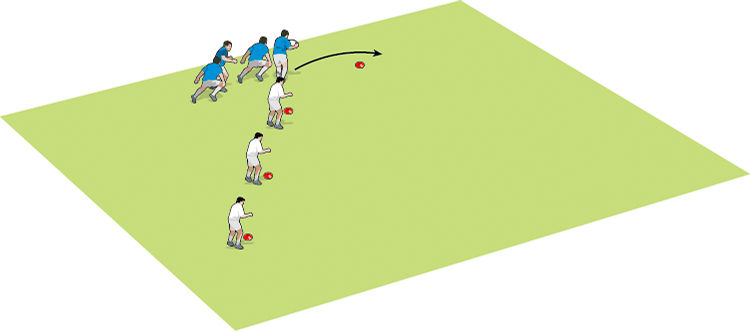
Put three attackers at one end of the box and two defenders opposite the first two attackers about 10m away. Put another defender to the side of the box opposite a feeder. From this side, the feeder passes to the first attacker. The defenders in the box can only pressurise the first two attackers. The defender outside the box covers the last attacker (see picture 3). Play touch rugby. Develop by allowing the defenders to drift but only do this with full tackling. This might slow the covering defender who will track the ball, not just go for the outside player.
What to call out
- “Outside hand up to act as the target for the passing player”
- “Run straight, both with the ball and before receiving”
- “Call to instil confidence”

Dan Cottrell
Latest Issue

Subscribe Today
Subscribe Today
Newsletter Sign Up
Coaches Testimonials

Colin Shaw

Gary Lee Heavner
Subscribe Today
Latest Issue
Be a more effective, more successful rugby coach
In a recent survey 89% of subscribers said Rugby Coach Weekly makes them more confident, 91% said Rugby Coach Weekly makes them a more effective coach and 93% said Rugby Coach Weekly makes them more inspired.
Get Weekly Inspiration
All the latest techniques and approaches


Rugby Coach Weekly offers proven and easy to use rugby drills, coaching sessions, practice plans, small-sided games, warm-ups, training tips and advice.
We've been at the cutting edge of rugby coaching since we launched in 2005, creating resources for the grassroots youth coach, following best practice from around the world and insights from the professional game.
