
 close
close


 LOGIN
LOGINGet the ball out wide - quickly!
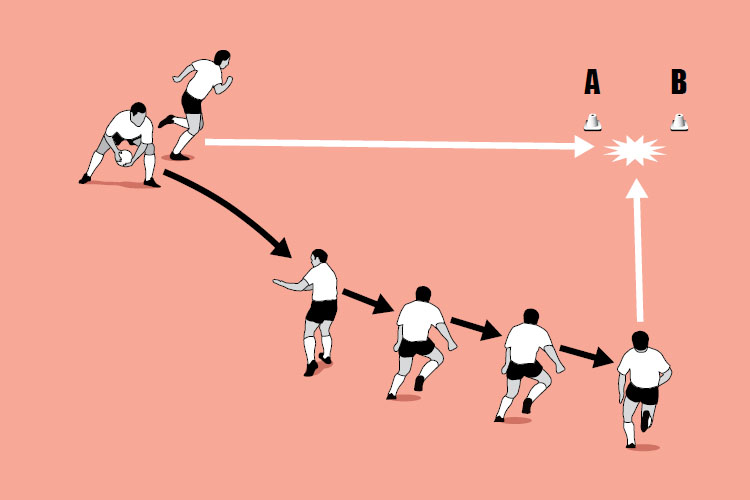
Players need to know what sequence of moves are being run. This makes it easier to run the right support lines and break down defences over a series of phases. This session runs a sequence of plays to attack close to the initial point of contact then wide out.
Warm up time: 7-10
Session time: 10-15
Development time: 10-15
Game time: 15-20
Warm down time: 7-10
What to think about
Are your players starting their runs too early? They should wait for previous player to move. How far should each set of passers be from the tackle line – flatter or deeper? It depends on the skills of your team and how wide you want to pass the ball. Deeper for more width. If players are realigning too flat from the second phase, use cones as starting points to make them run from deeper. Should the player who last passed the ball be the first player into the contact situation? Normally yes, but you do need to keep the most of backs out of rucking if you want to attack wide again quickly.set-up
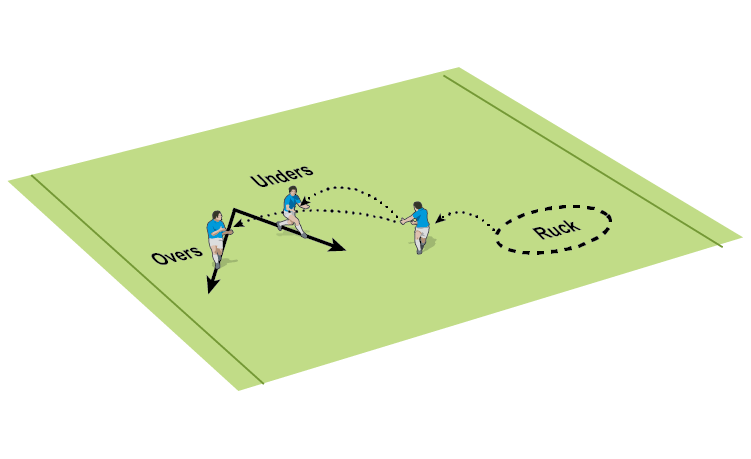
- Give and take quick passes without closing down the space between the attack and defensive line – then release a player wide out into space.
- Realign with depth taken from the first receiver, normally the fly half.
- First player in contact area turns towards support to allow quick release.
- Scrum half needs to clear the ball from the ruck as soon as he arrives.
What you get your players to do
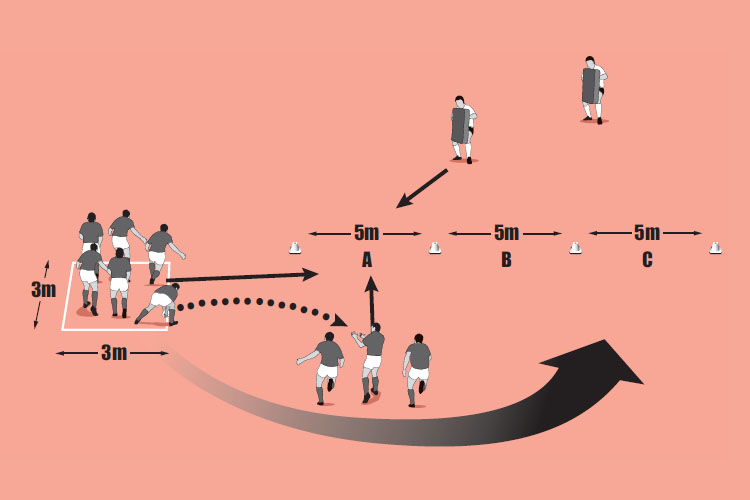
A scrum half and forward stand together and then a backline spreads out, but only a few metres apart. The ball is passed out and along the line to the furthest back who runs and falls at a set of cones (A and B). The forward recycles the ball and it is passed out quickly to the backs again so the final pass is in line with a pair of cones (C and D) for the final back to run through.Be a more effective, more successful youth rugby coach
- Win more games, without sacrificing the crucial element of fun
- Develop every player, regardless of vast differences in ability
- Run a respected, professional programme - even with a full-time job and limited time
Subscribe for full access
Or register and unlock 2 free articles,
receive our weekly newsletter, and
get a FREE coaching e-book.
Or if you are already a subscriber login for full access.

Dan Cottrell

Latest Issue

Subscribe Today
Subscribe Today
Newsletter Sign Up


Coaches Testimonials

Colin Shaw

Gary Lee Heavner
Subscribe Today
Latest Issue
Be a more effective, more successful rugby coach
In a recent survey 89% of subscribers said Rugby Coach Weekly makes them more confident, 91% said Rugby Coach Weekly makes them a more effective coach and 93% said Rugby Coach Weekly makes them more inspired.
Get Weekly Inspiration
All the latest techniques and approaches


Rugby Coach Weekly offers proven and easy to use rugby drills, coaching sessions, practice plans, small-sided games, warm-ups, training tips and advice.
We've been at the cutting edge of rugby coaching since we launched in 2005, creating resources for the grassroots youth coach, following best practice from around the world and insights from the professional game.
