
 close
close


 LOGIN
LOGINFront-on tackles
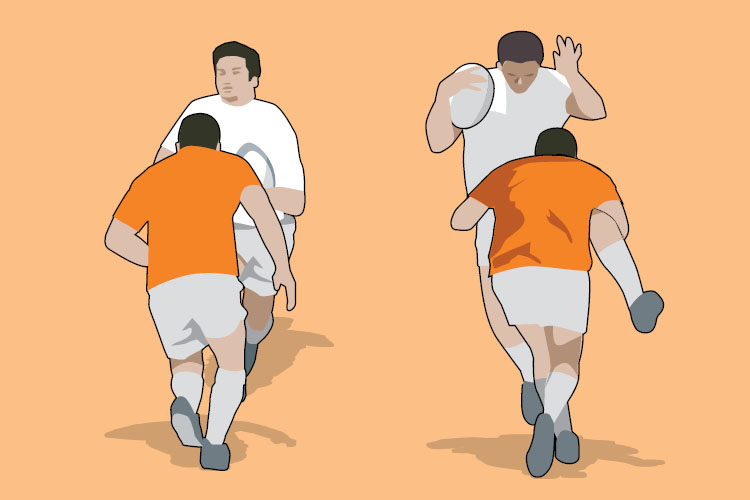
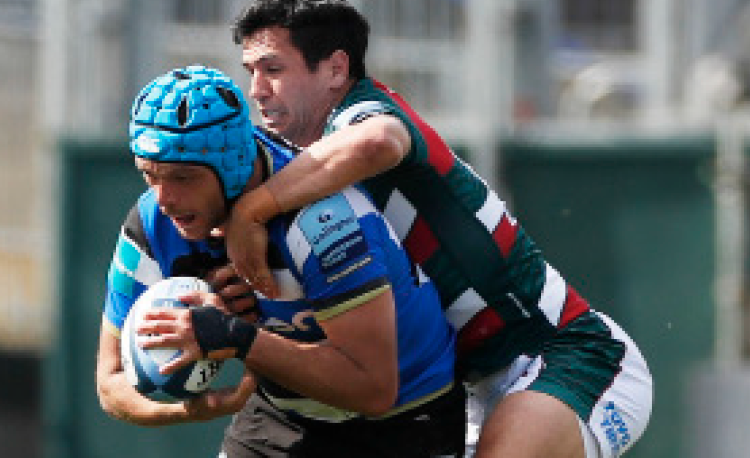
Most front-on tackles happen in close quarters. Neither tackler or ball carrier can adjust their lines to make it any other way. The majority of front-on tackles happen at the side of a ruck and the tackler has to choose whether to drive up and back or bring the player right down.
Warm up time: 5
Session time: 6-9
Development time: 6-9
Game time: 15-20
Warm down time: 7
What to think about
Simple laws of motion tell us that an object will knock back another object with a greater force. In rugby terms, a tackler who is static will find it more difficult make an aggressive front-on tackle, and, depending on relative weights, be knocked backwards. Therefore, he needs to move forward to meet the ball carrier. In reality, such an aggressive tackle can only happen when the ball carrier has not picked up much speed. The short distance allows the tackler to be in a strong position to drive forward. Otherwise, he will mishit and bounce off the tackle.set-up
- Pick your target (the ball carrier) early.
- Set yourself to come forward on your terms.
- Go from a low strong position and drive up and under the ball.
- Drive your head into the space right next to the ribs.
What you get your players to do
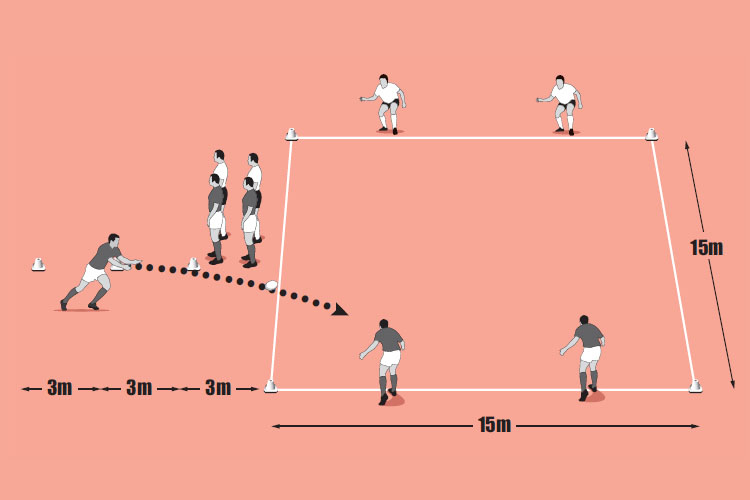
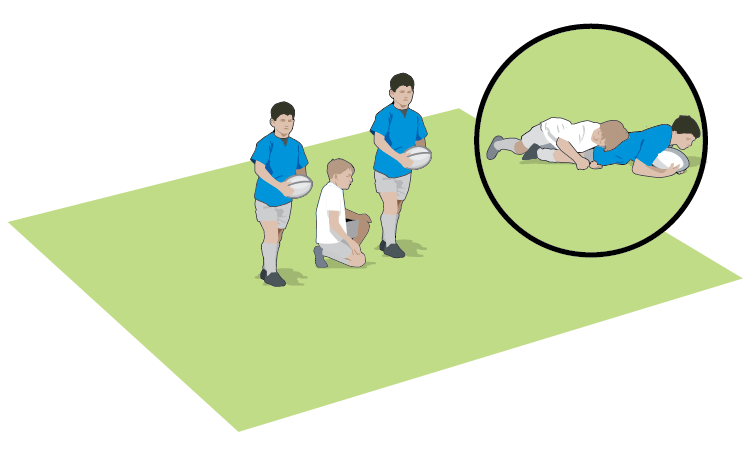
Split into pairs, with a ball each. The ball carrier skips up and down and side to side, but no more than one metre from his starting position. When you shout “GO”, the other player steps in and drives his shoulder under the ball. He wraps his hands around the ball carrier and lifts him up and back no more than a metre. Swap ball carriers and repeat.Be a more effective, more successful youth rugby coach
- Win more games, without sacrificing the crucial element of fun
- Develop every player, regardless of vast differences in ability
- Run a respected, professional programme - even with a full-time job and limited time
Subscribe for full access
Or register and unlock 2 free articles,
receive our weekly newsletter, and
get a FREE coaching e-book.
Or if you are already a subscriber login for full access.

Dan Cottrell
Latest Issue

Subscribe Today
Premium Books

Subscribe Today
Newsletter Sign Up

Coaches Testimonials

Colin Shaw

Gary Lee Heavner
Subscribe Today
Latest Issue
Be a more effective, more successful rugby coach
In a recent survey 89% of subscribers said Rugby Coach Weekly makes them more confident, 91% said Rugby Coach Weekly makes them a more effective coach and 93% said Rugby Coach Weekly makes them more inspired.
Get Weekly Inspiration
All the latest techniques and approaches


Rugby Coach Weekly offers proven and easy to use rugby drills, coaching sessions, practice plans, small-sided games, warm-ups, training tips and advice.
We've been at the cutting edge of rugby coaching since we launched in 2005, creating resources for the grassroots youth coach, following best practice from around the world and insights from the professional game.
