
 close
close


 LOGIN
LOGINDisco-tech-(nique)
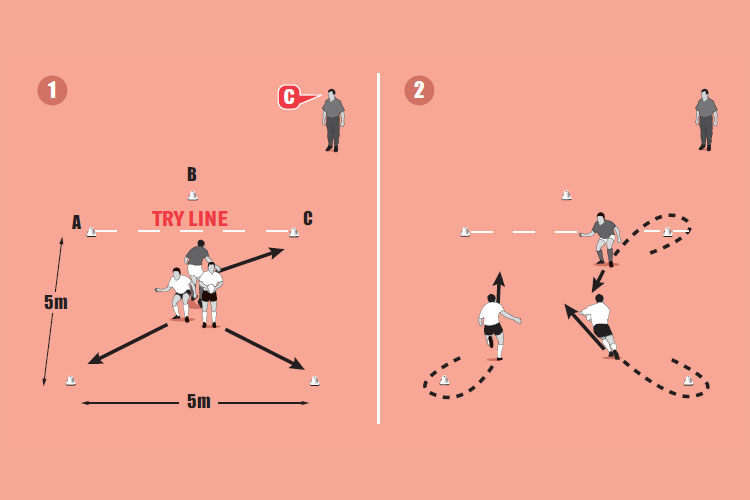
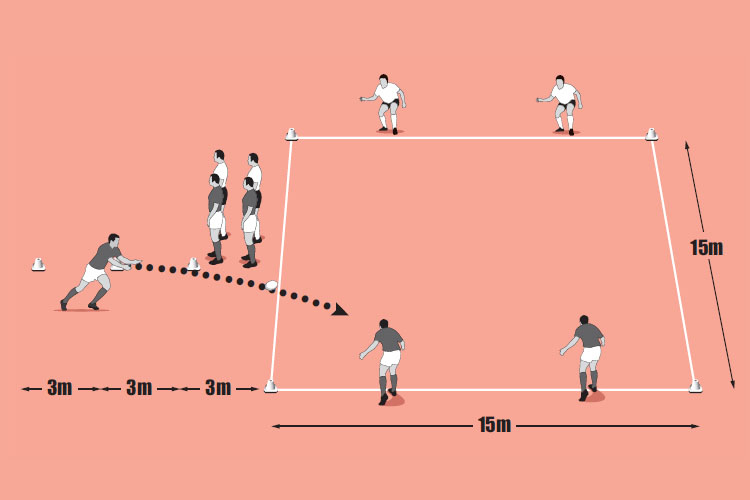
This is a decision-making exercise I used with Ospreys. To be successful, the attack must scan the defence and then adjust their pace and depth. Using the “disco” effect (different coloured cones replicating the different coloured lights) you can determine the shape of the defence, forcing the attack to take quick and effective passing and running options. It also works defenders, who have to reconnect after being pushed out of position.
Warm up time: 5-7
Session time: 8-10
Development time: 10-15
Game time: 15-20
Warm down time: 5-8
What to think about
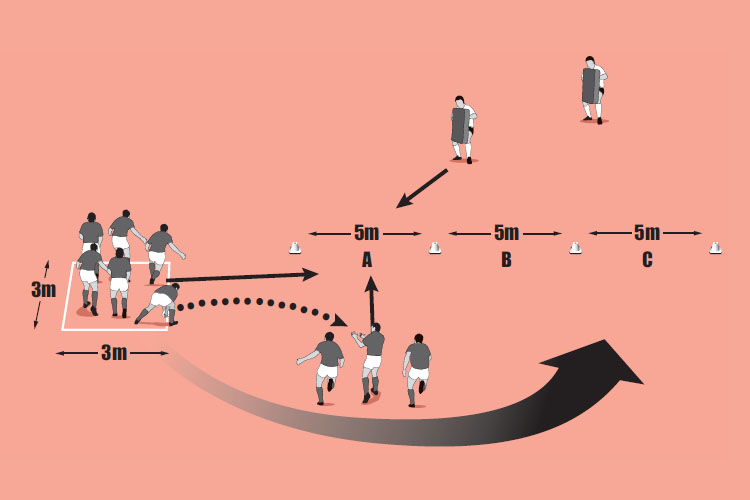
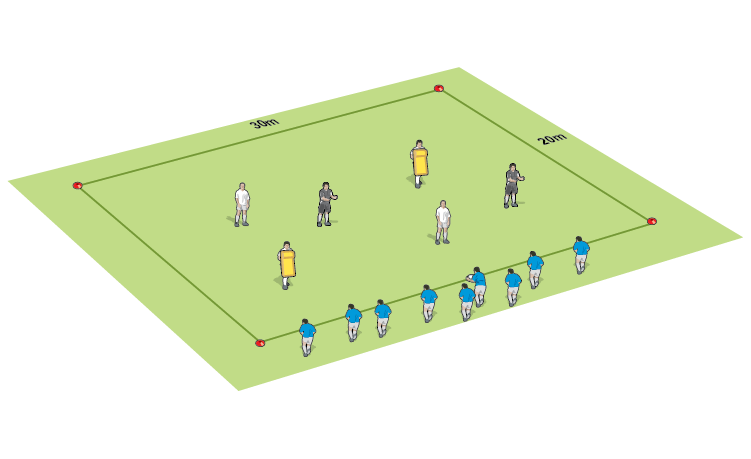
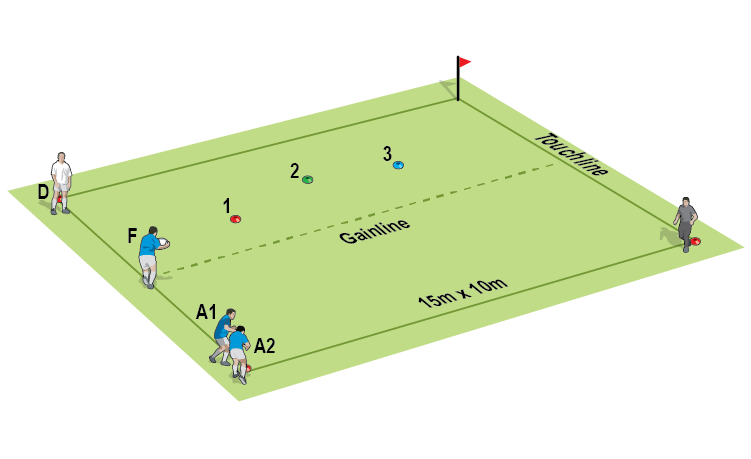
The first receiver often takes off too quickly, leaving his fellow attackers behind. The attacking line must judge the depth they take from one another and then ensure they move together. The way you set out the coloured cone trails for defenders will determine how and where defenders enter the box. It can be tailored to manufacture gaps or types of defensive line that attackers have to quickly adjust to and communicate from the outside in order to exploit. You can easily play around with the alignment of these cones and the distance away from the attackers to adjust the pressure put on the attacking line.set-up
- Scan the defence, hold your depth and pass the ball to space.
- Move together as a line, with the outside players communicating to the inside players.
What you get your players to do
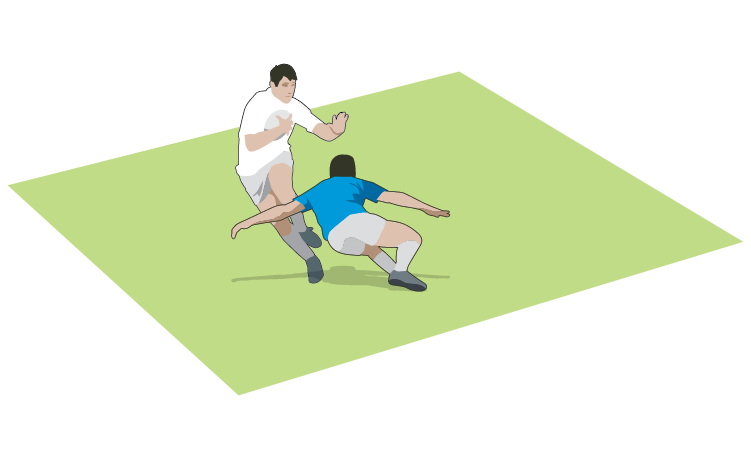
Put two attackers and a defender in the middle of a 5m box, back to back. Shout out a letter and then the defender runs to that lettered cone. In the meantime, the attackers run to the corners of the box and turn for a 2v1 (see picture 1). Use touch tackling. Swap one attacker with the defender after each attempt.Be a more effective, more successful youth rugby coach
- Win more games, without sacrificing the crucial element of fun
- Develop every player, regardless of vast differences in ability
- Run a respected, professional programme - even with a full-time job and limited time
Subscribe for full access
Or register and unlock 2 free articles,
receive our weekly newsletter, and
get a FREE coaching e-book.
Or if you are already a subscriber login for full access.

Dan Cottrell
Latest Issue

Subscribe Today
Subscribe Today
Newsletter Sign Up
Coaches Testimonials

Colin Shaw

Gary Lee Heavner
Subscribe Today
Latest Issue
Be a more effective, more successful rugby coach
In a recent survey 89% of subscribers said Rugby Coach Weekly makes them more confident, 91% said Rugby Coach Weekly makes them a more effective coach and 93% said Rugby Coach Weekly makes them more inspired.
Get Weekly Inspiration
All the latest techniques and approaches


Rugby Coach Weekly offers proven and easy to use rugby drills, coaching sessions, practice plans, small-sided games, warm-ups, training tips and advice.
We've been at the cutting edge of rugby coaching since we launched in 2005, creating resources for the grassroots youth coach, following best practice from around the world and insights from the professional game.
