
 close
close


 LOGIN
LOGINDefending the edges
In essence, lots of time is spent on positioning players to tackle and not enough time on setting and then tackling under fatigue conditions. As the French found out, almost to their cost, in the World Cup semi-final, it only takes one small slip for a player like Mike Phillips to slip through the hole.
Warm up time: 5-7
Session time: 8-10
Development time: 10-15
Game time: 10-15
Warm down time: 5-8
What to think about
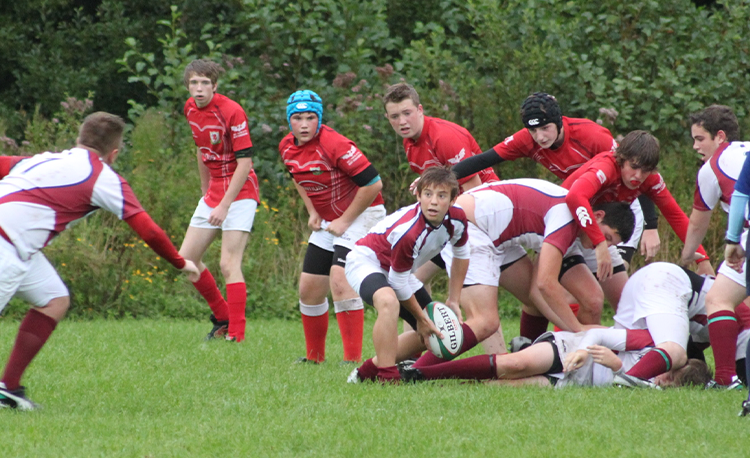
I have covered lots of defence stuff on getting into position...this session is on making the players more aware of what is happening before they get into position. To do this, the session sneakily breaks player concentration because the defender might not have to make the tackle at that ruck, or indeed the next ruck. He might also be making two or three consecutive tackles. The mental challenge is to make a good tackle every time, so this session works on strong technique under pressure.set-up
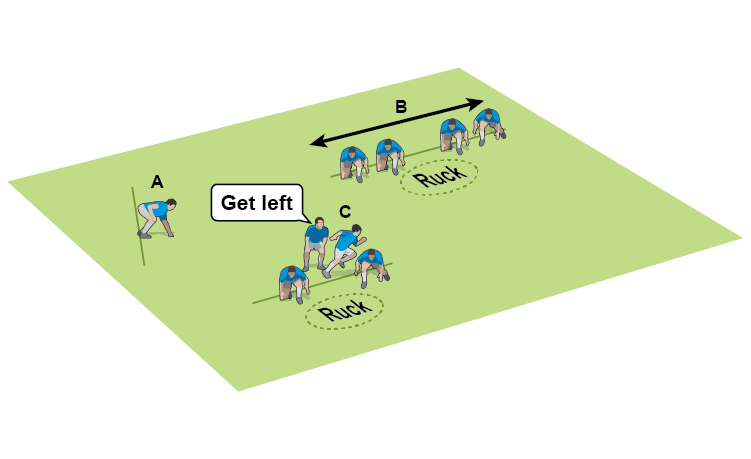
- First player to the ruck, get to the far side, set and say so.
- Second player, nearside of the ruck and do the same.
- Go forward when the ball is picked up. Don’t give up the inside channel at the ruck.
What you get your players to do
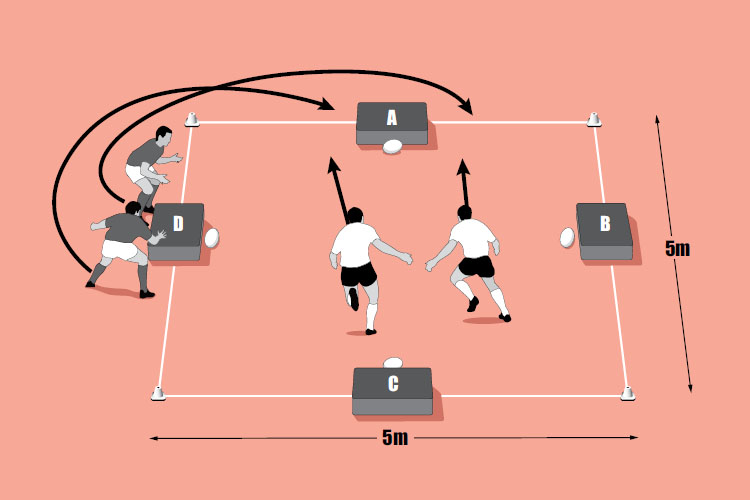
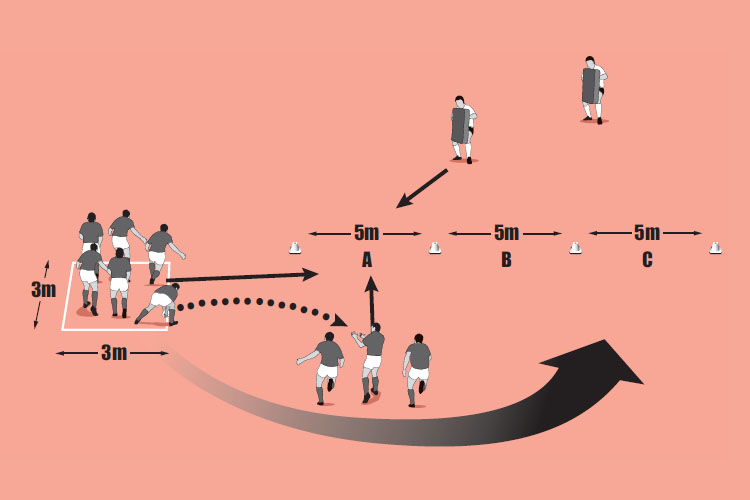
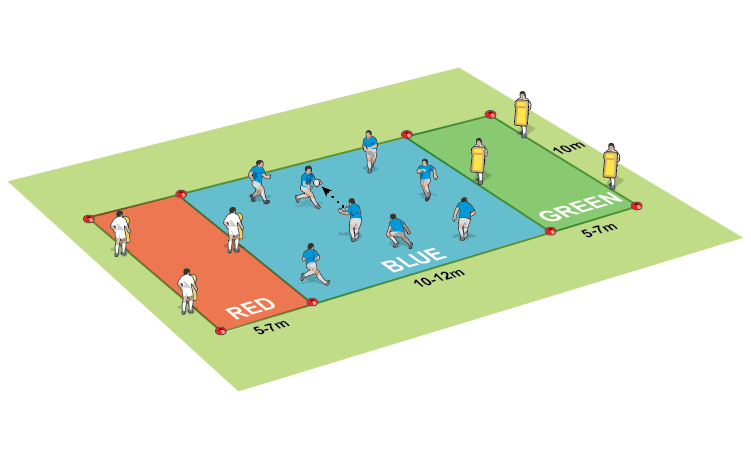
Set up a 5m square box as in picture 1, with two attackers in the middle and two defenders on the outside. Call out a letter (or ruck pad) and the defenders and attackers move to that ruck pad (see picture 2). The first attacker either passes or goes himself. Attackers aim to get out of the box in front of them without going over the ruck pad. Use full contact. You release the attackers whenever you want (you could countdown from five). Repeat several times before swapping roles of attackers and defenders. The defenders have to run outside the box to get into position.Be a more effective, more successful youth rugby coach
- Win more games, without sacrificing the crucial element of fun
- Develop every player, regardless of vast differences in ability
- Run a respected, professional programme - even with a full-time job and limited time
Subscribe for full access
Or register and unlock 2 free articles,
receive our weekly newsletter, and
get a FREE coaching e-book.
Or if you are already a subscriber login for full access.

Dan Cottrell
Latest Issue

Subscribe Today
Subscribe Today
Newsletter Sign Up
Coaches Testimonials

Colin Shaw

Gary Lee Heavner
Subscribe Today
Latest Issue
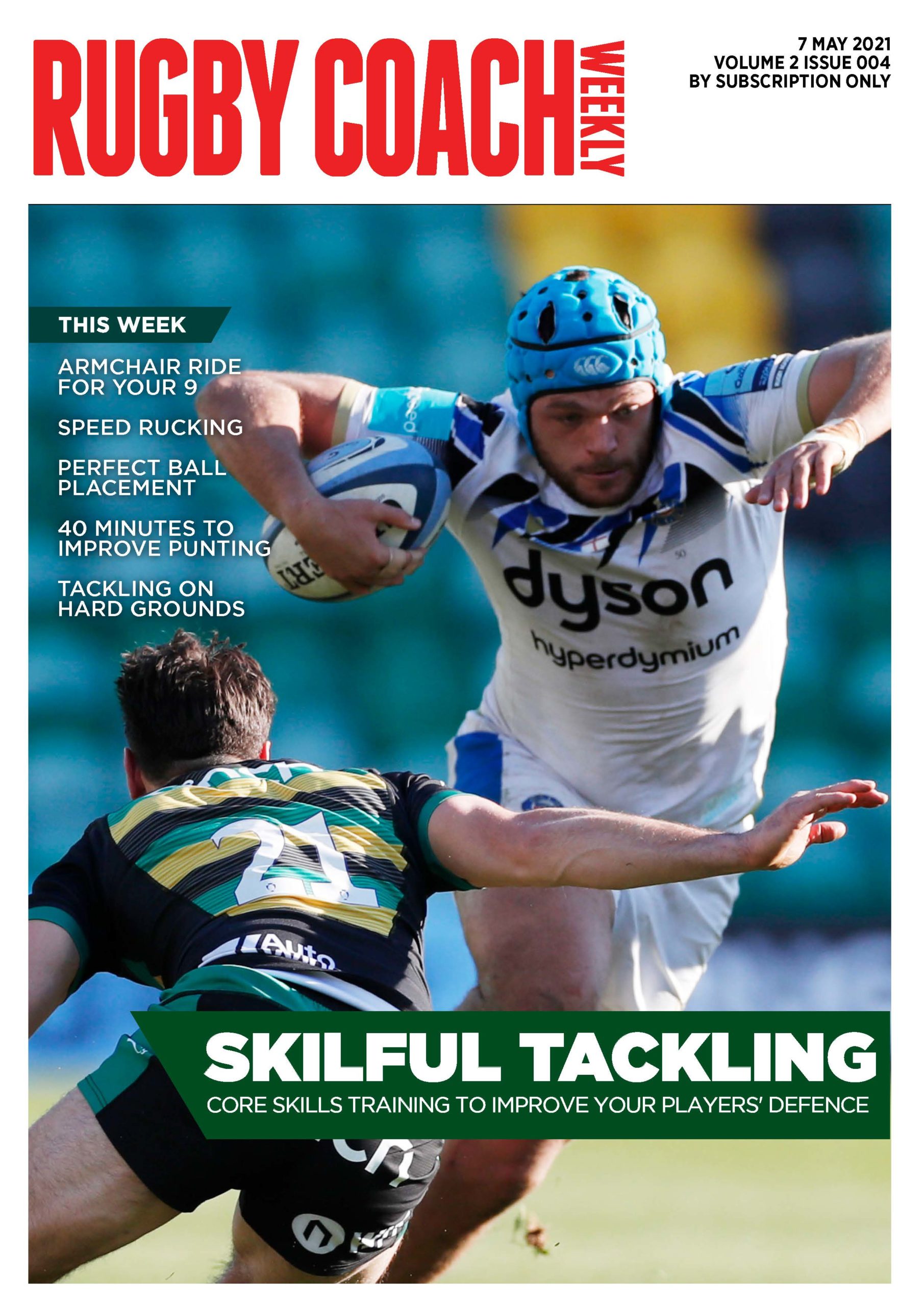
Be a more effective, more successful rugby coach
In a recent survey 89% of subscribers said Rugby Coach Weekly makes them more confident, 91% said Rugby Coach Weekly makes them a more effective coach and 93% said Rugby Coach Weekly makes them more inspired.
Get Weekly Inspiration
All the latest techniques and approaches


Rugby Coach Weekly offers proven and easy to use rugby drills, coaching sessions, practice plans, small-sided games, warm-ups, training tips and advice.
We've been at the cutting edge of rugby coaching since we launched in 2005, creating resources for the grassroots youth coach, following best practice from around the world and insights from the professional game.
