
 close
close


 LOGIN
LOGINRugby Coach Weekly is the largest digital resource for youth coaches, trusted by 15,000+ coaches, teachers and parents every month.
-
Coach with confidence
-
Improve your teams faster
-
Run great sessions with less effort
- Expert coaching advice from TOP Coaches
- Training sessions for players from U6 to U17+.
Defending the 2 v 1


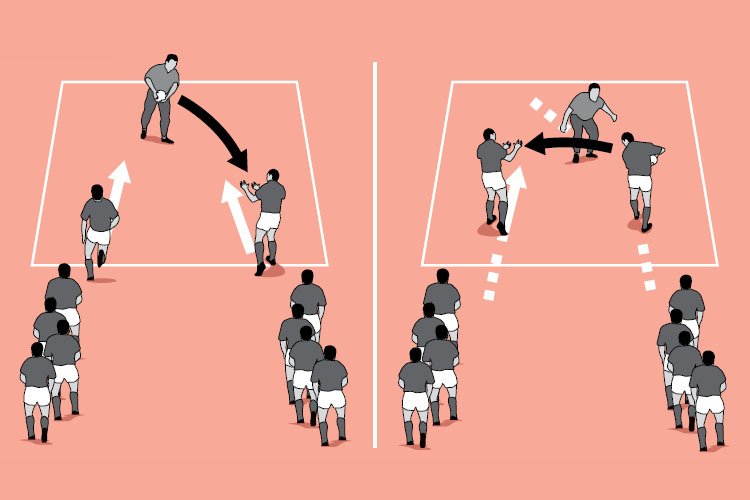
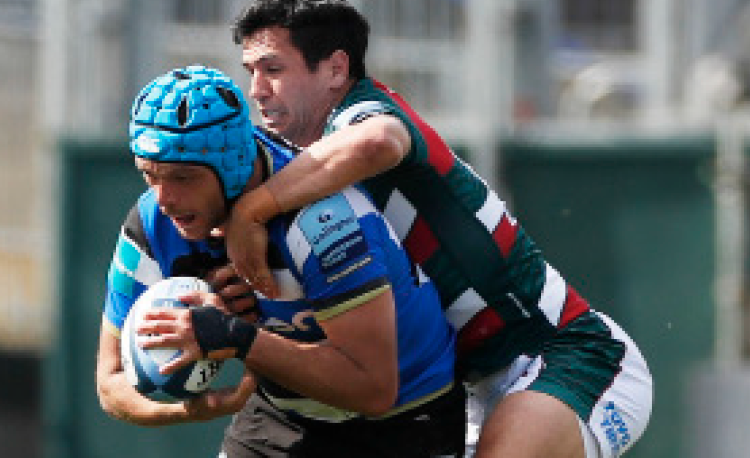
This session places more emphasis on the role of the defender than a standard 2 v 1 session, which tends to focus on the attackers. If the defender “cares” about stopping the 2 v 1, he can make it very difficult for the ball carrier to release the support player. This, in turn, ups the pressure on the 2 v 1, leading to better outcomes.
Warm up time: 7-10
Session time: 10-15
Development time: 10-15
Game time: 15-20
Warm down time: 7-10
What to think about
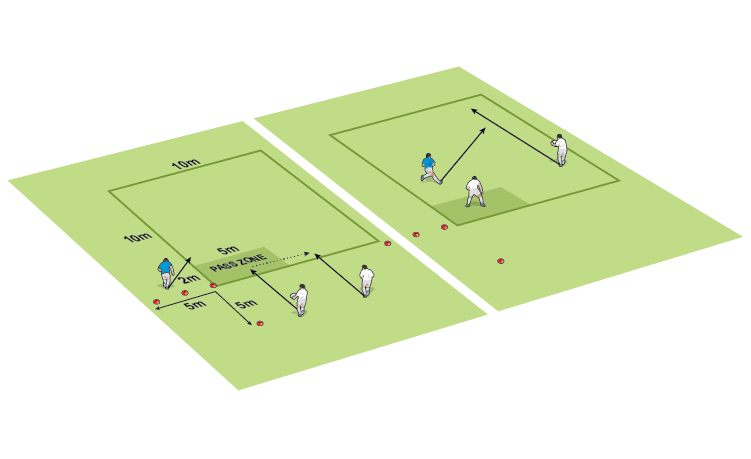
What is the role of the support player? First, he needs to hold his run, not creep up as the ball carrier moves forward. Second, because he has held his run, he must attack the space in front of him at pace. This will reduce the chances of the defender shifting over once the ball has been passed. What options has the defender got? He can go for the ball carrier quickly, rushing the ball carrier’s pass. He can get in between the two players and then close down the ball carrier. He could fake a run at the support player and then turn at the last moment to tackle the ball carrier.set-up
- Attackers: draw the defender by using changes of angle. Then pass to the player in space. Read the defender’s movements before passing and running.
- Defenders: don’t just go for the ball carrier, vary your approaches to the situation.
What you get your players to do
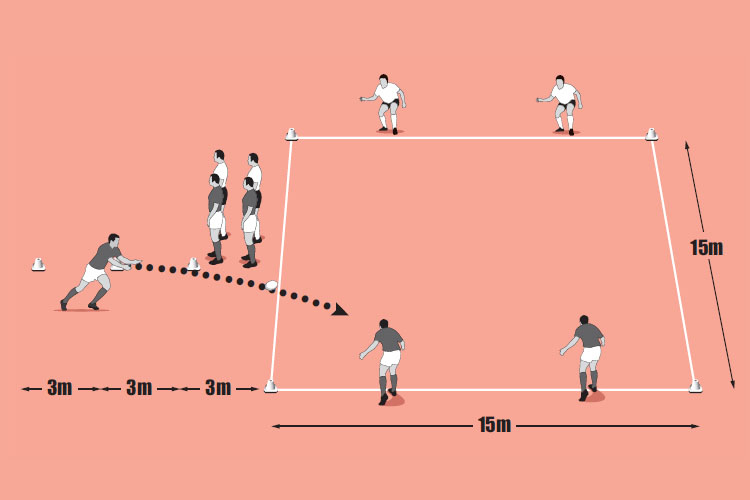
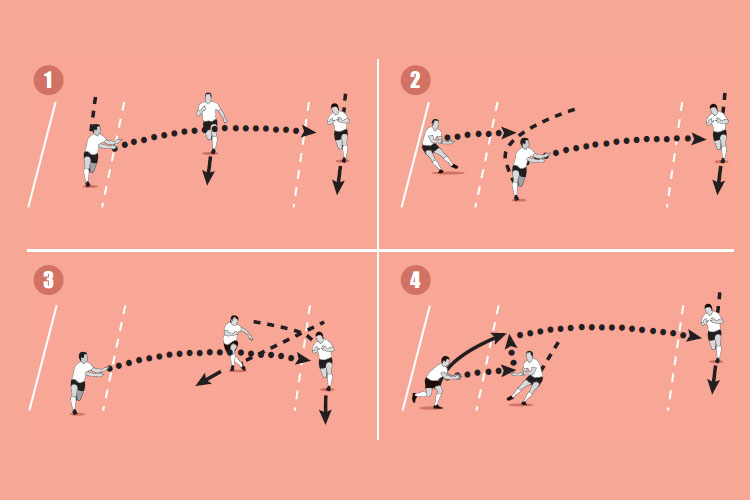
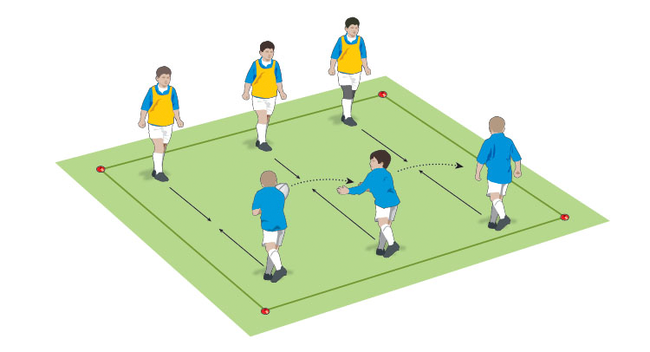
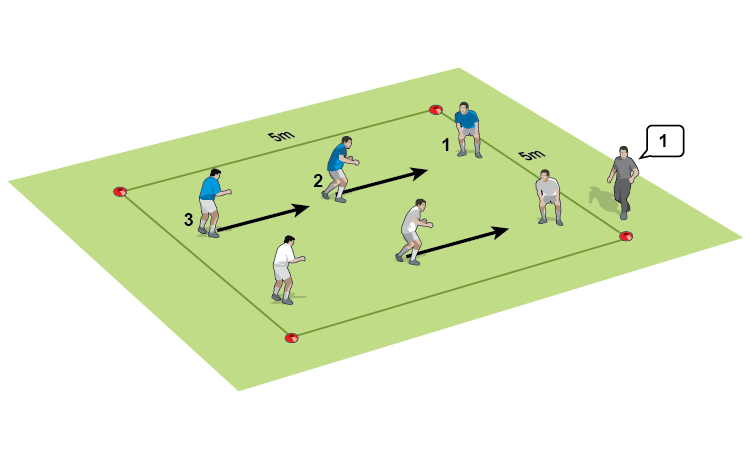
Split your team in groups of ten, with 5 pairs in each group. You stand in the middle of a box. The first pair line up opposite you and you throw a ball to either one of the players. They then have to beat you. You look to pressurise in different ways as they improve. For instance: hold your space, attack the ball carrier, fake and step in, shepherding. You work through each pair and then vary the types of pass they receive. For instance: on the ground, high balls, passes to the gut.Development
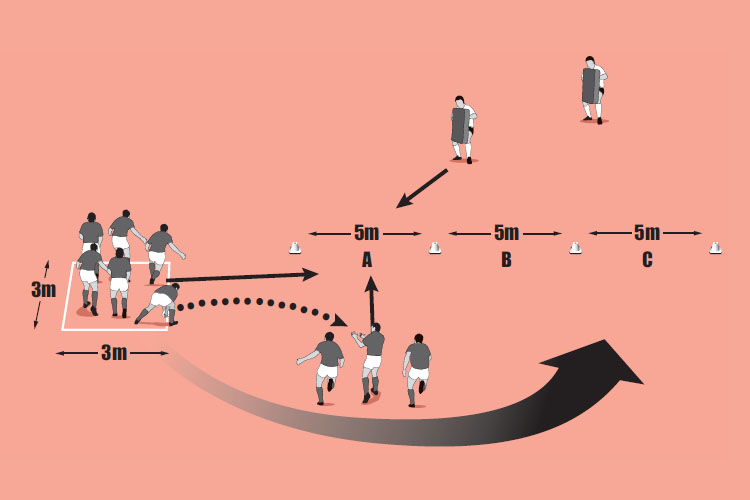
Continue the “Defending the 2 v 1” session above, but across a number of boxes each with a defender taking over your role. Make sure you have enough boxes to keep your players active in both attack and defence. Also make sure that every defender defends in a variety of ways. Work each of them for eight or so attacks, before swapping the players around. Then move on to full contact defending.Related Files

Game situation
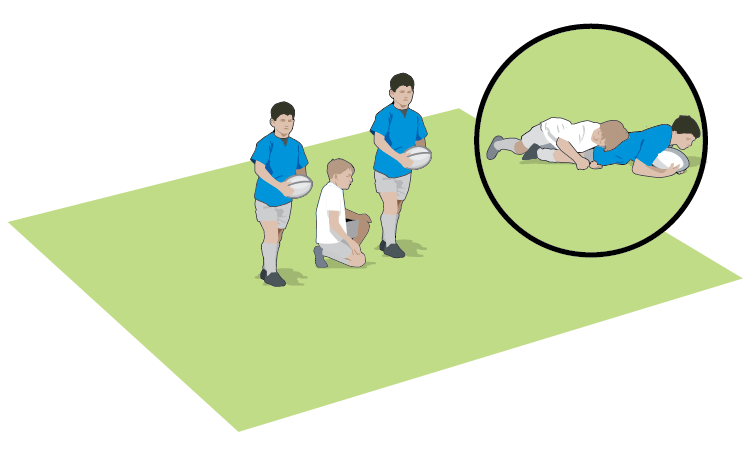
Set up 7 attackers v 5 defenders at each end of a 40m box. Play full contact if possible. Once a tackle has been made, the tackled player and tackler remain on the ground to form an offside line. The attacking scrum half then clears the ball away to his team but only after 5 seconds. The attack aim to create at least a 2 v 1 situation and score. The defenders have to force the attack to pass at the wrong time, or tackle the ball carrier.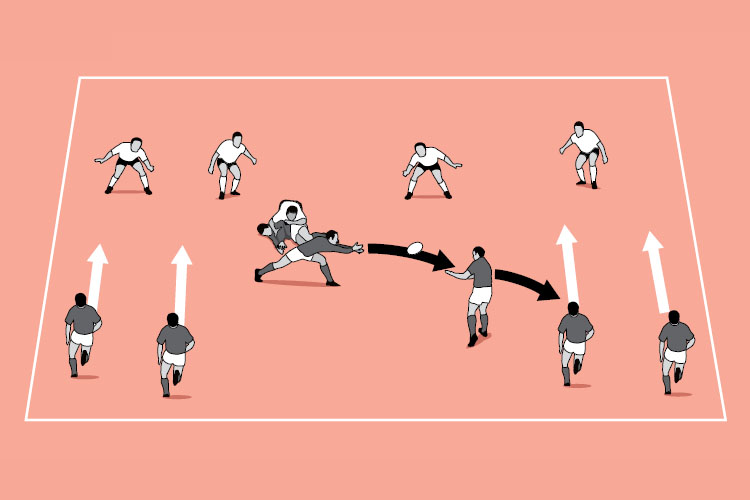
What to call out
- “Move the defender with footwork”
- “Don’t pass too late, and pass the ball firmly”
- “Defender: look at the passer, predict his likely actions, force a decision”

Dan Cottrell
Latest Issue

Subscribe Today
Subscribe Today
Newsletter Sign Up
Coaches Testimonials

Colin Shaw

Gary Lee Heavner
Subscribe Today
Latest Issue
Be a more effective, more successful rugby coach
In a recent survey 89% of subscribers said Rugby Coach Weekly makes them more confident, 91% said Rugby Coach Weekly makes them a more effective coach and 93% said Rugby Coach Weekly makes them more inspired.
Get Weekly Inspiration
All the latest techniques and approaches


Rugby Coach Weekly offers proven and easy to use rugby drills, coaching sessions, practice plans, small-sided games, warm-ups, training tips and advice.
We've been at the cutting edge of rugby coaching since we launched in 2005, creating resources for the grassroots youth coach, following best practice from around the world and insights from the professional game.
