
 close
close


 LOGIN
LOGINRugby Coach Weekly is the largest digital resource for youth coaches, trusted by 15,000+ coaches, teachers and parents every month.
-
Coach with confidence
-
Improve your teams faster
-
Run great sessions with less effort
- Expert coaching advice from TOP Coaches
- Training sessions for players from U6 to U17+.
Danish long ball


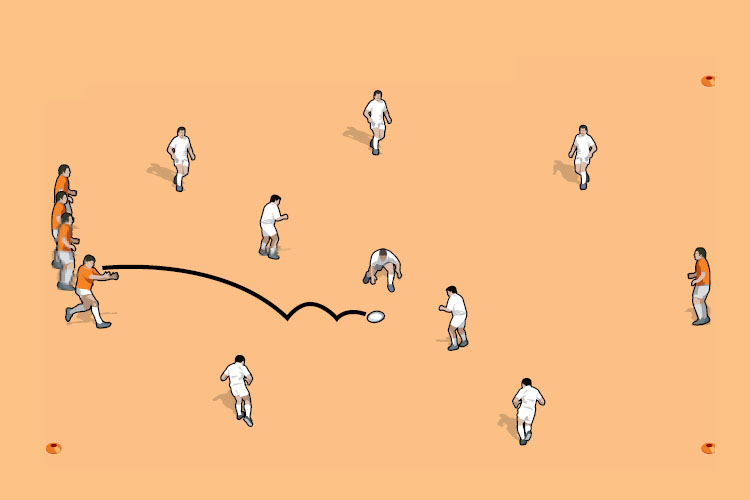
Help your players discover the power of passing and evasion under pressure with this game. “Danish long ball” can be used to trigger lots of skills exercises, with players returning to the game afterwards. For instance you could work on long passing, sidestepping or communication in between bouts of play.
Warm up time: 7-10
Session time: 20-25
Development time: 10-15
Game time: 10-15
Warm down time: 7-10
What to think about
Are the players using their vision to see where the ball is and then to avoid it? It seems obvious that the initial throw should be made in a direction away from where the runner will be going, however it’s important to emphasise this. Once the fielding team starts running and passing the ball encourage the runner to turn his head and watch the ball. Are the fielders working together to ensure the ball gets to a player close to the runner, for a better chance of hitting them? It is important that the fielders’ initial positions cover most of the area. This will lead to an early gathering of the ball. Ask the receiving fielder to signal by holding the hands up in the air.set-up
- Pass the ball into space and run to the far end of the square.
- Keep away from the ball.
- Use your agility and evasion skills to change direction and keep the ball away from you.
- As a fielder collect the ball quickly and pass it to a team mate closer to the runner.
What you get your players to do
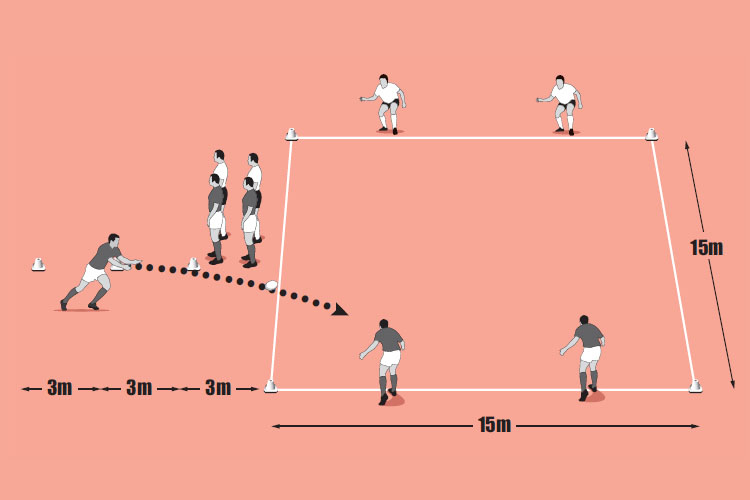
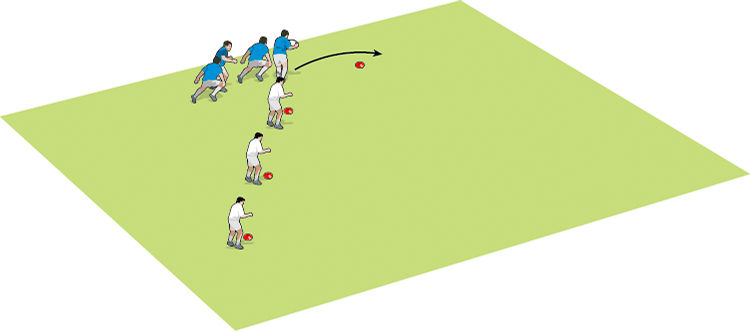
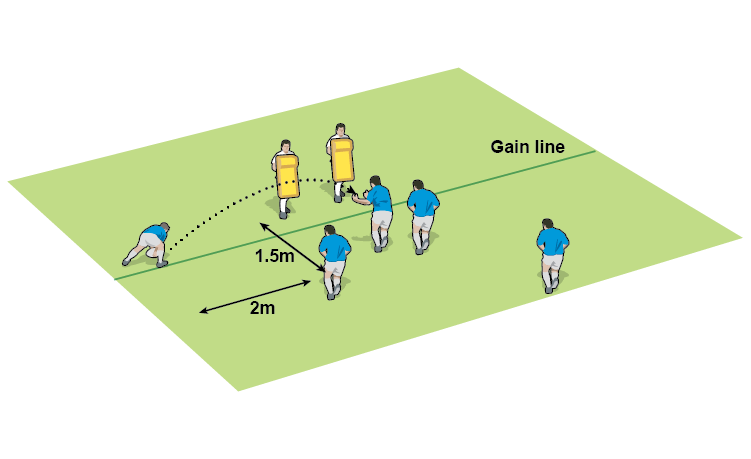
Split your squad into two teams of approximately eight to ten players. One team spreads out as fielders in a box. The other team line up at one side of the box, with the lead player holding a ball. He throws the ball so it lands somewhere in the square. At the same time he has to run to the far side. The fielders catch or gather the ball and try to hit the runner below the waist with the ball before he reaches the far side. Fielders can pass to each other or run five metres with the ball. The runner is safe if he reaches the far side. Now another player from the runner’s team throws the ball into the area and the first runner must make his way back to his team, with the fielding team now able to hit either the first or second runners. When three runners are caught the teams change over. Each runner who gets back to his team gets one point.Development
- Play 3 v 1 passing and evasion games in small boxes to remind players of the key skills.
- Change the shape of the area to an hour glass shape – wide then narrow, then wide.
Related Files
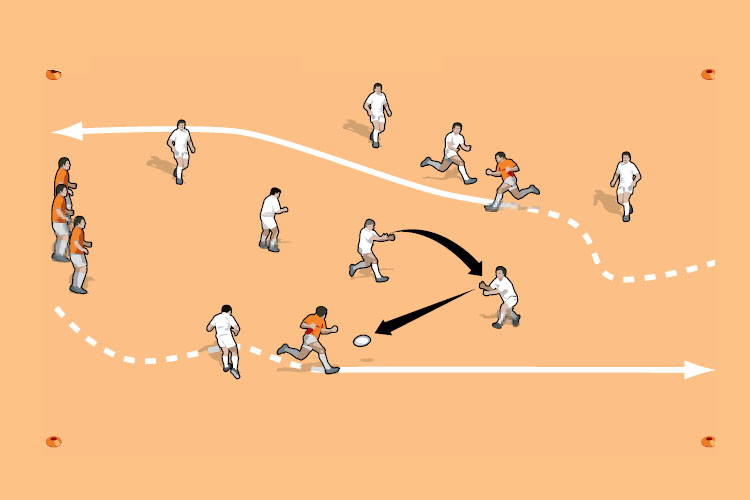
Game situation
Split your players into two teams of eight to ten. Each team is then split into two groups. Players can stand anywhere they like. You say which end each team is attacking, at the same time, you turn your back and call a group name for each team (like red team group 2, black team group 1). You then throw the ball into the area. The players not involved exit the playing area and each team tries to score a try using normal rugby rules (or touch tackles).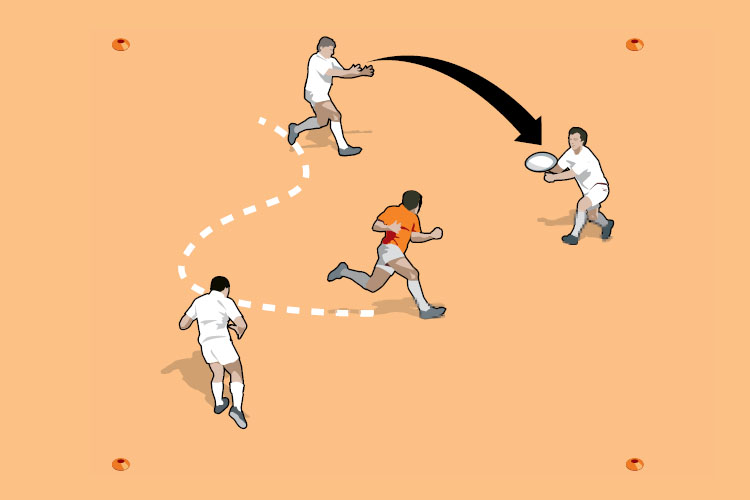
What to call out
- “Look for the fielders and plan your evasion”
- “Scan and see what’s in front of you”

Dan Cottrell
Latest Issue

Subscribe Today
Subscribe Today
Newsletter Sign Up
Coaches Testimonials

Colin Shaw

Gary Lee Heavner
Subscribe Today
Latest Issue
Be a more effective, more successful rugby coach
In a recent survey 89% of subscribers said Rugby Coach Weekly makes them more confident, 91% said Rugby Coach Weekly makes them a more effective coach and 93% said Rugby Coach Weekly makes them more inspired.
Get Weekly Inspiration
All the latest techniques and approaches


Rugby Coach Weekly offers proven and easy to use rugby drills, coaching sessions, practice plans, small-sided games, warm-ups, training tips and advice.
We've been at the cutting edge of rugby coaching since we launched in 2005, creating resources for the grassroots youth coach, following best practice from around the world and insights from the professional game.
