
 close
close


 LOGIN
LOGINRugby Coach Weekly is the largest digital resource for youth coaches, trusted by 15,000+ coaches, teachers and parents every month.
-
Coach with confidence
-
Improve your teams faster
-
Run great sessions with less effort
- Expert coaching advice from TOP Coaches
- Training sessions for players from U6 to U17+.
Daisy cutters


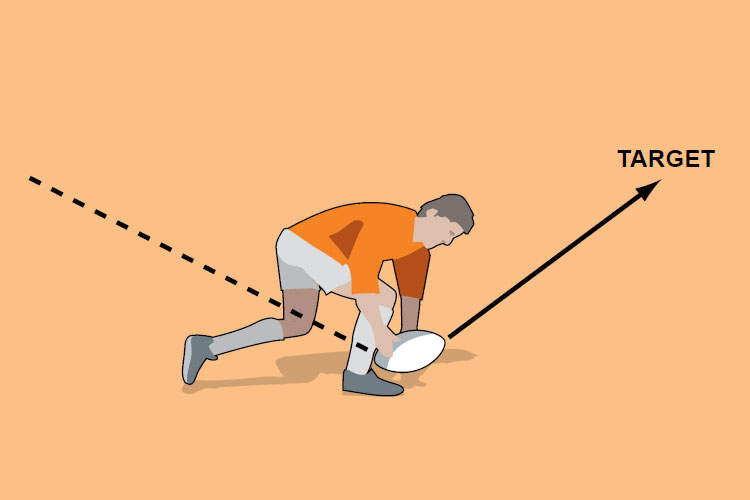
Having to receive a low pass at knee level or below (a “daisy cutter” pass) happens no matter how much your team practises. Help your players prepare to cope with this type of pass so they never drop the ball or knock on and keep the attack moving. This is achieved by turning a poor pass into a good pass in one smooth movement.
Warm up time: 7-10
Session time: 10-15
Development time: 10-15
Game time: 10-15
Warm down time: 7-10
What to think about
Knowing that the ball will be delivered low obviously helps the receiver prepare physically and mentally. It takes away the unknown element from the session. Ensure that you develop the session by mixing up the type of passes the receiver has to deal with, as this will be far more realistic to the game. Watch to see if, in dealing with the low pass, your players’ running and balance is affected. If so, spend time with individuals and work on their footwork when bending over to collect the ball.set-up
- Always keep your hands up as a target, even though you know the ball will be passed low to you.
- As the ball is passed, try to keep your movement smooth while reaching down and catching the ball.
- Take the catch and pass in one movement.
What you get your players to do
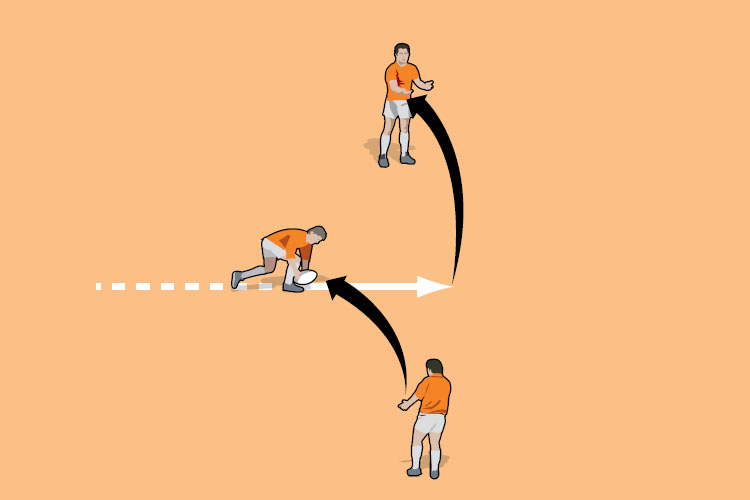
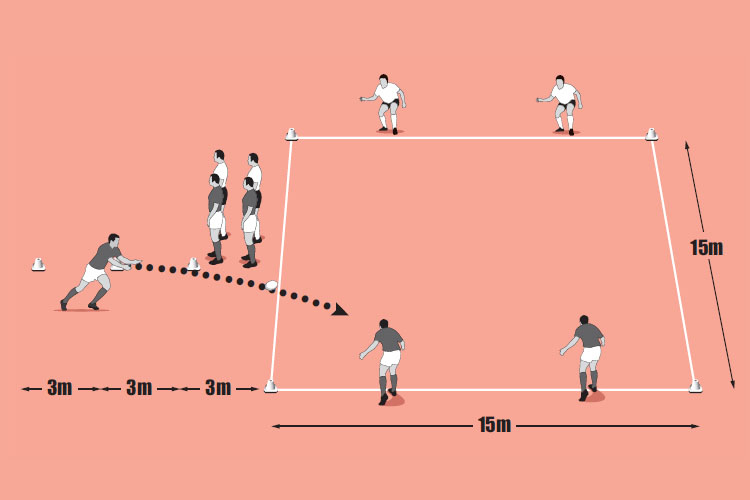
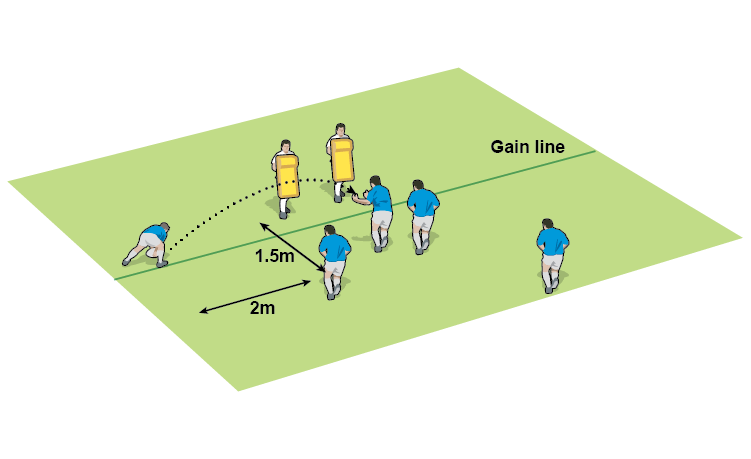
Split into groups of three with two players feeding and one catching and passing. Stand both players feeding the ball on either side of the box. Start the third player at one end running through the middle of the box. As he gets close to the centre, have the first feeder pass the ball low to the catcher’s knee. He should catch and pass immediately to the second feeder, ensuring he turns the low pass into a good pass. Have the passer run to the end of the box, turn and repeat the exercise six times.Development
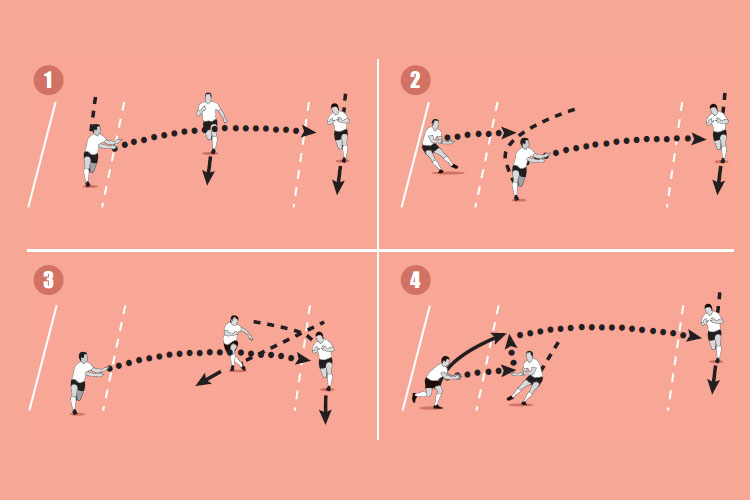
- Ask the feeders to vary the height of pass they give from good to low. This improves the catcher’s ability to adapt to the unpredictable pass.
- Vary the length of pass the catcher has to give by moving the feeders further back.
- Add a second runner so the player catching the low pass has to pass to a moving target rather than a static one.
Related Files
Game situation
Split your squad into two teams of six, with two nominated players in each team wearing a different coloured bib or strip. The nominated players are part of the team but can only give low passes. Start with touch rugby before moving on to contact, with all restarts a tap and pass. If the nominated player accidentally gives a good pass, the ball is turned over to the other team.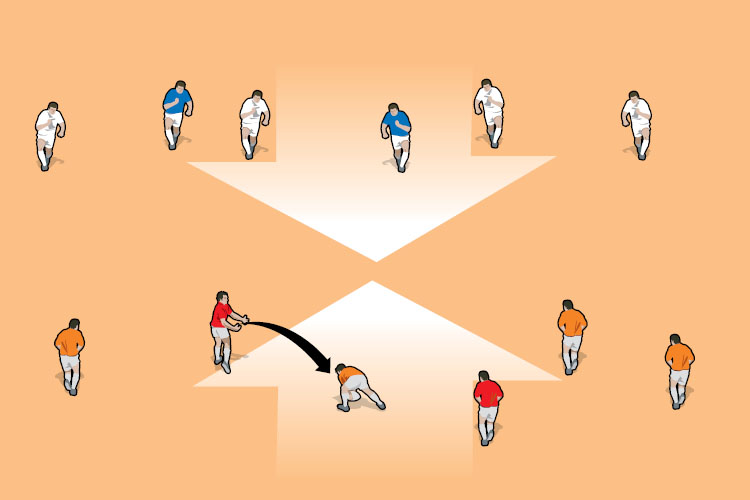
What to call out
- “Hands up as a target”
- “Watch the ball as it is fed to you”
- “Bend and catch, keep soft hands”
- “Keep your running rhythm”
- “Flick the ball away to the receiver”

Dan Cottrell

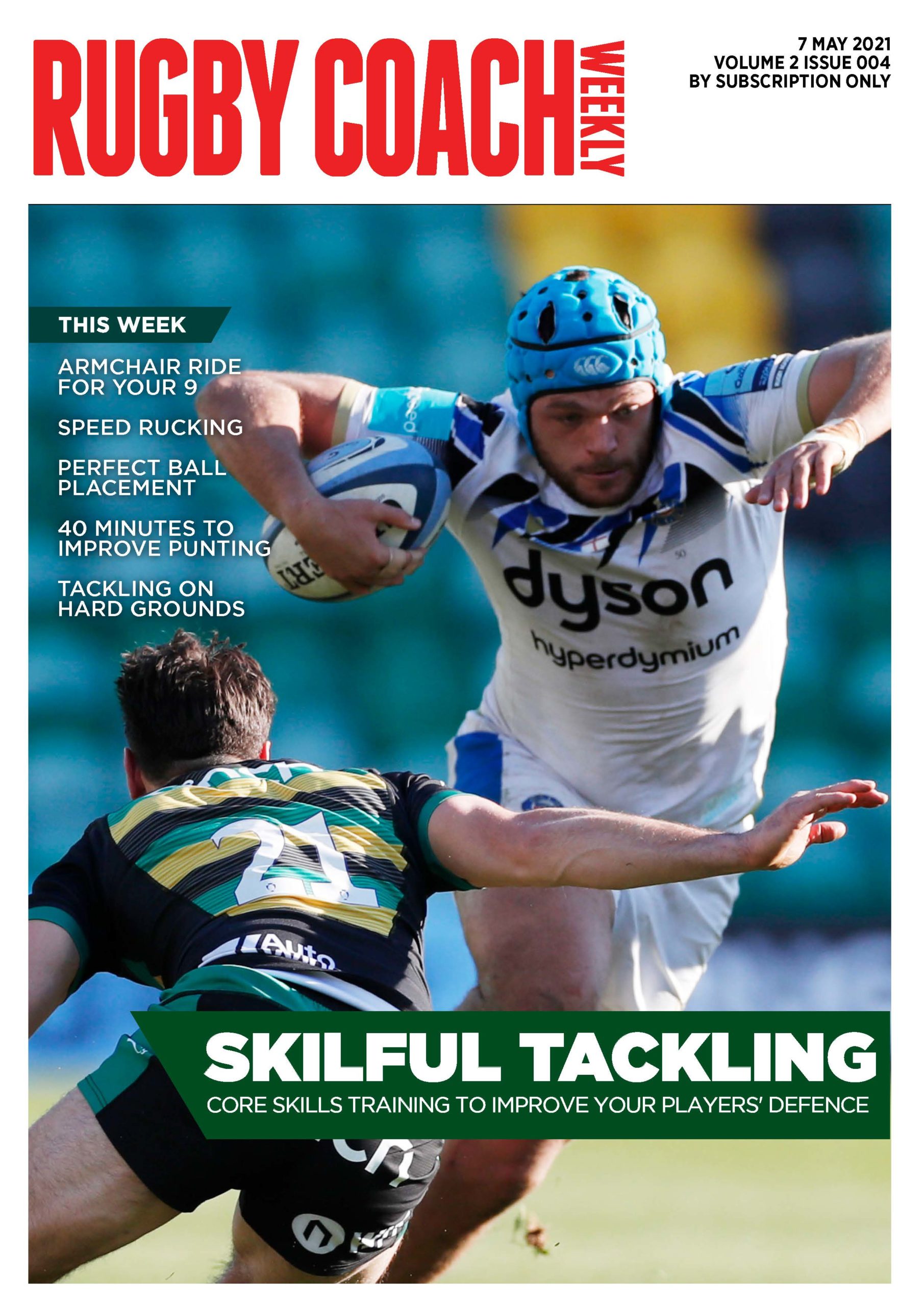
Latest Issue

Subscribe Today
Subscribe Today
Newsletter Sign Up

Coaches Testimonials

Colin Shaw

Gary Lee Heavner
Subscribe Today
Latest Issue
Be a more effective, more successful rugby coach
In a recent survey 89% of subscribers said Rugby Coach Weekly makes them more confident, 91% said Rugby Coach Weekly makes them a more effective coach and 93% said Rugby Coach Weekly makes them more inspired.
Get Weekly Inspiration
All the latest techniques and approaches


Rugby Coach Weekly offers proven and easy to use rugby drills, coaching sessions, practice plans, small-sided games, warm-ups, training tips and advice.
We've been at the cutting edge of rugby coaching since we launched in 2005, creating resources for the grassroots youth coach, following best practice from around the world and insights from the professional game.
