
 close
close


 LOGIN
LOGINRugby Coach Weekly is the largest digital resource for youth coaches, trusted by 15,000+ coaches, teachers and parents every month.
-
Coach with confidence
-
Improve your teams faster
-
Run great sessions with less effort
- Expert coaching advice from TOP Coaches
- Training sessions for players from U6 to U17+.
Counter ruck


Disrupt teams that do not put enough players into the ruck by counter rucking at the right moments. The first skill is to know how to counter ruck, then when to do it. This session works on developing the technical and decision-making tools to slow down or steal opposition ball.
Warm up time: 5-7
Session time: 8-10
Development time: 10-15
Game time: 15-20
Warm down time: 5-8
What to think about
Counter rucking should only be done by two players at most. If you commit too many resources, you open up gaps elsewhere, skewing the risk and reward balance in favour of the opposition. Should the counter ruck be effective, your players can flood through to steal the ball.set-up
- Identify whether the opposition is weak (lazy or poor body positions) and then attack over the ball.
- Drive over the ball with short, powerful steps, wrestling the opposition to unbalance them if not driving them back.
What you get your players to do
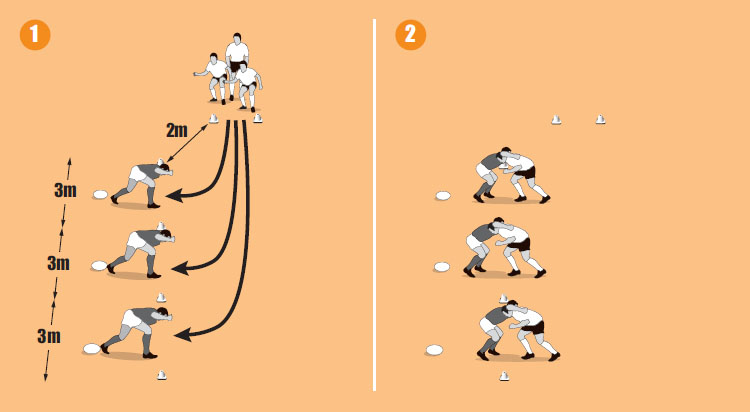
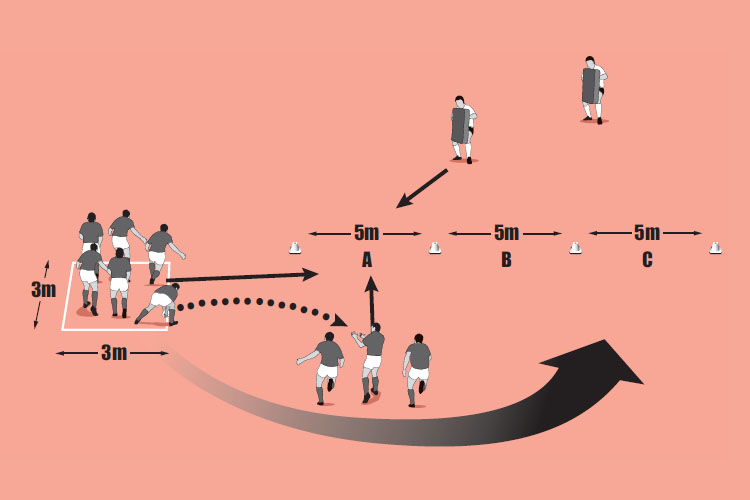
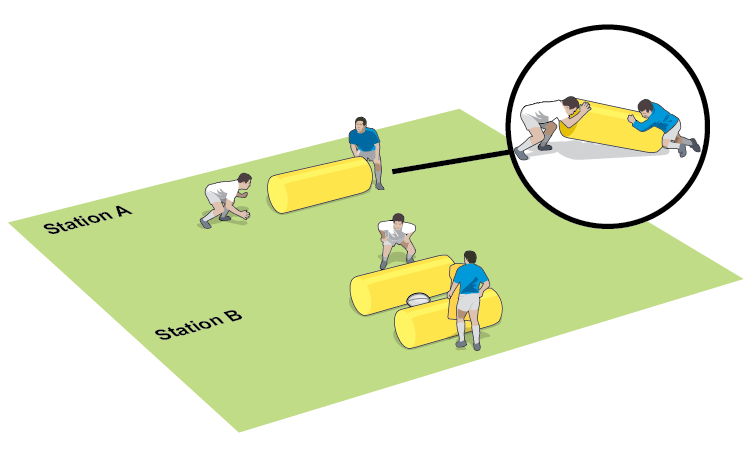
Put three attackers one step in front of a ball, 3m apart. Put three counter ruckers 2m away from the line of attackers. The counter ruckers run around to clear each attacker (see picture 1:1). Counter ruckers should work on getting into a strong position to drive attackers either back over the ball or away from it (see picture 1:2). After five seconds of counter rucking, stop and swap attackers and defenders. Keep a tally of how many each group “wins”.Development
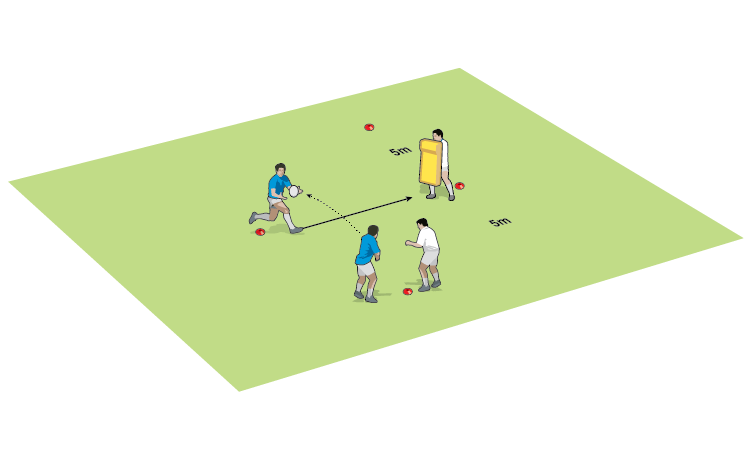
Have a 1v1 as before along with a 2v1 followed by another 2v1. Players will need to work out the best match-ups to win the rucks as quickly as they can. Time them, swap groups and work out the winners. Give feedback on the best techniques to use.Related Files
Game situation
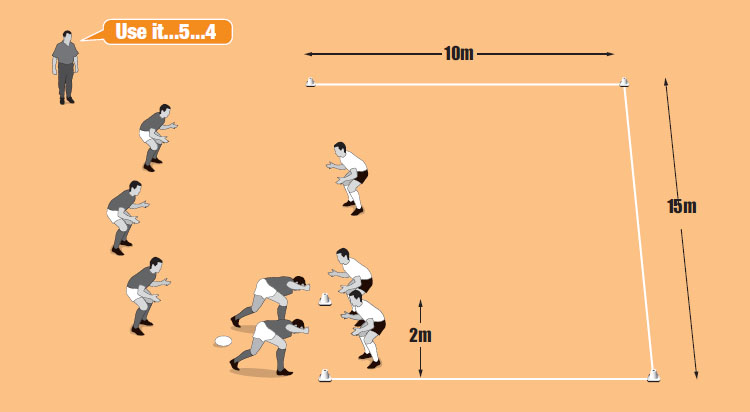
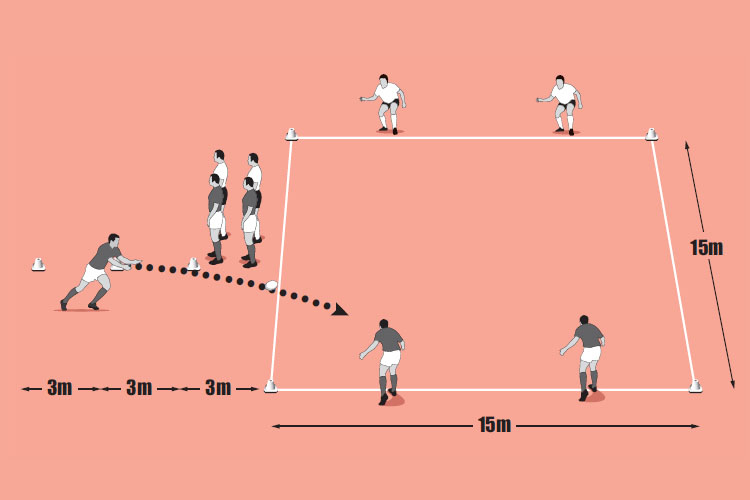
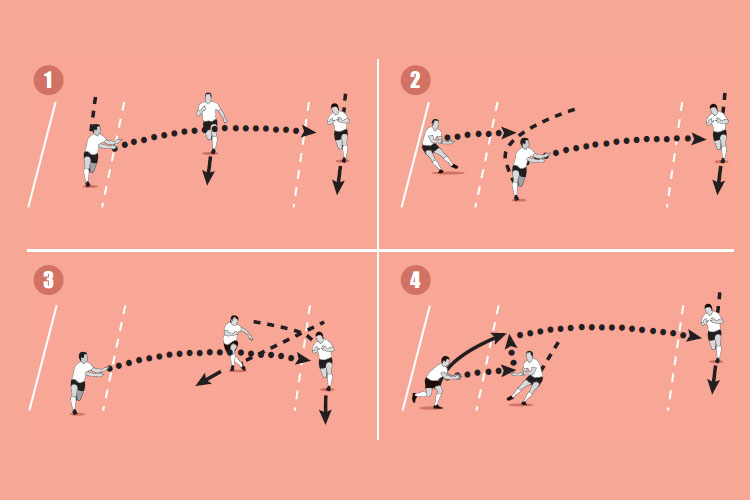
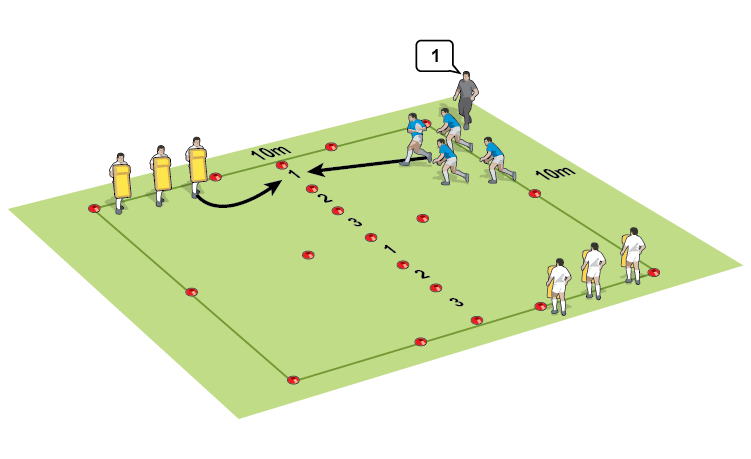
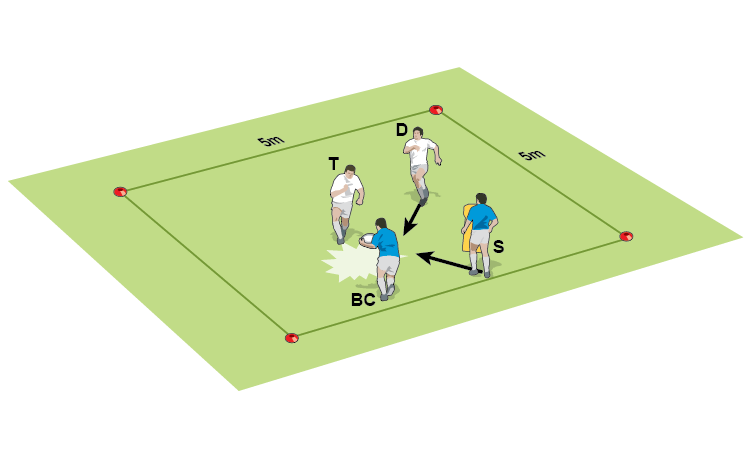
Put three defenders (the counter-rucking group) inside the 15m x 10m box with two of them just outside a 2m gate. Have two attackers just over the ball, and three spread out behind (see picture 2). When you start counting down (as if the ball is now available at the back of a ruck), the counter attackers need to work out whether to try to disrupt the ball or spread out to defend (see picture 3). Play full contact. Develop by nominating which attackers have to go over the ball.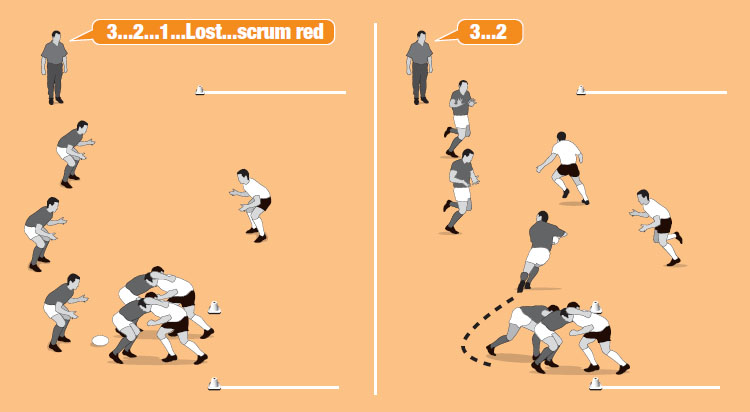
What to call out
“Set yourself to counter ruck, don’t just fly in” “Get shoulders under their shoulders if you can”
Dan Cottrell

Latest Issue

Subscribe Today
Subscribe Today
Newsletter Sign Up
Coaches Testimonials

Colin Shaw

Gary Lee Heavner
Subscribe Today
Latest Issue
Be a more effective, more successful rugby coach
In a recent survey 89% of subscribers said Rugby Coach Weekly makes them more confident, 91% said Rugby Coach Weekly makes them a more effective coach and 93% said Rugby Coach Weekly makes them more inspired.
Get Weekly Inspiration
All the latest techniques and approaches


Rugby Coach Weekly offers proven and easy to use rugby drills, coaching sessions, practice plans, small-sided games, warm-ups, training tips and advice.
We've been at the cutting edge of rugby coaching since we launched in 2005, creating resources for the grassroots youth coach, following best practice from around the world and insights from the professional game.
