
 close
close


 LOGIN
LOGINRugby Coach Weekly is the largest digital resource for youth coaches, trusted by 15,000+ coaches, teachers and parents every month.
-
Coach with confidence
-
Improve your teams faster
-
Run great sessions with less effort
- Expert coaching advice from TOP Coaches
- Training sessions for players from U6 to U17+.
Conquer the maul


You cannot bring down a maul once it has started so defenders have to hold it or break it up. Holding means driving hard and low, breaking means splitting the maul and getting through gaps. Good maul breakers will exploit any small seam to take it apart.
Warm up time: 5
Session time: 6-9
Development time: 6-9
Game time: 12-20
Warm down time: 7
What to think about
Players must join the maul from behind the back feet. If the maul is being held, then there are few opportunities to splinter the maul but the attacking team will be forced to use the ball or they will lose it, in accordance with the laws. However, if not held, the more dangerous, dynamic maul often exposes attackers. Ideally, the maul breaker drives this attacker out. He can only do this by getting inside him and driving, not by pulling from the outside. Momentum is key. If the breaker can do it as he is still moving forward, he should have a better chance of unbalancing the mauling player.set-up
- Look for gaps in the maul and drive through and outwards.
- Keep the legs driving through contact. If you cannot split the maul, you will force the opposition to commit more players.
What you get your players to do
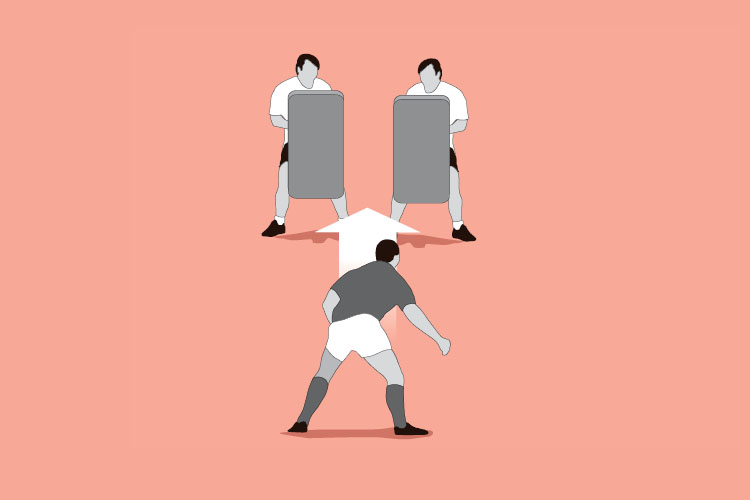
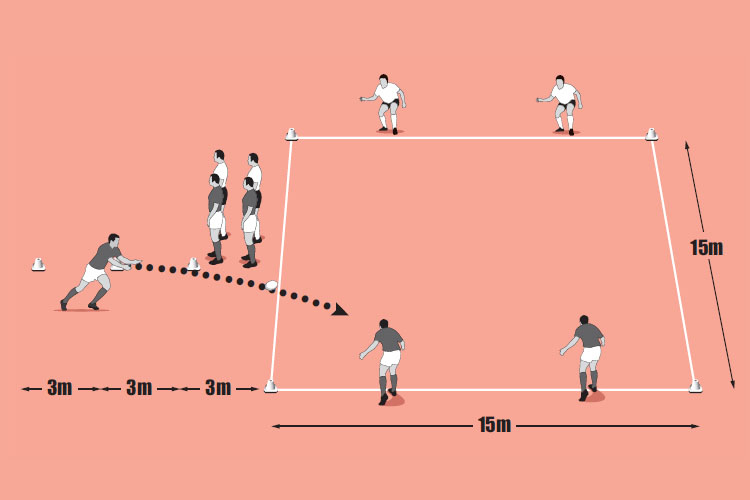
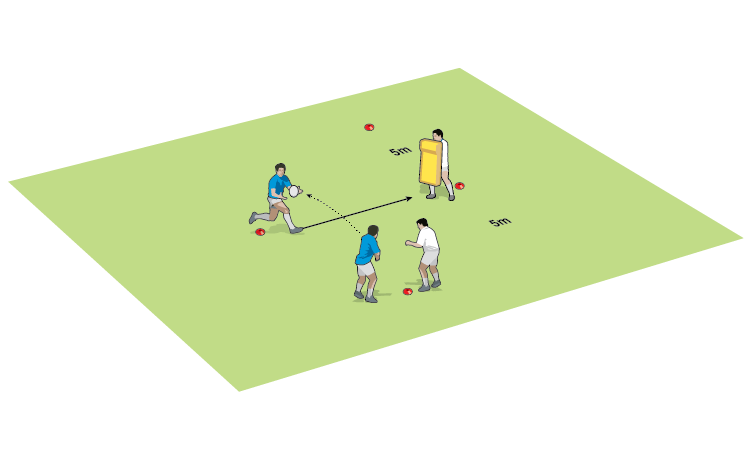
Stand two ruck pad holders slightly apart. A defender drives between them and then drives one of the ruck pad holders outwards for at least 2m. Repeat, but put the ruck pad holders closer together. Finally repeat, but have another player behind the ruck pad holders binding and driving the ruck pad holders together.Development
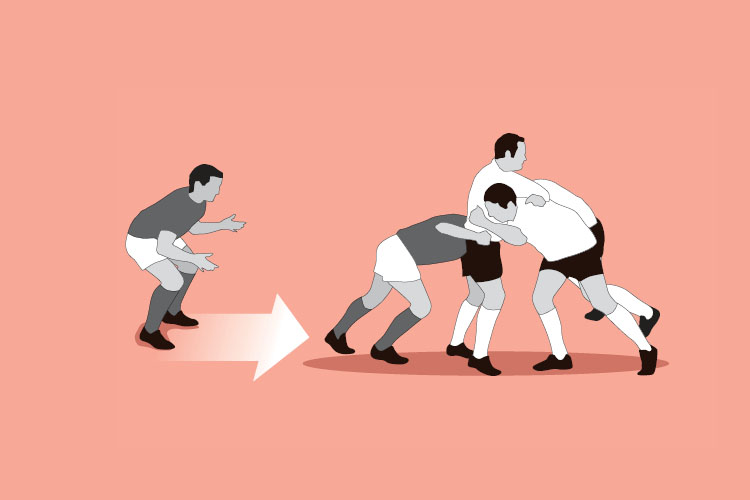
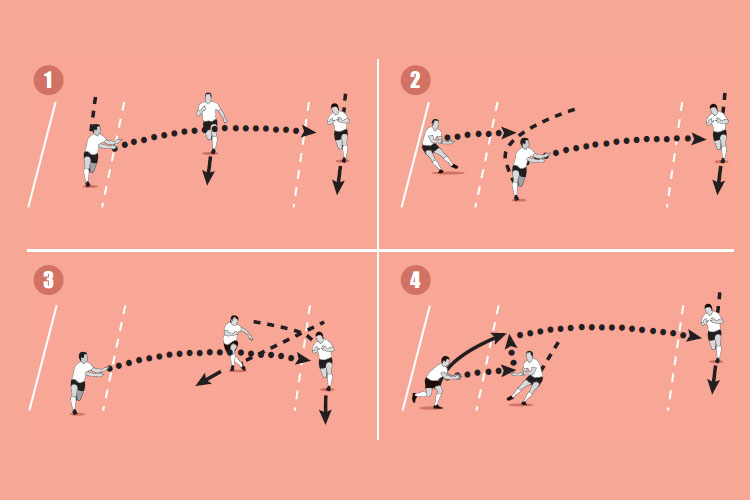
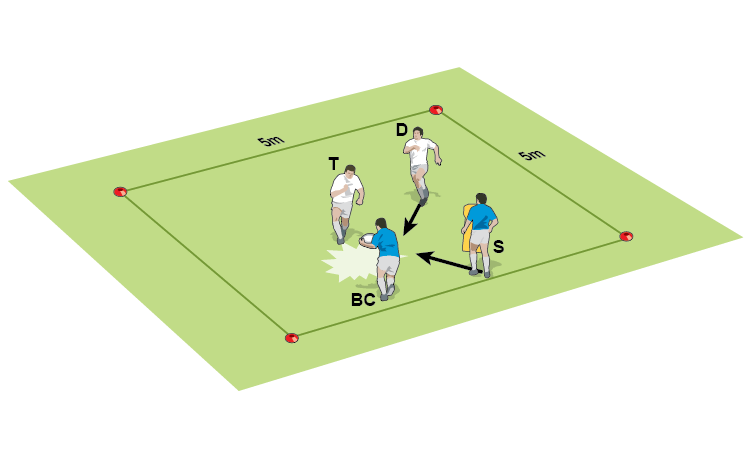
With at least three attackers and one defender, set up a maul about 5m from a 5m wide try line. Have another defender try to break the maul before it goes over the try line. The narrow line allows some lateral movement for the maul, but not much. Develop by adding more attackers and defenders at the start.Related Files
Game situation
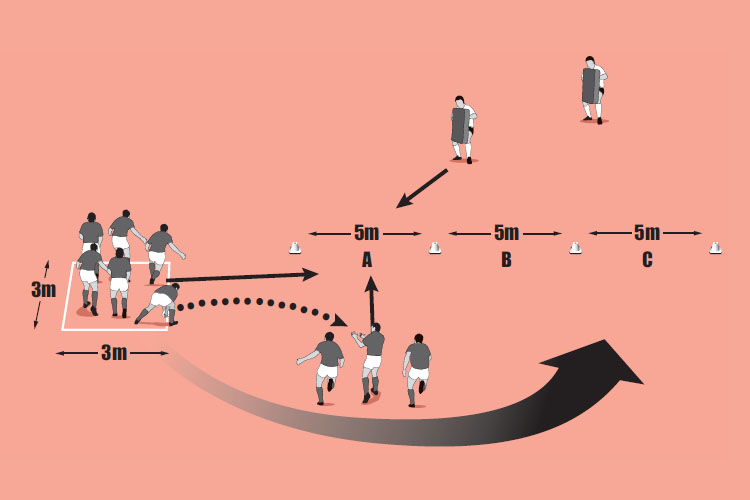
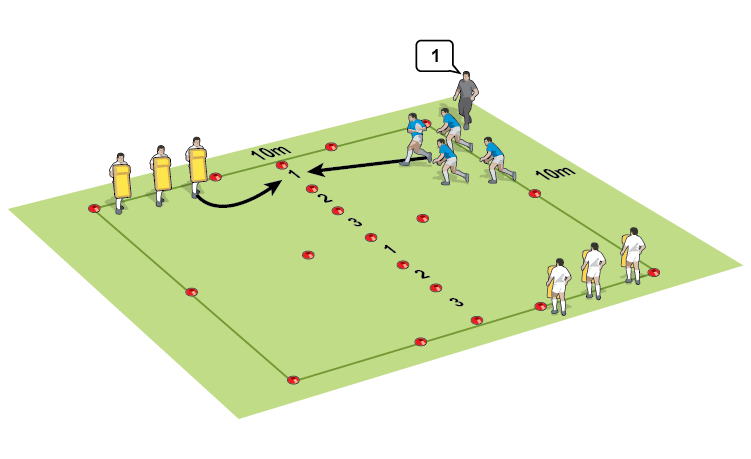
Set up three defenders as in the bottom picture. Have at least five attackers walk down the box. They can only move the ball within a maul. As they enter each section, the lone defender can move forward to stop or break the maul. As the maul moves to the next section, the next defender joins in and so on. Use normal maul rules. Add in more defenders if the attack finds it too easy.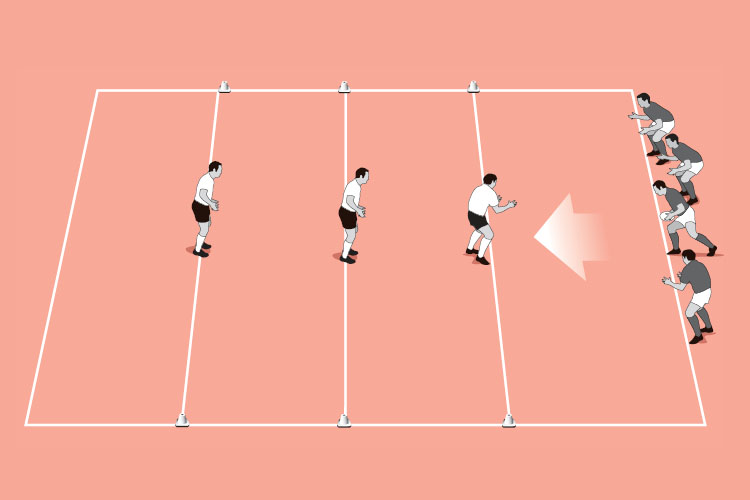
What to call out
- “Keep the hips facing forwards, but twist and turn the shoulders to squeeze through gaps”
- “Aim to get lower than the opposing player’s shoulders”

Dan Cottrell

Latest Issue

Subscribe Today
Subscribe Today
Newsletter Sign Up

Coaches Testimonials

Colin Shaw

Gary Lee Heavner
Subscribe Today
Latest Issue
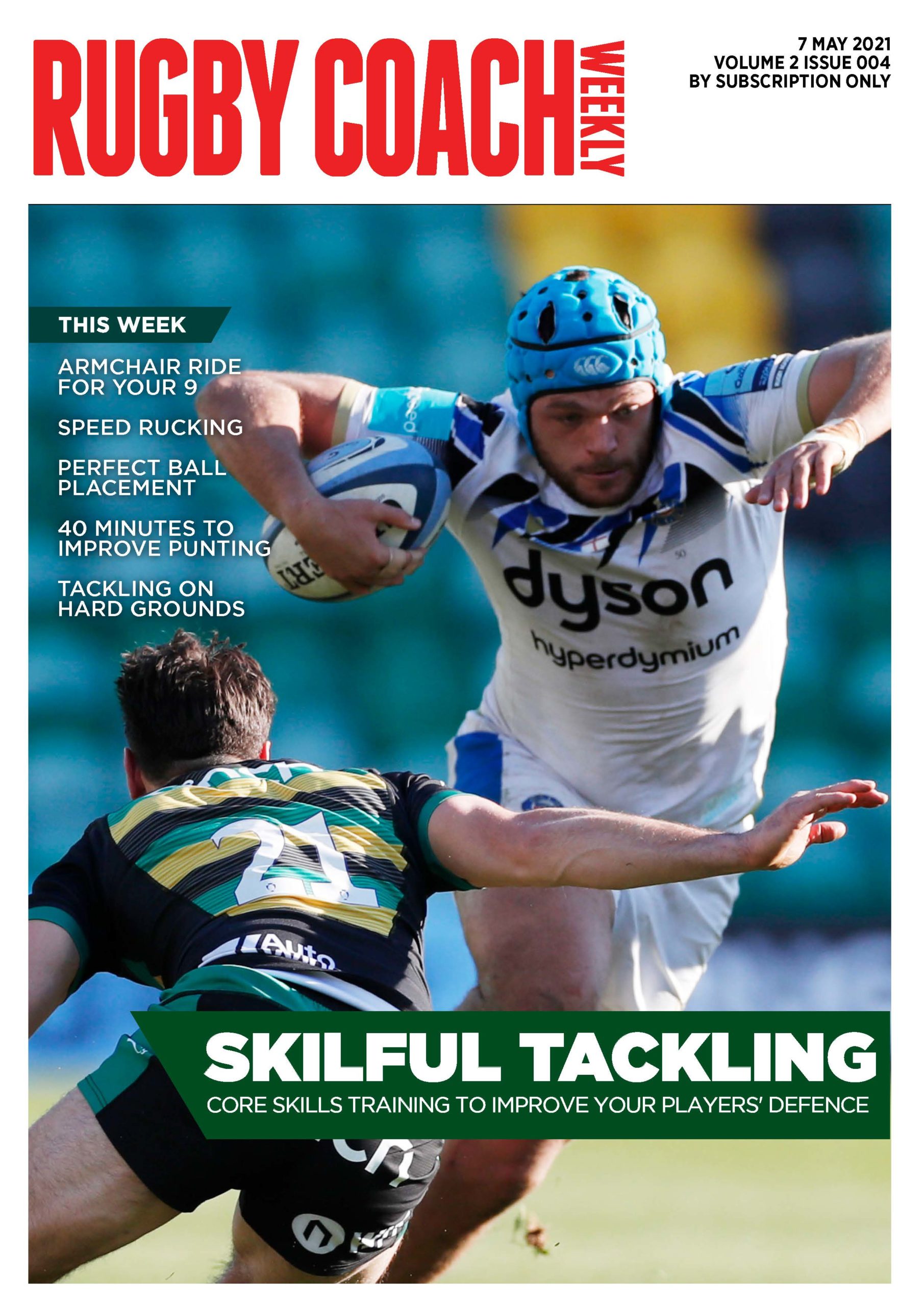
Be a more effective, more successful rugby coach
In a recent survey 89% of subscribers said Rugby Coach Weekly makes them more confident, 91% said Rugby Coach Weekly makes them a more effective coach and 93% said Rugby Coach Weekly makes them more inspired.
Get Weekly Inspiration
All the latest techniques and approaches


Rugby Coach Weekly offers proven and easy to use rugby drills, coaching sessions, practice plans, small-sided games, warm-ups, training tips and advice.
We've been at the cutting edge of rugby coaching since we launched in 2005, creating resources for the grassroots youth coach, following best practice from around the world and insights from the professional game.
