
 close
close


 LOGIN
LOGINCircle alignment
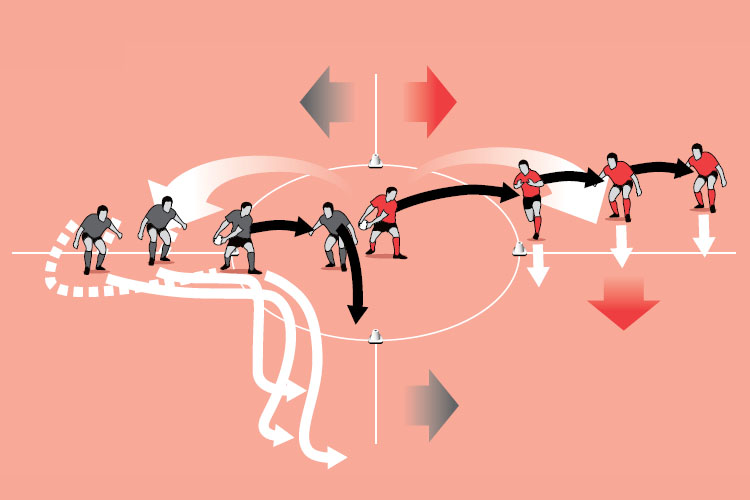
One of the current focuses for top rugby teams is quick repositioning in attacking play. This session works on putting backs and forwards into the correct position fast, often when they have started in front of the ball. Players need to anticipate where they need to be to make a run or collect a pass.
Warm up time: 5-7
Session time: 8-10
Development time: 8-10
Game time: 15-20
Warm down time: 5-7
What to think about
Realignment is toughest when the ball carriers are not moving forward. Attackers have to hold their runs or even drop back to make it easier to come on to the ball. Since there are no hard and fast rules on the ideal depth players should be at, the games in this session will help players discover what works best for them. You need to identify players who are receiving the ball while standing still, or not passing to players who are in better positions. These are two crucial symptoms of poor alignment.set-up
- Make adjustments to your position to be ready to attack the ball.
- Look ahead as well as inside towards the ball.
- Attack the ball with conviction.
What you get your players to do
Set up a circle with four lines marked out from its circumference at north, south, east and west positions. Split the players into groups of three with a feeder in the middle. Tell each group which line to attack. Players then come out of the circle and attack the line at pace starting with a pass from the feeder inside the circle. The ball is passed to the player at the end and all the players return to the circle before realigning to attack the next line. Make sure the passes are made before the end player reaches the line. At some stage the players will be attacking the same line and will have to avoid each other.Be a more effective, more successful youth rugby coach
- Win more games, without sacrificing the crucial element of fun
- Develop every player, regardless of vast differences in ability
- Run a respected, professional programme - even with a full-time job and limited time
Subscribe for full access
Or register and unlock 2 free articles,
receive our weekly newsletter, and
get a FREE coaching e-book.
Or if you are already a subscriber login for full access.

Dan Cottrell
Latest Issue

Subscribe Today
Subscribe Today
Newsletter Sign Up
Coaches Testimonials

Colin Shaw

Gary Lee Heavner
Subscribe Today
Latest Issue
Be a more effective, more successful rugby coach
In a recent survey 89% of subscribers said Rugby Coach Weekly makes them more confident, 91% said Rugby Coach Weekly makes them a more effective coach and 93% said Rugby Coach Weekly makes them more inspired.
Get Weekly Inspiration
All the latest techniques and approaches


Rugby Coach Weekly offers proven and easy to use rugby drills, coaching sessions, practice plans, small-sided games, warm-ups, training tips and advice.
We've been at the cutting edge of rugby coaching since we launched in 2005, creating resources for the grassroots youth coach, following best practice from around the world and insights from the professional game.
