
 close
close


 LOGIN
LOGINRugby Coach Weekly is the largest digital resource for youth coaches, trusted by 15,000+ coaches, teachers and parents every month.
-
Coach with confidence
-
Improve your teams faster
-
Run great sessions with less effort
- Expert coaching advice from TOP Coaches
- Training sessions for players from U6 to U17+.
Chipping over the midfield


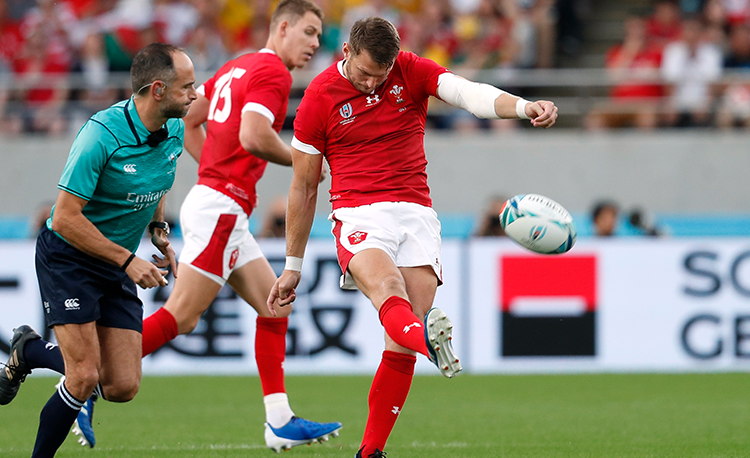
Against a rush defence, the chip kick is an important weapon. It requires co-ordination from the kicker and the chaser. The kicker needs to take into account the speed of the chaser for the angle and height of his chip kick.
Warm up time: 5
Session time: 5-8
Development time: 6-9
Game time: 15-20
Warm down time: 7
What to think about
Unlike a winger chipping his opposite number, the chip kicker is not intending to chase his own kick. Instead, he must disguise his intentions by running first before slowing down to kick. It is a set move so the chasers should know when and where to make their runs. Try kicking against the direction of play. You can wrong-foot a defensive line that is sliding across the field in line with the angle of your attack. Kick the other way – to a blindside winger for example – and you can catch the defence by surprise.set-up
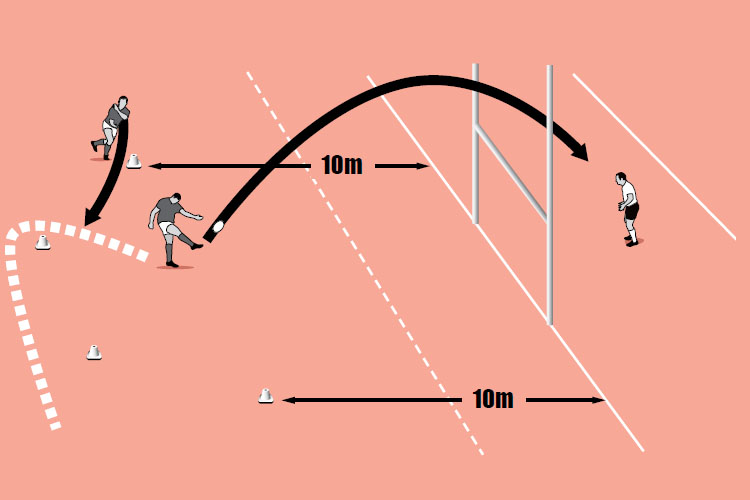
- Kicker: Run forward to entice the defence and then chip the ball.
- Chasers: Stay behind the kicker and then run to where the ball will land.
What you get your players to do
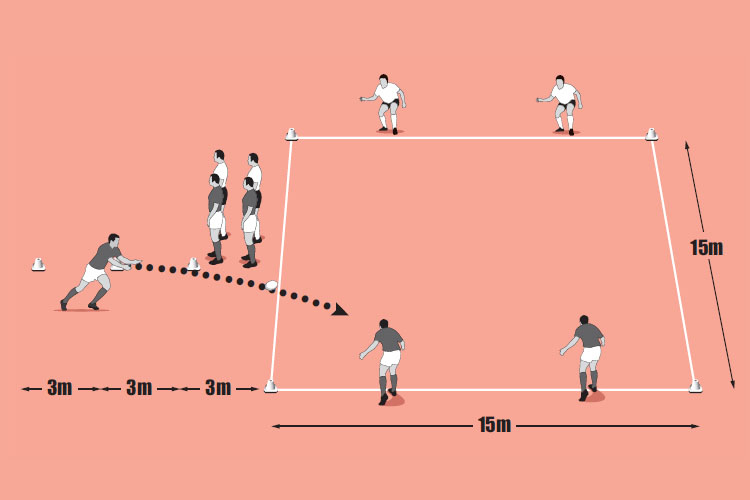
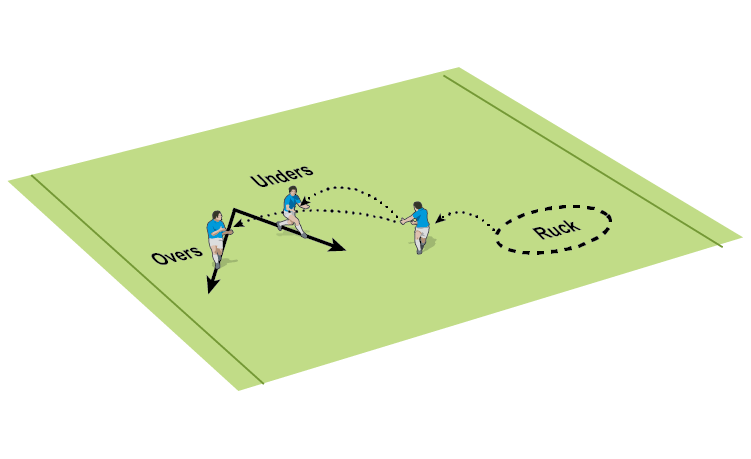
Spread out four cones about 10 to 15m away from a set of posts. Put a player behind the posts to retrieve the ball. A kicker starts somewhere behind the cones, runs to one of the cones and then towards the posts. As he runs towards the posts, another player passes the ball to him. The kicker catches and chips the ball between the posts so it lands inside the dead ball area. Repeat the drill but the kicker runs through the cones in a different direction.Development
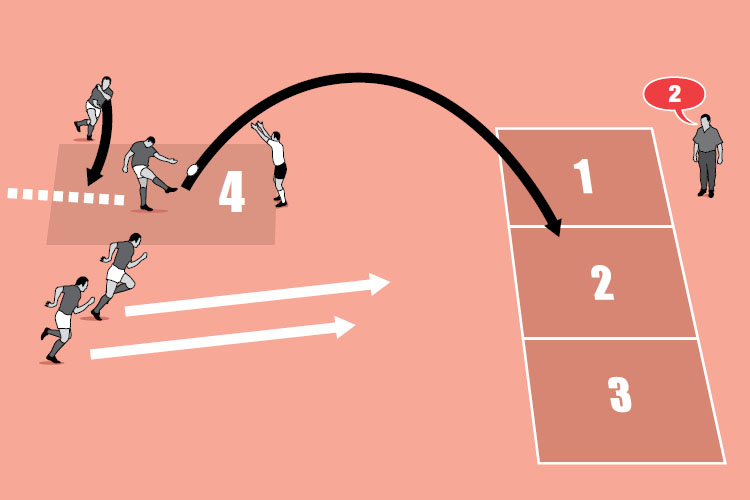
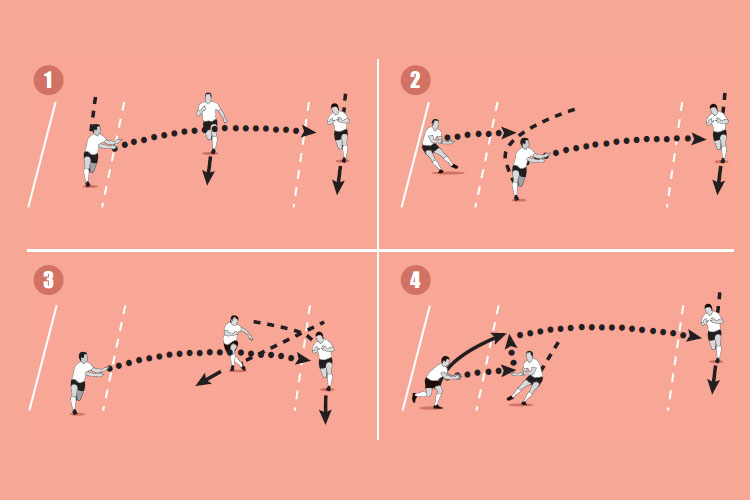
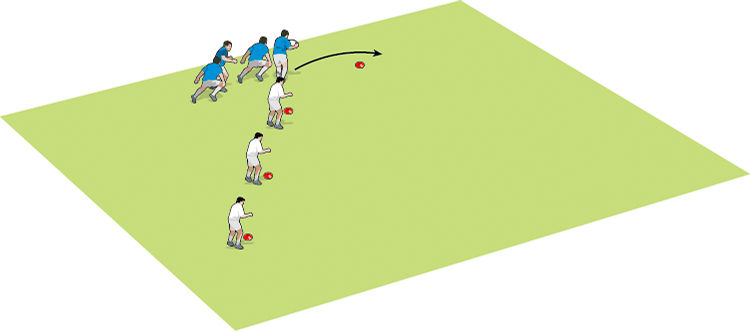
Mark out four boxes, as shown in the middle picture, with one defender at the end of box 4. A kicker runs into this box, receives a pass and kicks to one of the boxes (1-3) that you indicate. Two chasers sprint to that box to take the ball in the air if possible, or gather it after the bounce. Develop by adding more defenders to put more pressure on the kicker and catchers.Related Files
Game situation
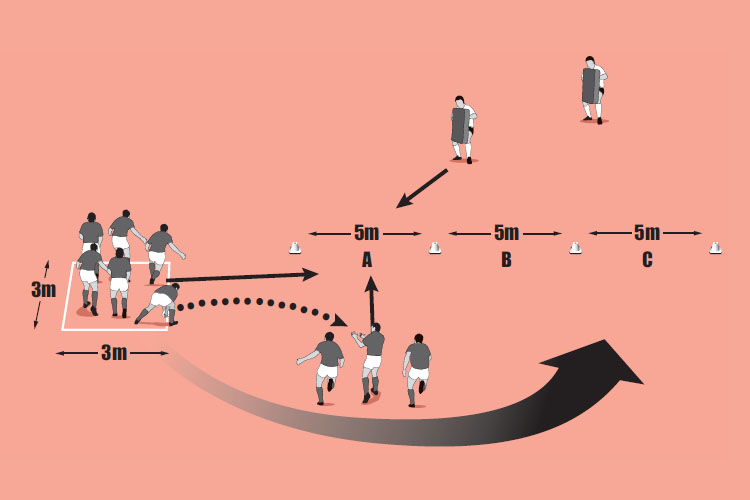
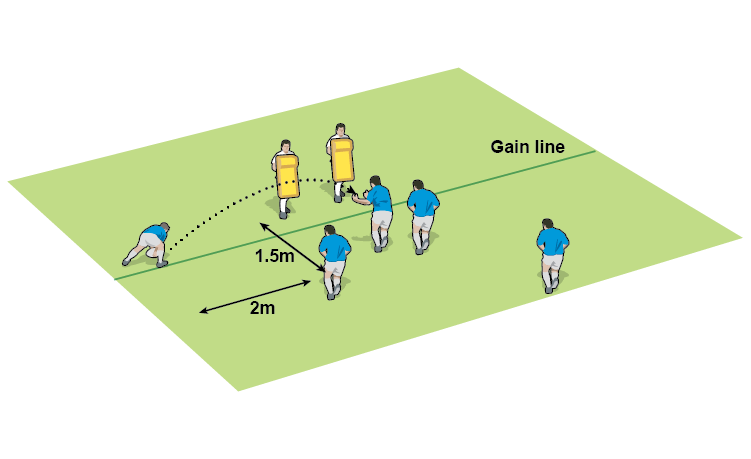
Split into two teams of four. Teams can run and kick in any part of the field. However, they can only make tackles or intercept the ball in specific areas (see bottom picture). Play touch rugby, with a turnover after three touches or an infringement. The game should encourage teams to chip into the non-defended areas if the defence remains flat, or run if the defence is disorganised.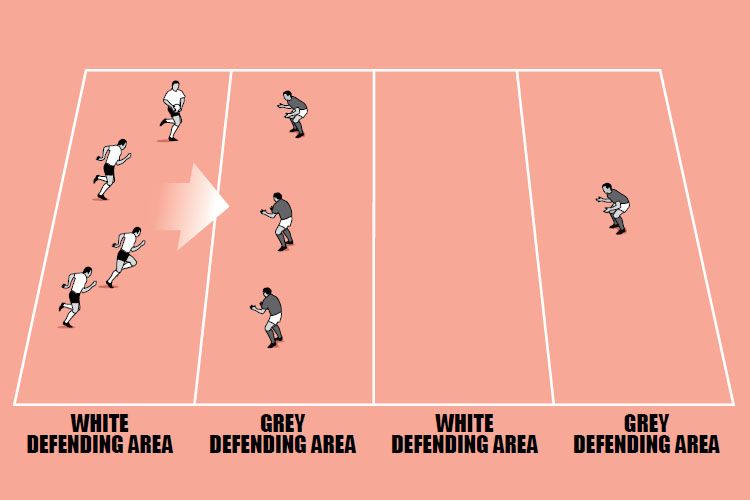
What to call out
- “Interest the defence first before chipping”
- “Drop the ball on to the foot”
- “Assume the ball will bounce up if you don’t make the catch – hesitation will lose you vital seconds”

Dan Cottrell

Latest Issue

Subscribe Today
Subscribe Today
Newsletter Sign Up
Coaches Testimonials

Colin Shaw

Gary Lee Heavner
Subscribe Today
Latest Issue
Be a more effective, more successful rugby coach
In a recent survey 89% of subscribers said Rugby Coach Weekly makes them more confident, 91% said Rugby Coach Weekly makes them a more effective coach and 93% said Rugby Coach Weekly makes them more inspired.
Get Weekly Inspiration
All the latest techniques and approaches


Rugby Coach Weekly offers proven and easy to use rugby drills, coaching sessions, practice plans, small-sided games, warm-ups, training tips and advice.
We've been at the cutting edge of rugby coaching since we launched in 2005, creating resources for the grassroots youth coach, following best practice from around the world and insights from the professional game.
