
 close
close


 LOGIN
LOGINRugby Coach Weekly is the largest digital resource for youth coaches, trusted by 15,000+ coaches, teachers and parents every month.
-
Coach with confidence
-
Improve your teams faster
-
Run great sessions with less effort
- Expert coaching advice from TOP Coaches
- Training sessions for players from U6 to U17+.
Block passing v flat passing


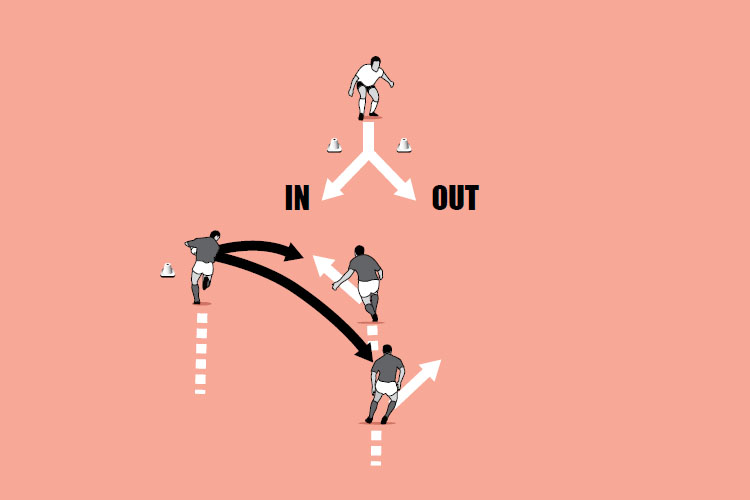
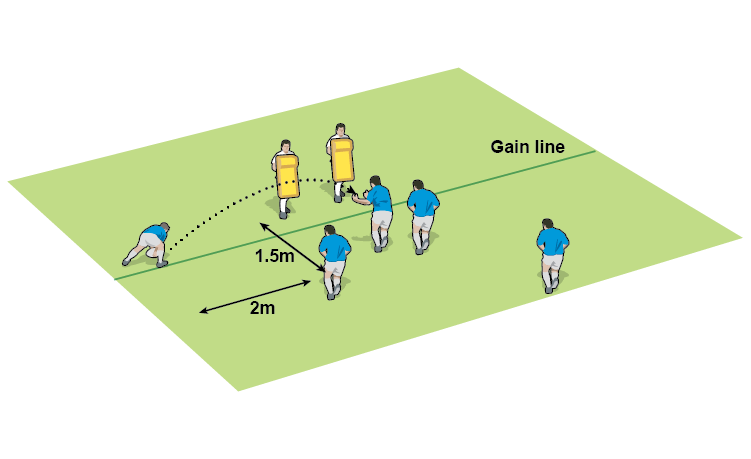
This is a decision-making session based on using either a pass close to the gain line or a “block” pass, which is a pass that goes behind the front line of attack. Players will have to decide which pass to use according to the defence in front of them, not on a predetermined play.
Warm up time: 5
Session time: 5-8
Development time: 6-9
Game time: 15-20
Warm down time: 7
What to think about
In simple terms, flat passes attack the gain line close to the last phase of play, block passes attack the tackle line wider out. Players in both lines of attack should expect to receive the pass. A player who runs on to a flat pass can run “in” or “out”, depending on the defender in front of him. A player who runs on to a block pass tends to run “out”, because he does not need to fix a defender and the aim is to take the ball wider.set-up
- Look at the defence. Time the pass to beat the defence.
- Runners, commit to your line and expect the ball.
What you get your players to do
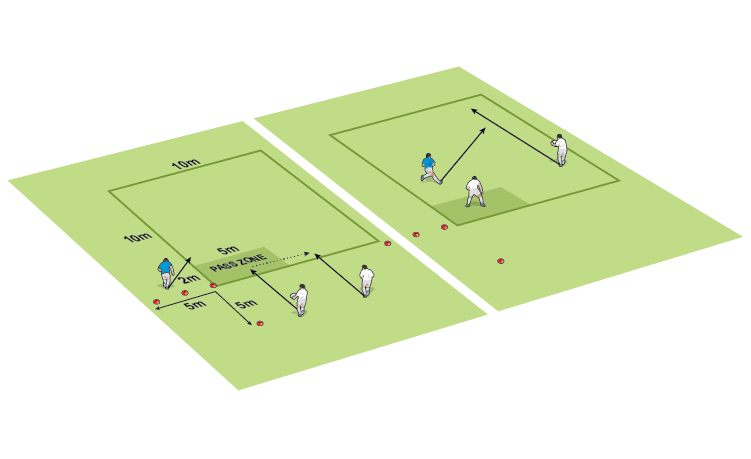
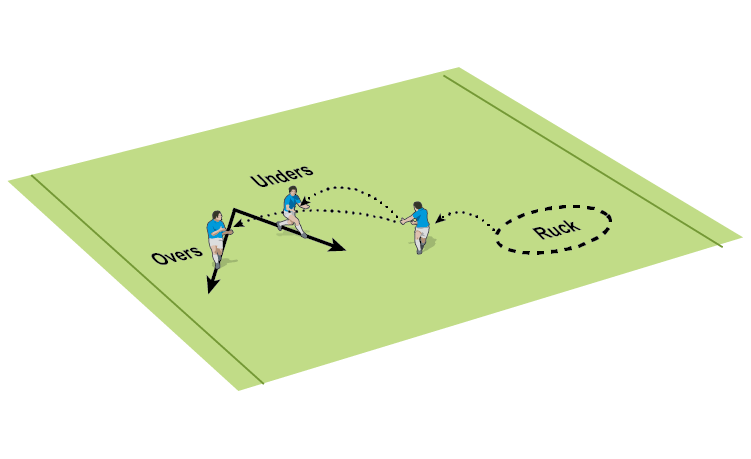
Set up three attackers as in the top picture, with a ball carrier and two receivers who start one in front of the other. The attackers run forward while a defender runs forward through a gate and then runs “in” or “out”. If the defender runs “in”, the ball is passed behind the front attacker. If he runs “out”, then the ball is passed to the front attacker.Development
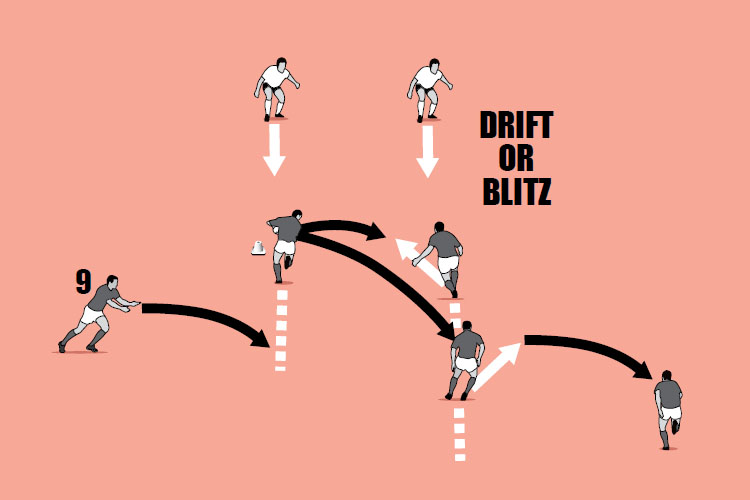
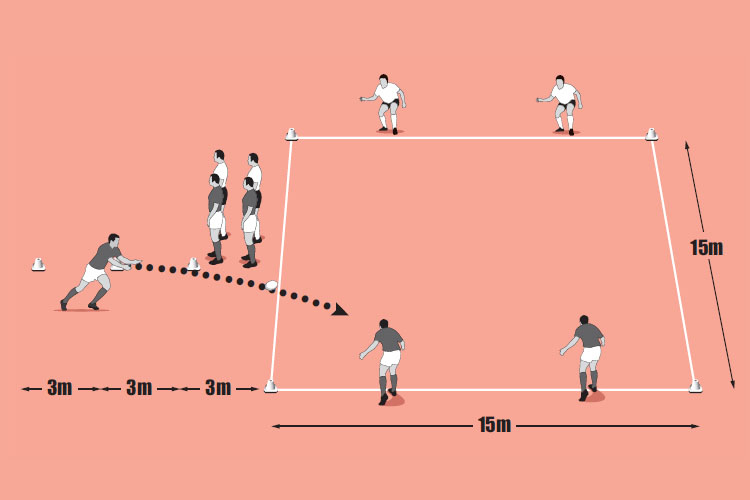
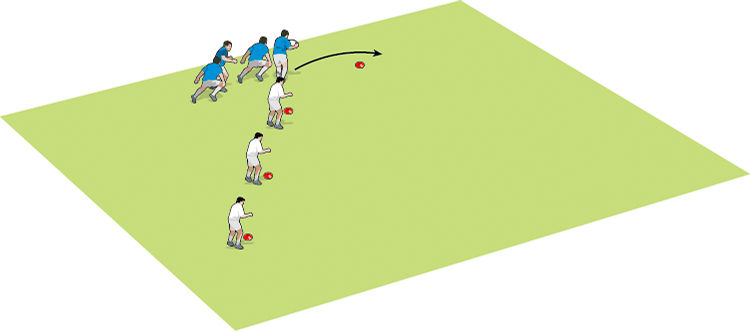
Set up five attackers and two defenders as in the middle picture. 9 feeds the first attacker who runs towards a target cone in front of him. The two defenders come forward, either “blitzing” or “drifting”. The ball carrier chooses which pass he thinks will beat the defence in front of him.Related Files
Game situation
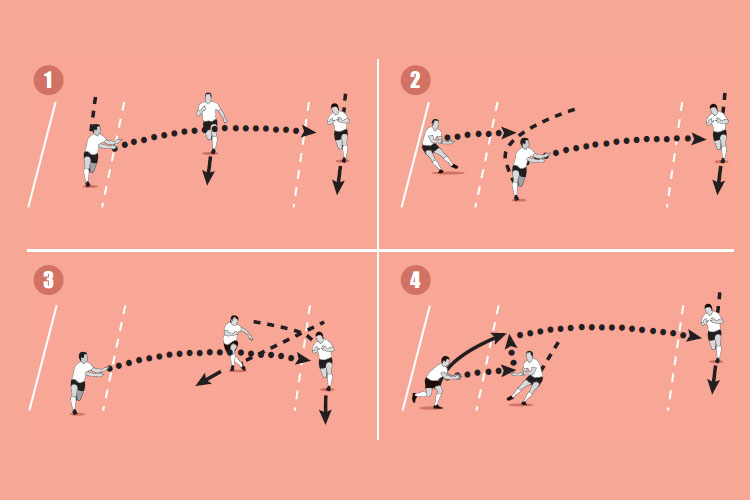
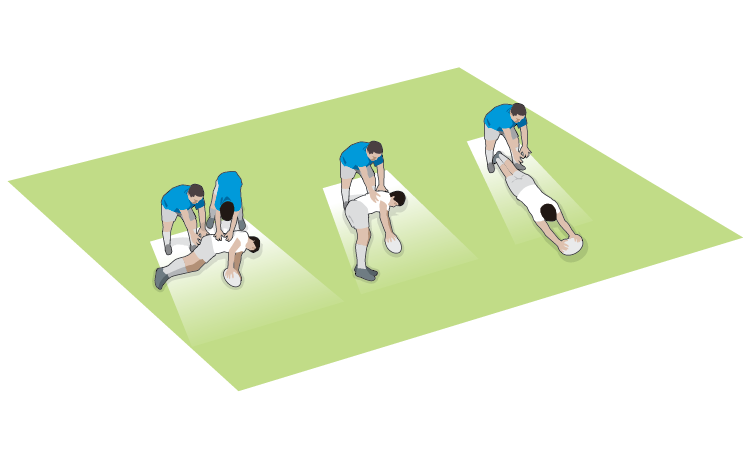
Set up three defenders and five attackers and a 9 as in the bottom picture. The defenders run into position. Call either slow ball to allow them time to align, or fast ball so they are rushed. The 9 passes the ball out and the attack uses running and passing to beat the defence. Use grab tackling.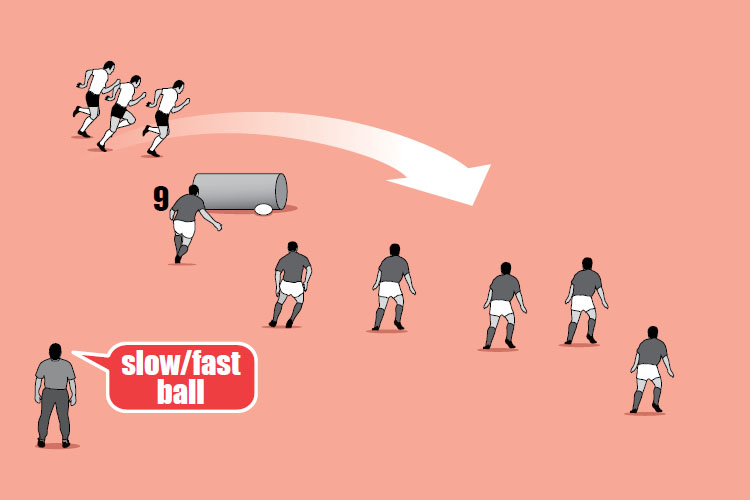
What to call out
- “Don’t change angles until the latest moment”
- “First passer, slow down before you pass”
- “Shout for the ball, so you and everyone else expects you to get the pass”

Dan Cottrell
Latest Issue

Subscribe Today
Subscribe Today
Newsletter Sign Up
Coaches Testimonials

Colin Shaw

Gary Lee Heavner
Subscribe Today
Latest Issue
Be a more effective, more successful rugby coach
In a recent survey 89% of subscribers said Rugby Coach Weekly makes them more confident, 91% said Rugby Coach Weekly makes them a more effective coach and 93% said Rugby Coach Weekly makes them more inspired.
Get Weekly Inspiration
All the latest techniques and approaches


Rugby Coach Weekly offers proven and easy to use rugby drills, coaching sessions, practice plans, small-sided games, warm-ups, training tips and advice.
We've been at the cutting edge of rugby coaching since we launched in 2005, creating resources for the grassroots youth coach, following best practice from around the world and insights from the professional game.
