
 close
close


 LOGIN
LOGINRugby Coach Weekly is the largest digital resource for youth coaches, trusted by 15,000+ coaches, teachers and parents every month.
-
Coach with confidence
-
Improve your teams faster
-
Run great sessions with less effort
- Expert coaching advice from TOP Coaches
- Training sessions for players from U6 to U17+.
Aussie 2v1 line breakers


The best teams frequently create line breaking 2v1s. The forwards are as much part of the action as the backs, with either making the pass or bursting through the gaps. This session recreates three different 2v1 situations your players will regularly find themselves in. These exercises are inspired by the Australian success in this part of the game.
Warm up time: 5-7
Session time: 8-10
Development time: 8-10
Game time: 15-20
Warm down time: 5-7
What to think about
These are the hardest 2 v 1 exercises because the defender has a better idea of what is going to happen than the attackers. This gives the defender an advantage because the attackers have little time to plan and do not know their running lines. Don’t expect much success to start with, partly because attackers take time to become used to the situations. That is why you could mix this session up, so you rotate between each exercise / game to keep the players refocusing. Simple skills, such as firm passes and pace on to the pass, will still pay dividends.set-up
- Always attack the defender at pace, but aim to keep your hips facing down the pitch to help you pass if you need to.
- Pass hard so the defender cannot move on to the receiver.
- Be decisive, so even if the ball carrier is caught, he is still moving forward.
What you get your players to do
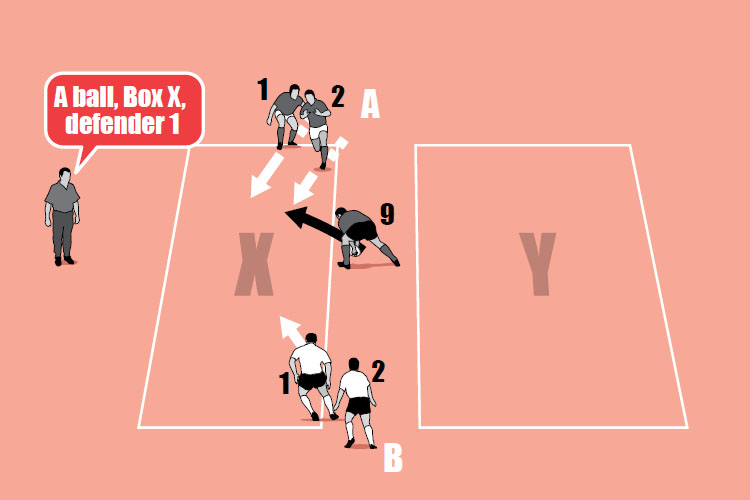
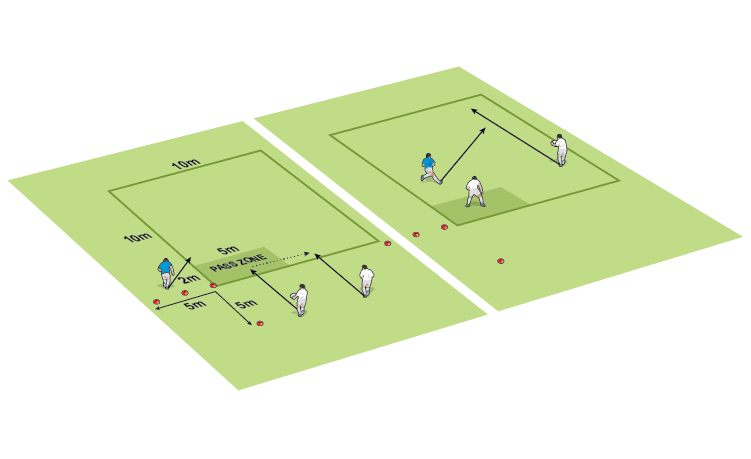
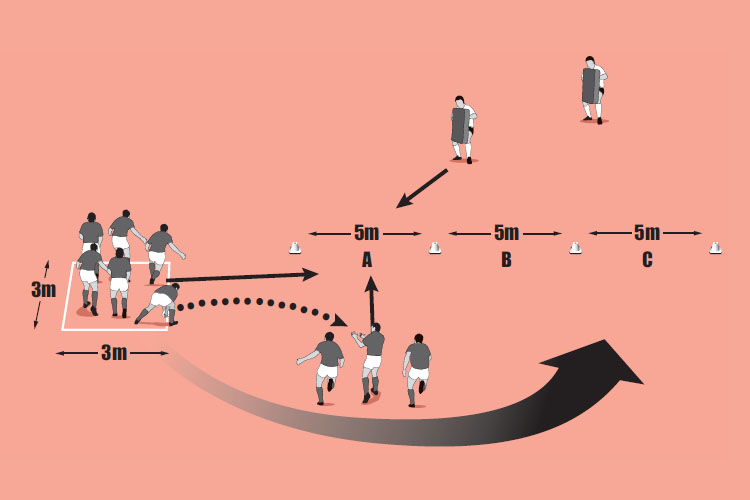
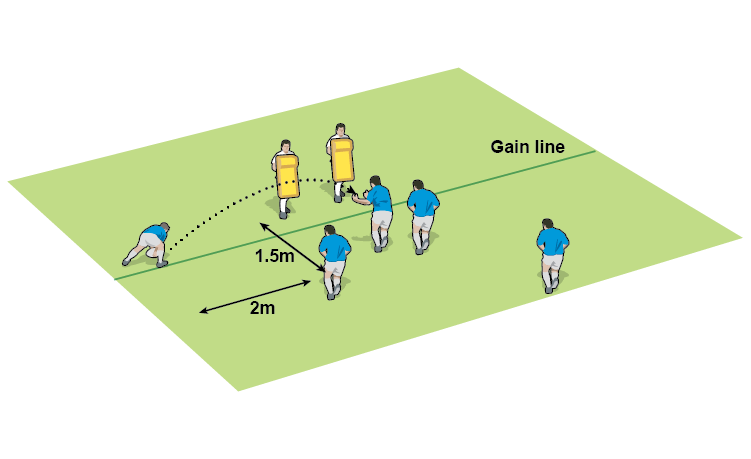
Set up two boxes assigning a letter to each. Position two players at each end. Shout out which box to attack, which team will receive the ball and which one of the defenders can defend. The players move immediately into this box. Attackers receive the ball, with the attack aiming to score at the far end. Use full tackling.Development
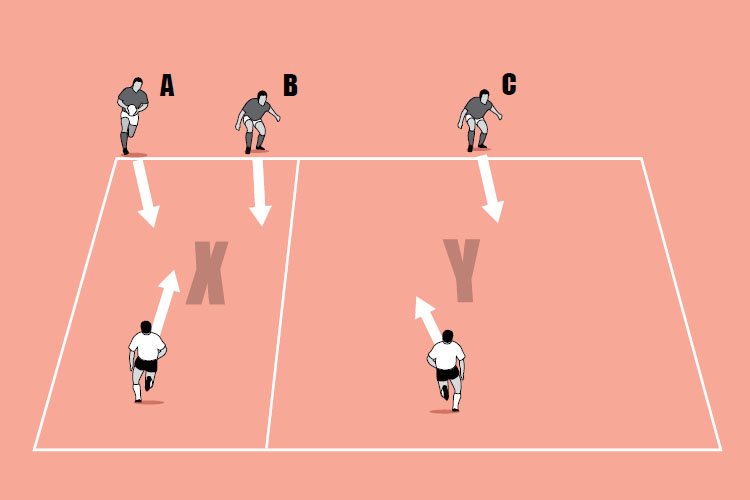
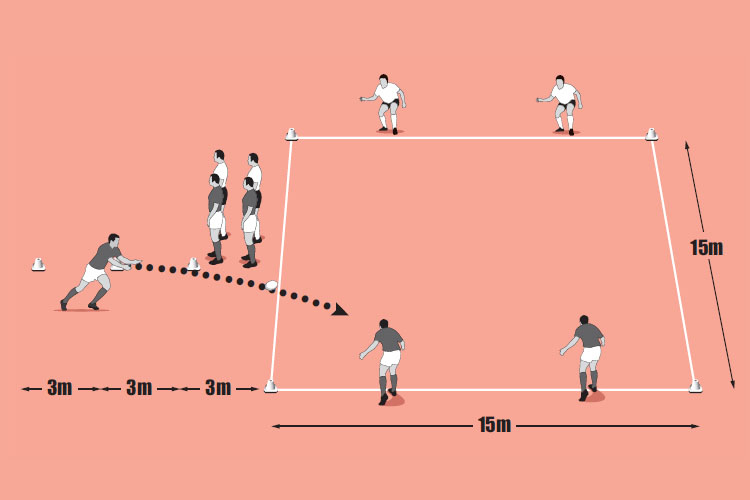
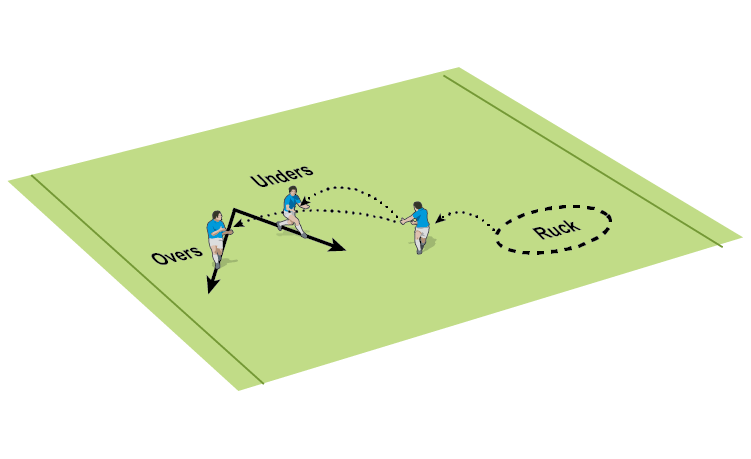
Put two attackers in the narrow channel and one in the wide channel. The middle attacker is the only attacker who can move between both. Put a defender in each channel. They must stay in their channels. Start the attack in the narrow channel. Given the defence in front of them, the ball carrier has to decide whether to create a 2 v 1 in the narrow channel or pass to his team mate in the wide channel to create the 2 v 1 there.Related Files
Game situation
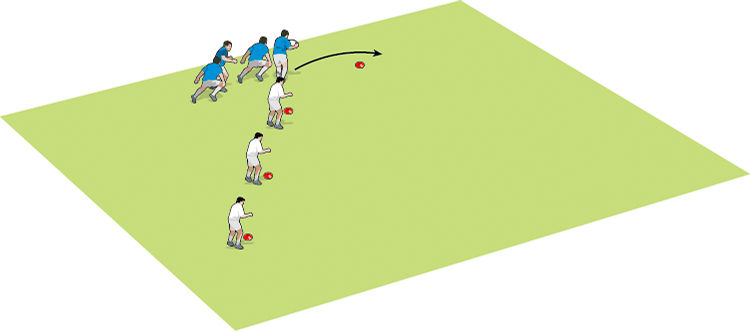
Put two attackers in the middle of the box, and a defender at each end. The two attackers have 60 seconds to score as many tries as they can. Use either touch tackling or full tackling. If the ball carrier is tackled / touched he has 1 second to pass the ball (this encourages passing before contact). Defenders can only move forward from one metre in front of their try line once the attackers have come over the half way point. Any infringement by the defence means an automatic try. Any infringement by the attack means they turn and attack the defender at the opposite end.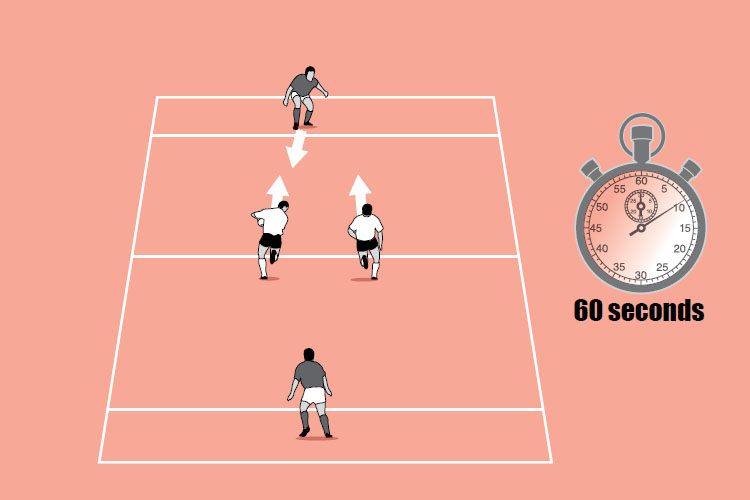
What to call out
- “Make space for your support player”
- “Support player, hold your run so you can see the space and accelerate on to the ball”

Dan Cottrell
Latest Issue

Subscribe Today
Subscribe Today
Newsletter Sign Up
Coaches Testimonials

Colin Shaw

Gary Lee Heavner
Subscribe Today
Latest Issue
Be a more effective, more successful rugby coach
In a recent survey 89% of subscribers said Rugby Coach Weekly makes them more confident, 91% said Rugby Coach Weekly makes them a more effective coach and 93% said Rugby Coach Weekly makes them more inspired.
Get Weekly Inspiration
All the latest techniques and approaches


Rugby Coach Weekly offers proven and easy to use rugby drills, coaching sessions, practice plans, small-sided games, warm-ups, training tips and advice.
We've been at the cutting edge of rugby coaching since we launched in 2005, creating resources for the grassroots youth coach, following best practice from around the world and insights from the professional game.
