
 close
close


 LOGIN
LOGINAngles or straight


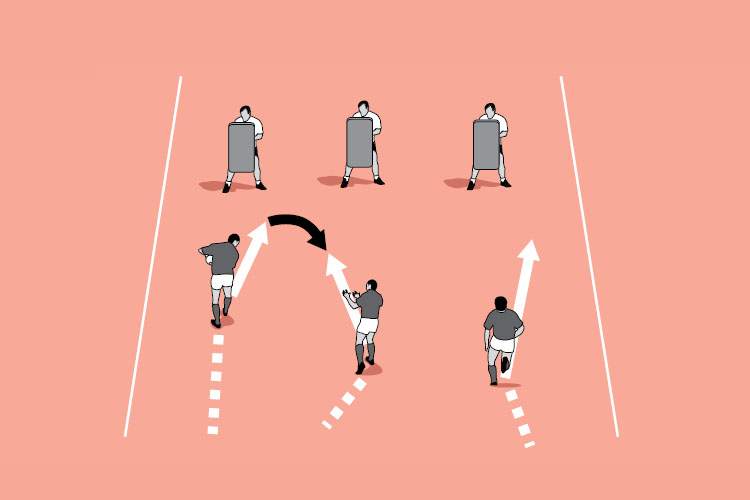
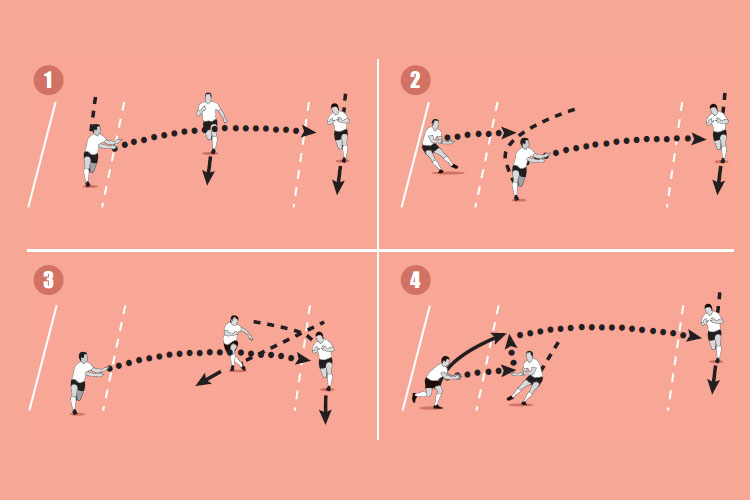
More advanced players often look to do too much. In particular there may be simpler ways to move the ball into space than those chosen. This session works on developing running and passing skills against different defences. The players should run angles at a defensive overload and straight lines if they have an overlap.
Warm up time: 5-7
Session time: 5-8
Development time: 5-8
Game time: 15-20
Warm down time: 5-7
What to think about
The quick identification of the situation. The mechanics of running angles or straight only work if the players have scanned and identified the threats and opportunities. Your players should have calls to indicate whether there is an overlap or to attack a gap. The first receiver is often not in the best position to do this. He relies on the outside players, who should be scanning the defence and calling the situations. Firm passing for running straight. Where players are running straight and moving the ball quickly, the pass needs to the flat and firm. You might prefer your players not to use spin passes either, because these can be more difficult to catch Click here to download the index and then pass on.set-up
- Change your angles of attack if there is no overlap.
- Run straight and move the ball quickly if there is an overlap.
- Communicate the options and hold your depth in attack.
- Hit the gap at pace.
What you get your players to do
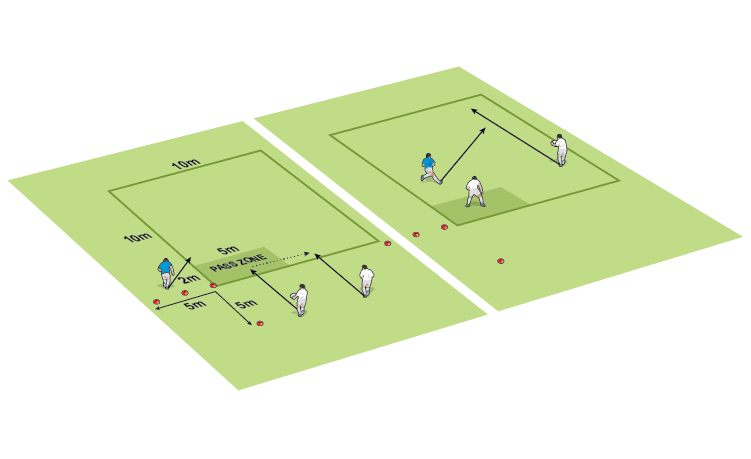
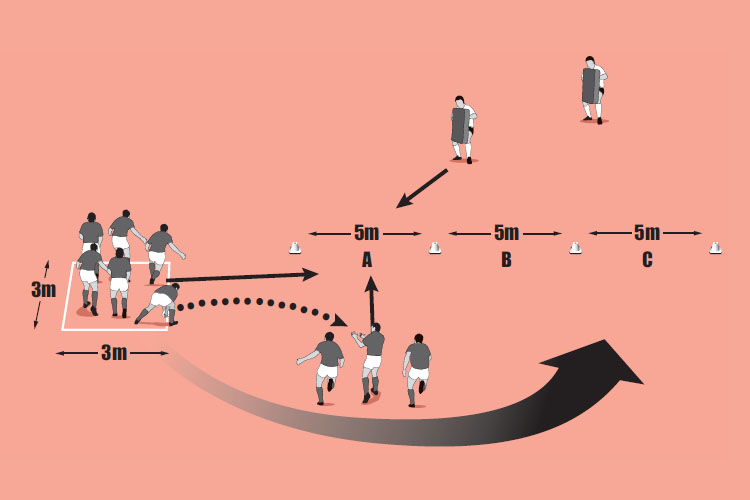
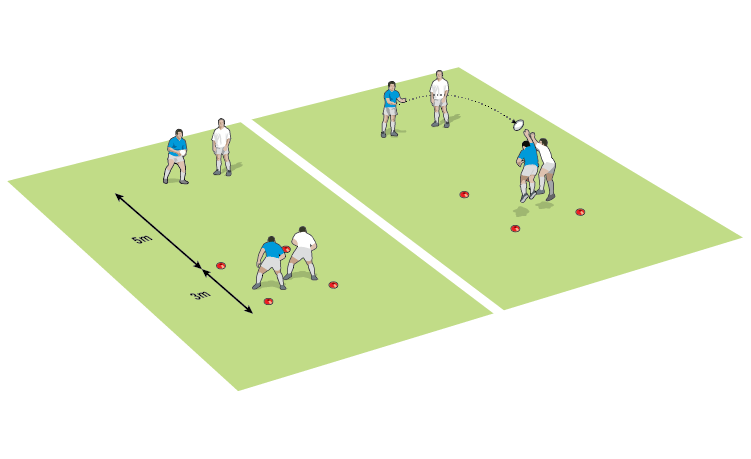
Put three attackers about 10 metres away from three defenders holding tackle pads. Give the ball to one of the attackers at the side and they attack the bags, attempting to burst through a gap without taking much contact. The defenders can move forward and laterally.Development
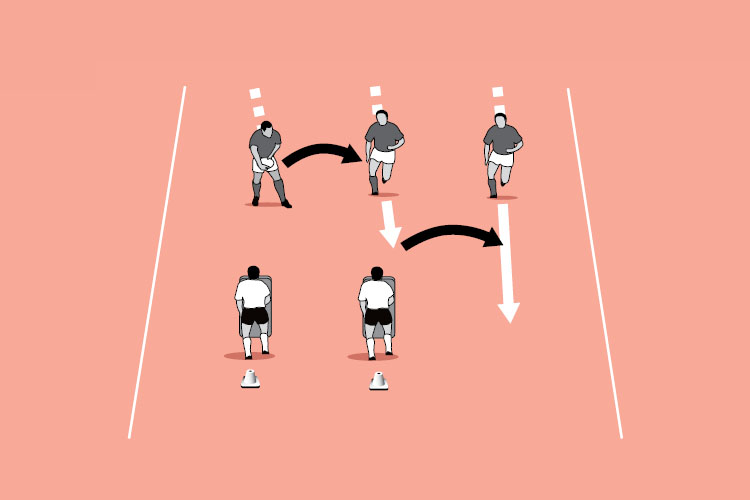
- Remove one of the pad holders. The defenders can only pressurise the first two attackers.
- Add a feeding player and adjust the distances between the attack and defence to develop the practice further.
Related Files
Game situation
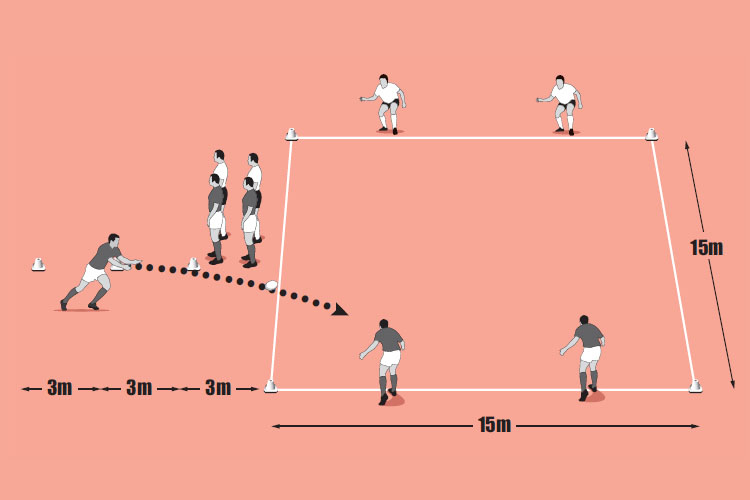
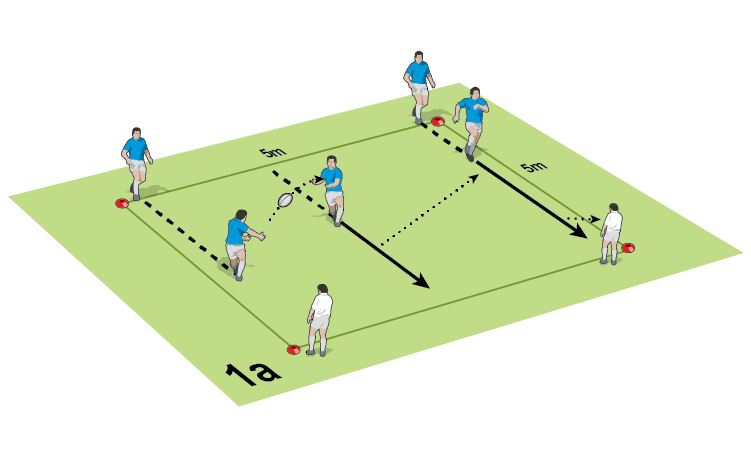
Set up two ruck areas. Nominate a scrum half (9) and four attackers. Place them anywhere inside the playing area. Put four defenders with tackle pads behind lettered cones (A, B, C, D). Call for two to four of the defenders to come forward, which ruck area 9 to play from and how long the players have to organise themselves before they can start. Let the play develop. Remove the bags to make the game more realistic. You can also secretly tell the defenders who is to run up.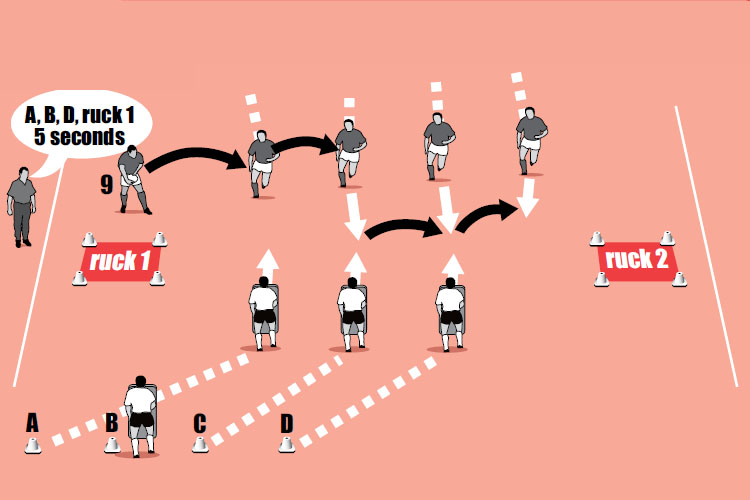
What to call out
- “Attack spaces. Change angles late”
- “Tell the ball carrier if there is an overlap or an angle”
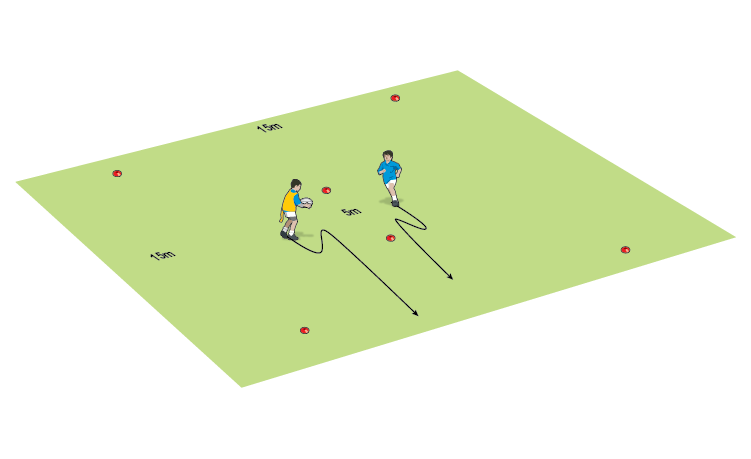
- “Run straight by keeping the hips square on to the defender and only moving the shoulders up”

Dan Cottrell
Latest Issue
Subscribe Today
Subscribe Today
Newsletter Sign Up
Coaches Testimonials

Gerald Kearney, Downtown Las Vegas Soccer Club

Paul Butler, Florida, USA

Rick Shields, Springboro, USA

Tony Green, Pierrefonds Titans, Quebec, Canada
Subscribe Today
Latest Issue

Be a more effective, more successful rugby coach
In a recent survey 89% of subscribers said Rugby Coach Weekly makes them more confident, 91% said Rugby Coach Weekly makes them a more effective coach and 93% said Rugby Coach Weekly makes them more inspired.
Get Weekly Inspiration
All the latest techniques and approaches


Rugby Coach Weekly offers proven and easy to use rugby drills, coaching sessions, practice plans, small-sided games, warm-ups, training tips and advice.
We've been at the cutting edge of rugby coaching since we launched in 2005, creating resources for the grassroots youth coach, following best practice from around the world and insights from the professional game.
