
 close
close


 LOGIN
LOGINRugby Coach Weekly is the largest digital resource for youth coaches, trusted by 15,000+ coaches, teachers and parents every month.
-
Coach with confidence
-
Improve your teams faster
-
Run great sessions with less effort
- Expert coaching advice from TOP Coaches
- Training sessions for players from U6 to U17+.
10 options


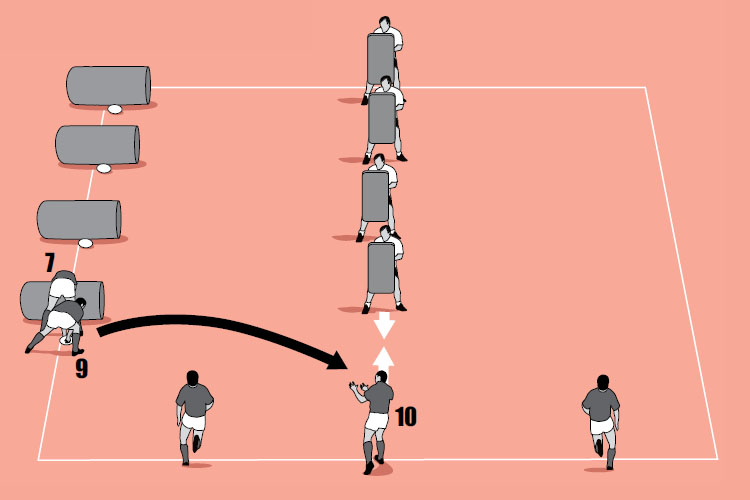
The fly half is known in some parts of the world as the “pivot player”. From his controlling position he can launch his team away from the bunch of opposition forwards and into the open spaces. He therefore needs to be comfortable with the options in front of him. This session builds the awareness to appreciate these options.
Warm up time: 7-10
Session time: 10-15
Development time: 10-15
Game time: 10-15
Warm down time: 7-10
What to think about
How deep should the fly half stand? Deep means how far back from the gain line. The best distance is judged by working with the 10 in game situations and reviewing their performances from games. Video analysis can play an important part in this analysis. Too flat and the options are rushed or cut out. Too deep and your 10 makes all his plays too early and the defence can adjust. One area to note is the distance covered by 10 between receiving the ball and delivering it. Could he reduce the number of steps forwards he takes?set-up
- 10 look ahead, look around and call the plays early.
- Look to use pop passes, switches, circle balls, changes of angle.
- Move defenders with decoy runs, changes in pace.
What you get your players to do
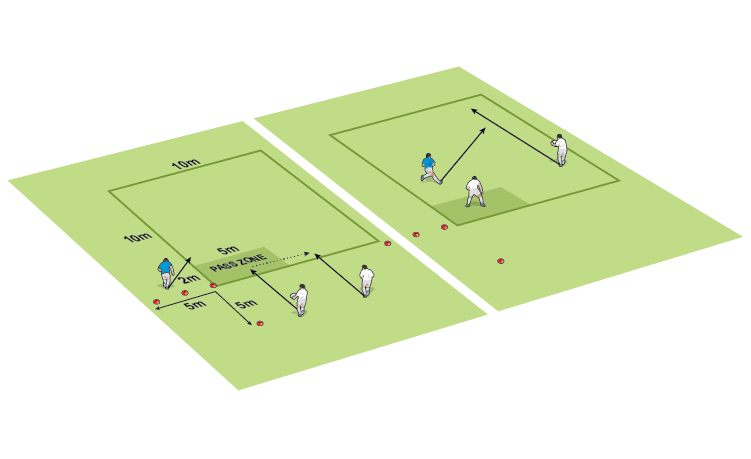
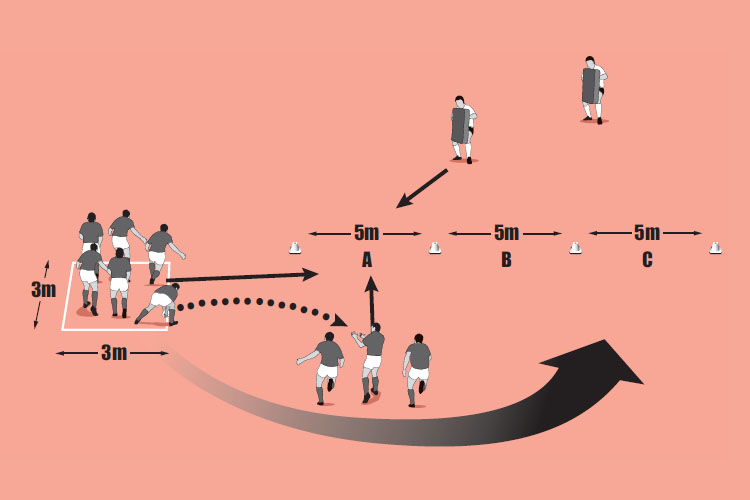
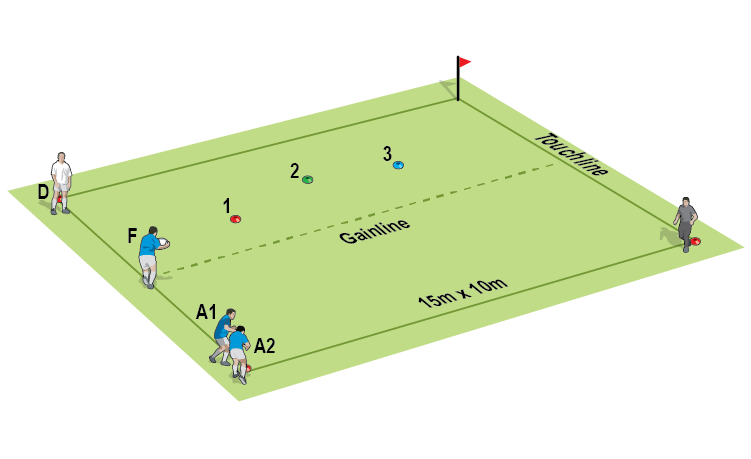
Set up the training area as the top picture. Put a scrum half (9) and a forward (7) behind the first bag. 7 steps over the ball and 9 passes out to 10 who attacks a bag holder in front of him. He uses any pass he likes to feed a support player either side of him. Once the pass is completed, the attacking players realign for a pass from the second bag and repeat the exercise.Development
Develop the practice by changing the pressure exerted by the defenders, having two bag holders standing in the line and using 7 as a support player for an inside pass.Related Files
Game situation
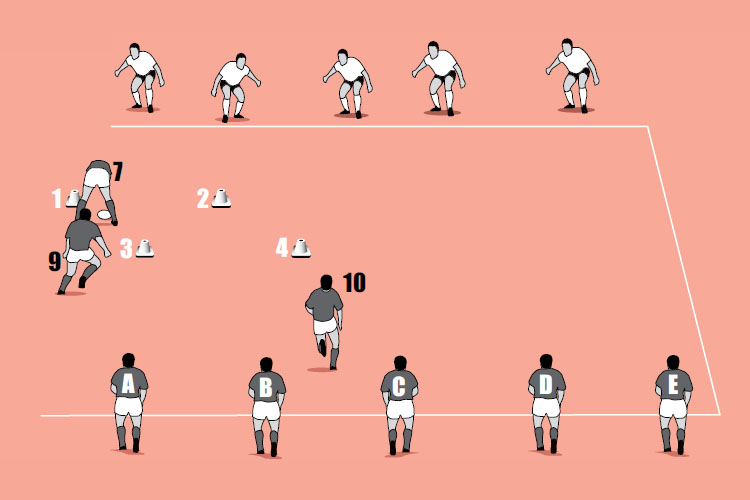
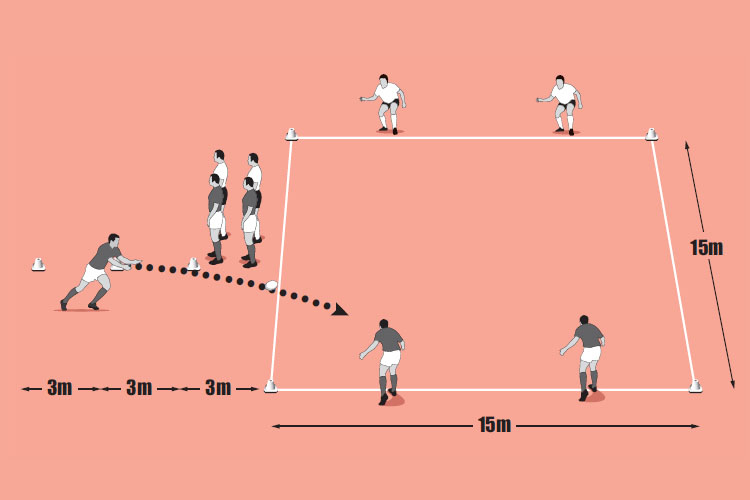
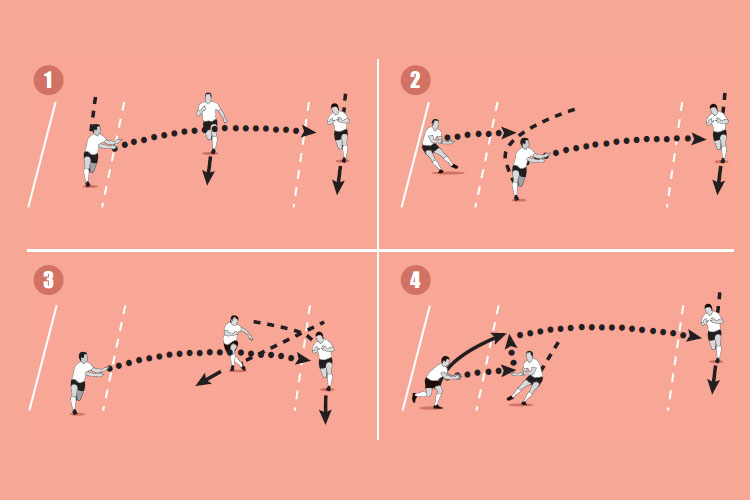
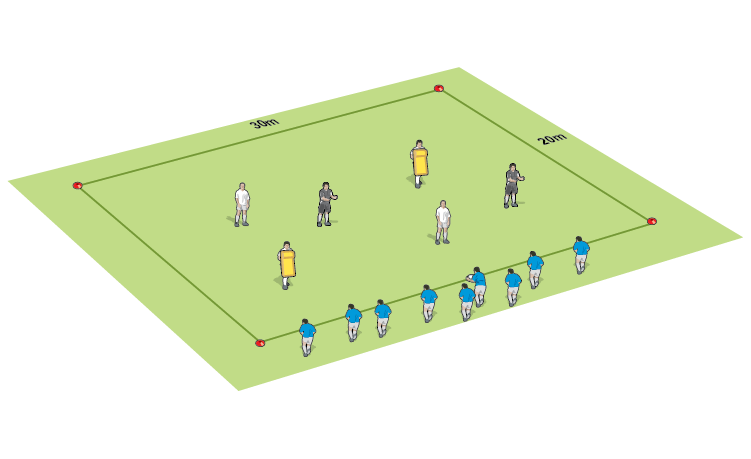
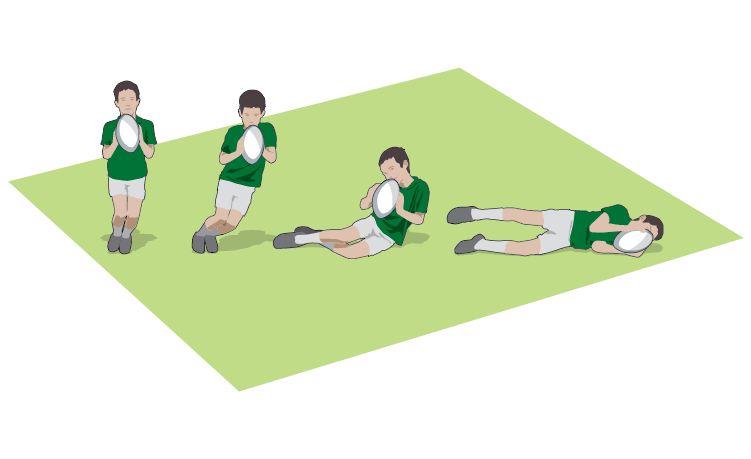
Put down four coloured (or numbered) cones. Place a forward (7) over the first cone with 9 behind him. Set up five defenders and five attackers (each with a letter) at each end of the box, with the 10 inside (as picture 1). You call out a cone, the letters of the attackers you want to attack and the number of defenders to step in to defend (as picture 2). The 7 puts the ball by the cone you called and steps over when the 9 says so. 10 plays what’s in front of him. Make sure the defenders stay onside by saying the “back foot” of the ruck is a metre behind the cone.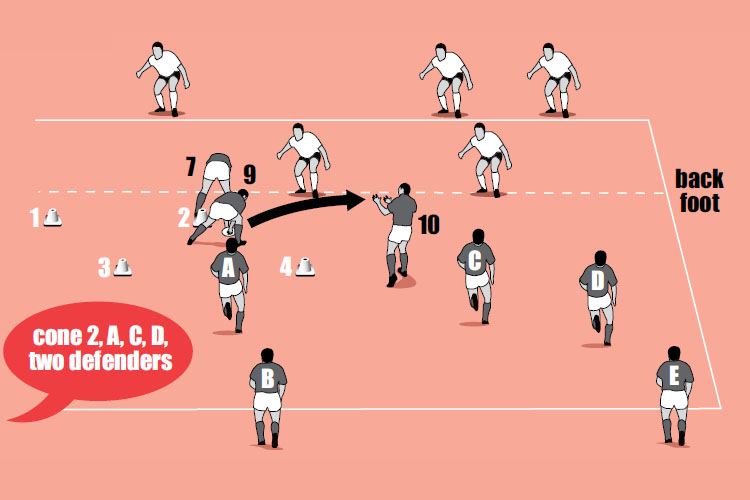
What to call out
- “Look at the players you are calling the move to”
- “Don’t start your run until the trigger to move – that is either a pass from 9, or 10 moving forwards”

Dan Cottrell
Latest Issue
Subscribe Today
Subscribe Today
Newsletter Sign Up
Coaches Testimonials

Colin Shaw

Gary Lee Heavner
Subscribe Today
Latest Issue
Be a more effective, more successful rugby coach
In a recent survey 89% of subscribers said Rugby Coach Weekly makes them more confident, 91% said Rugby Coach Weekly makes them a more effective coach and 93% said Rugby Coach Weekly makes them more inspired.
Get Weekly Inspiration
All the latest techniques and approaches


Rugby Coach Weekly offers proven and easy to use rugby drills, coaching sessions, practice plans, small-sided games, warm-ups, training tips and advice.
We've been at the cutting edge of rugby coaching since we launched in 2005, creating resources for the grassroots youth coach, following best practice from around the world and insights from the professional game.
