
 close
close


 LOGIN
LOGINExpose weak defenders
Taking contact can disrupt a team’s defensive system, writes Peter Russell.
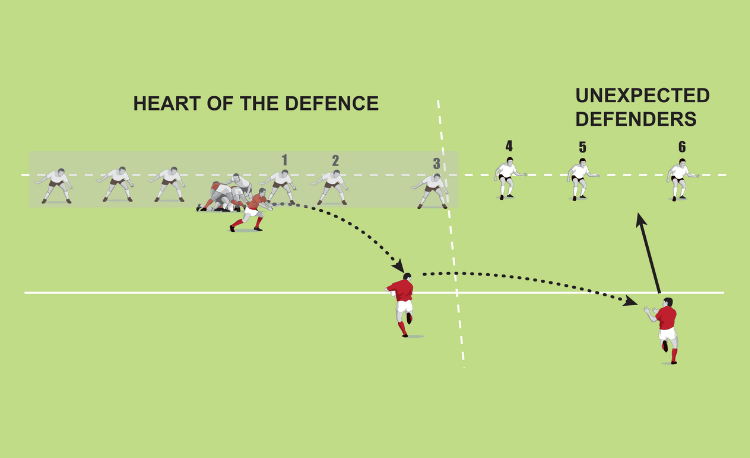
The ’heart’ of the defence is a point of strength for any team.
A strong ’heart’ defensive system allows other systems of the defensive policies to be deployed, like line speed and drift, which, in essence, cuts down the attacking options of the opposing team.
As an attacking team, we need to soak up that line speed, or find a way to break down their defensive system.
For a start, we look to move the point of contact away from their strength. In simple terms, we want to attack the ’unexpected’ defenders, or their weakest defenders, who might well be the fifth or sixth position in the ruck-defence chain.
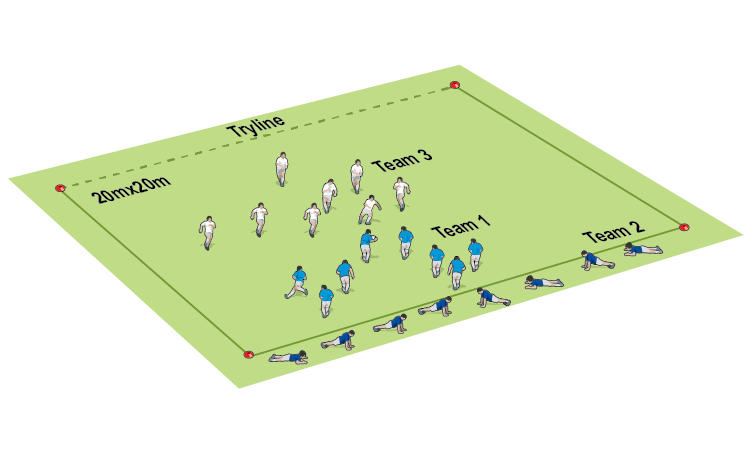
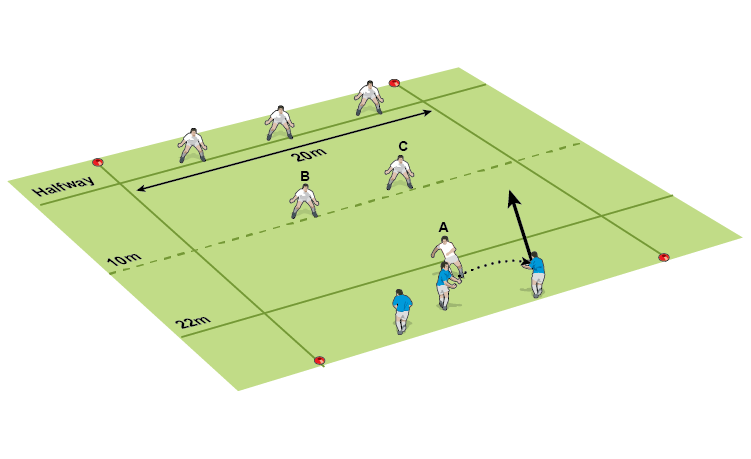
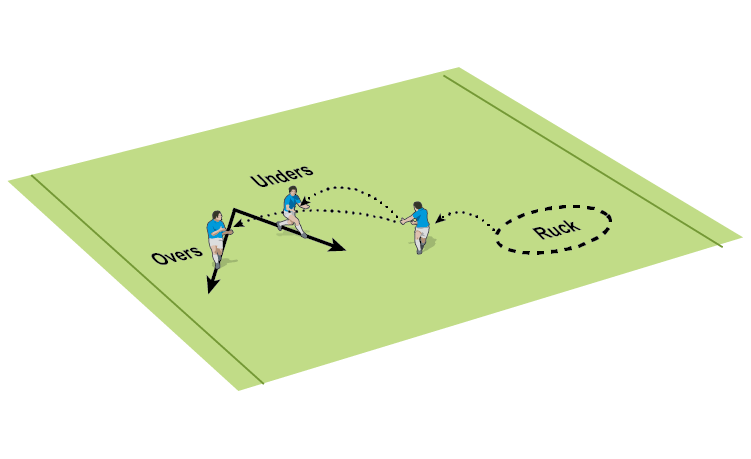
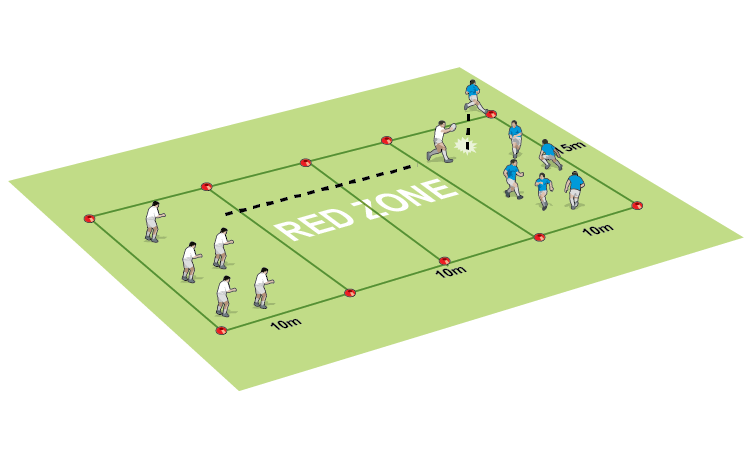
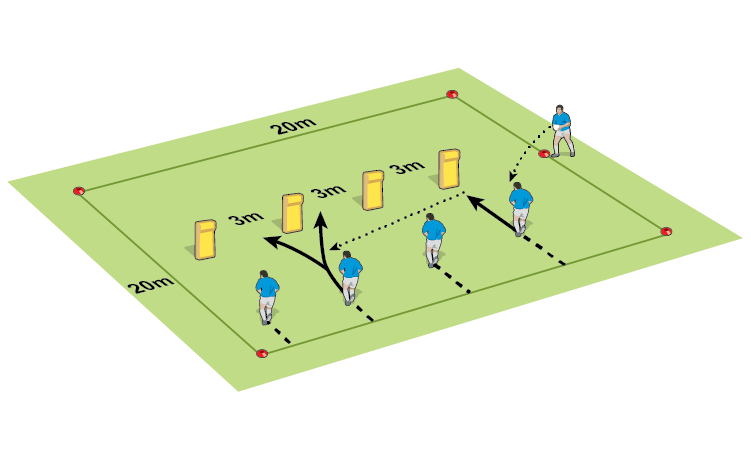
We can do this by grouping the defence and spreading the ball – fixing the defence, because they must stay in their system – and move the ball towards the unexpected defender.
Grouping the defence
Inevitably, your ball carriers will take contact. In fact, they may seek it out.
There are three main reasons why they may run at a defender; two of which need correcting, the other is a tactical play. We need to distinguish between them.
Two bad reasons to take contact
- The ball carrier does not have the skills to move the ball before contact. Added to that, they are not positively encouraged to avoid contact. To remedy this, we need to work on their awareness of where the weaknesses are in a defensive line, and how they can be exploited.
- The ball carrier has the wrong mentality about taking contact. They want to carry into the middle of the defender, to take them on, rather than attack the soft shoulder and edges of the defender.
One good reason to take contact
Sometimes it is necessary to take contact. It‘s not because the player simply thrives on contact, doesn’t have the skills to avoid it or the defence is better at getting in the way. It’s necessary because it’s a means to an end. It’s about grouping the defence and utilising quick ball into space.
What is necessary contact?
Necessary contact is when you want to set up a particular contact point in the opposition defensive system to expose a weakness elsewhere, or the defending team cannot get their defensive system in place quick enough to successfully negate your attack.
Contact can also group a weaker defensive team, knowing they must send more support players in to stop a rampaging attacking team, which then leaves open spaces elsewhere.
If the opposition team has a frontline defence mentality, with a tackle-only system, you may need to take contact to ensure they send necessary defenders in to stop your momentum.
In this system, you will find that the team makes one-on-one tackles, not overcomitting to the ruck, relying totally on individuals to make sound defensive tackles and decisions, to ensure the defensive line stays intact. This is where your attackers can exploit the weaker or slower defenders and system errors.
Necessary contact is not attacking the defender front-on. Instead, the ball carrier attacks a weak shoulder, which in turn draws more defenders into the tackle to try and halt the attack.
With more than one defender stepping in, the defence will have fewer players on their feet around the tackle, and will need to send wider out defenders in to secure their ’heart’ defence. This will give space out wide to attack.
Be a more effective, more successful youth rugby coach
- Win more games, without sacrificing the crucial element of fun
- Develop every player, regardless of vast differences in ability
- Run a respected, professional programme - even with a full-time job and limited time
Subscribe for full access
Or register and unlock 2 free articles,
receive our weekly newsletter, and
get a FREE coaching e-book.
Or if you are already a subscriber login for full access.

Peter Russell
Latest Issue

Subscribe Today
Subscribe Today
Newsletter Sign Up
Coaches Testimonials

Colin Shaw

Gary Lee Heavner
Subscribe Today
Latest Issue
Be a more effective, more successful rugby coach
In a recent survey 89% of subscribers said Rugby Coach Weekly makes them more confident, 91% said Rugby Coach Weekly makes them a more effective coach and 93% said Rugby Coach Weekly makes them more inspired.
Get Weekly Inspiration
All the latest techniques and approaches


Rugby Coach Weekly offers proven and easy to use rugby drills, coaching sessions, practice plans, small-sided games, warm-ups, training tips and advice.
We've been at the cutting edge of rugby coaching since we launched in 2005, creating resources for the grassroots youth coach, following best practice from around the world and insights from the professional game.
