
 close
close


 LOGIN
LOGINAttacking tactics for different-sized teams
Whatever a team’s style, players must know where to play to and how to get there to create gaps in a defence.
If you have a good back line, and perhaps a small, fit pack of forwards, then you might choose to play a wide, high-tempo game.
Likewise, if you have a big carrying pack, and little pace in your back line, you may want to play a closer carrying game, getting your forwards to carry a few more phases before you attack with your backs.
Either way, you need to have a plan of where to attack and when, so the players know what to expect, and their potential roles.
Wide game and split the pitch
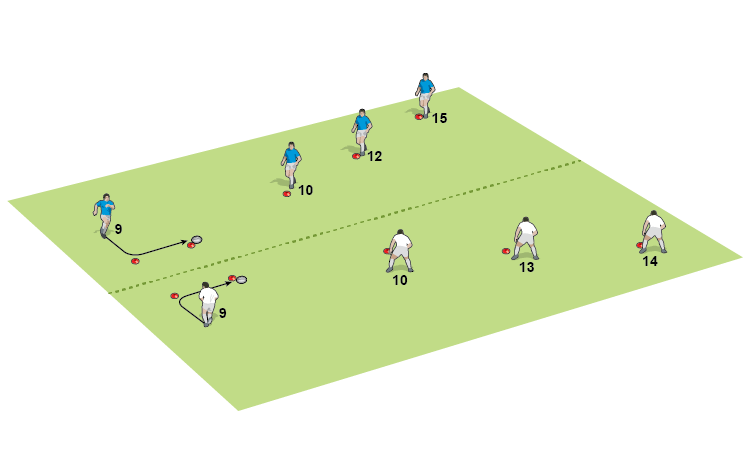
In a wide game, your tactic may be to attack both sides of the pitch, either with a wide-then-wide-again attack, or a game where you look to split the pitch.
A wide game maintains players in the 15m channels, mixing backs and forwards to retain possession.
To play a split-pitch game, you would look to work to the middle of the pitch, so the defence has to defend both sides of the ruck.
With their numbers split, they can’t afford to over-commit when they race up, reducing their line speed and possibly putting them on a drift defence, which gives you the opportunity to attack wide or run at drifting defenders’ inside shoulders.
Be a more effective, more successful youth rugby coach
- Win more games, without sacrificing the crucial element of fun
- Develop every player, regardless of vast differences in ability
- Run a respected, professional programme - even with a full-time job and limited time
Limited time - use code WELCOME40 to save 40% on membership
or register to receive our weekly newsletter, and a free coaching e-book
Already subscribed? login

Danny Wilson

Latest Issue

Subscribe Today
Subscribe Today



Newsletter Sign Up




Coaches Testimonials

Gerald Kearney, Downtown Las Vegas Soccer Club

Paul Butler, Florida, USA

Rick Shields, Springboro, USA

Tony Green, Pierrefonds Titans, Quebec, Canada
Subscribe Today
Latest Issue

Be a more effective, more successful rugby coach
In a recent survey 89% of subscribers said Rugby Coach Weekly makes them more confident, 91% said Rugby Coach Weekly makes them a more effective coach and 93% said Rugby Coach Weekly makes them more inspired.
Get Weekly Inspiration
All the latest techniques and approaches


Rugby Coach Weekly offers proven and easy to use rugby drills, coaching sessions, practice plans, small-sided games, warm-ups, training tips and advice.
We've been at the cutting edge of rugby coaching since we launched in 2005, creating resources for the grassroots youth coach, following best practice from around the world and insights from the professional game.
