
 close
close


 LOGIN
LOGINSeven must-have line outs
Make sure your lineout playbook has these essentials in it. You can then build your season’s variations around them and develop a more effective lineout.


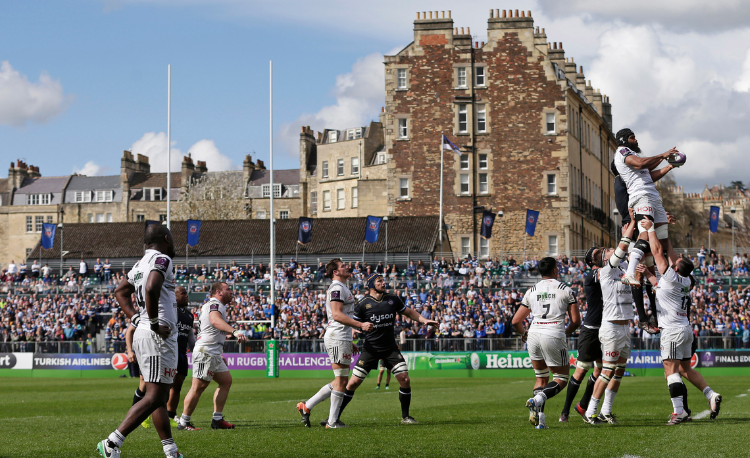
It’s fair to say that many team’s lineouts are a jack of all trades, but masters of none – they have so many plays, that they don’t get the basics right.
Gary Gold was the forwards coach of arguably the best lineout in the world: the South African team of the late 2000s.
He said that, even if sides knew what was coming, they still couldn’t compete with excellent execution.
That comes from a balance of technique and teamwork, honed from many hours of practice.
If your team are spending too much of their valuable time trying out new plays, they can easily forget the basics.
Therefore, you must perform the following lineouts, in the box-out (right), close to their best before you try out any variations.
Once you have these seven lineouts outlined, you need to spend time practising.
Depending on your time allocation, you should spend a third of your time on technique, which could form part of a warm up; one third on play design; and one third on competitive lineouts, to test out the plays.
LINEOUTS: FORWARD OR BACKWARDS CAN CHANGE THE CALL
The lineout attack captain decides on the call, partly on whether the lineout is going forward or backwards.
A forward lineout is where the players are moving up the pitch towards the lineout. This is normally from a penalty kick to touch. It’s easy to call the lineout on the move so when the players arrive, they can set up quickly and then execute before the defence has time to become well-organised. The hooker needs to be part of the walk towards the lineout.
A backwards lineout is where the players are moving back towards their own try line before forming the lineout, probably from a kick out on the full from the opposition 22m. Now the call is made at the lineout, or in a huddle before the lineout is formed.
Note the difference in tempo. You will be using safer lineouts from a backwards situation.
Related Files
Attacking playbook |
Defensive playbook |
|
Banker The simplest play, which is a throw to the front of the lineout. The thrower only throws when the jumper goes up.
The banker ball works best with the players arriving at the lineout and then the ball coming in – not them arriving, waiting, and then the ball being thrown. |
Anti-maul What are you going to do to stop a lineout maul? Identify the calls and the roles of players. |
|
Risk/reward This is a lineout to the middle or middle/back. The jumper either goes up on the spot, or moves back, depending on the opposition. If they are going up at the spot, they nod or signal to the thrower, who throws, and then the jumper jumps. Otherwise they move back three steps. As they move, the thrower throws. |
5m play If they have a lineout on the 5m line, what are you going to do? Jump or drive? Also, if you have a lineout on your 5m line, are you going to have a shortened lineout? |
|
Maul Your team must have a catch and drive option – see pages 4 and 5 on how to set this up. But don’t overdo training on this aspect at the expense of the other six lineout options. |
Disrupt If you are going to compete, how do you set up? Do you always lift at the front? Do you have the personnel to react to the opposition lineout? |
|
Shorty You should have one shortened lineout option available, for two reasons. The first is to mitigate against teams who have an excellent lineout defence, and you need to mix them up. Secondly, and more positively, a shortened lineout allows a different attacking shape in midfield. |

Latest Issue
Subscribe Today
Subscribe Today
Newsletter Sign Up
Coaches Testimonials

Colin Shaw

Gary Lee Heavner
Subscribe Today
Latest Issue
Be a more effective, more successful rugby coach
In a recent survey 89% of subscribers said Rugby Coach Weekly makes them more confident, 91% said Rugby Coach Weekly makes them a more effective coach and 93% said Rugby Coach Weekly makes them more inspired.
Get Weekly Inspiration
All the latest techniques and approaches


Rugby Coach Weekly offers proven and easy to use rugby drills, coaching sessions, practice plans, small-sided games, warm-ups, training tips and advice.
We've been at the cutting edge of rugby coaching since we launched in 2005, creating resources for the grassroots youth coach, following best practice from around the world and insights from the professional game.
