
 close
close


 LOGIN
LOGINSimple change games
Using these will create different problems and challenge players to think about more than just executing skills – they might find some interesting solutions...
WHY USE IT
These games are quick to set up and the rules very obvious. The solutions to win aren’t, though, and are different for both teams. They make your players think.
set up
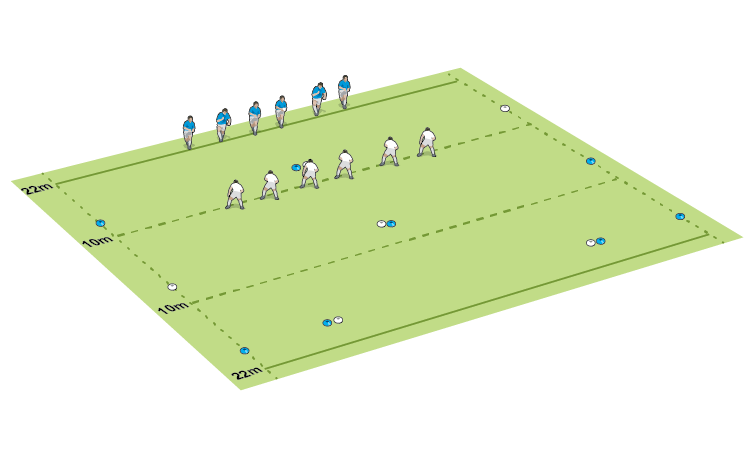
Game 1: A 30m x 20m pitch (or similar), with a coloured cone at each end to mark different try lines.
Game 2: As above, but no cone.
HOW TO PLAY
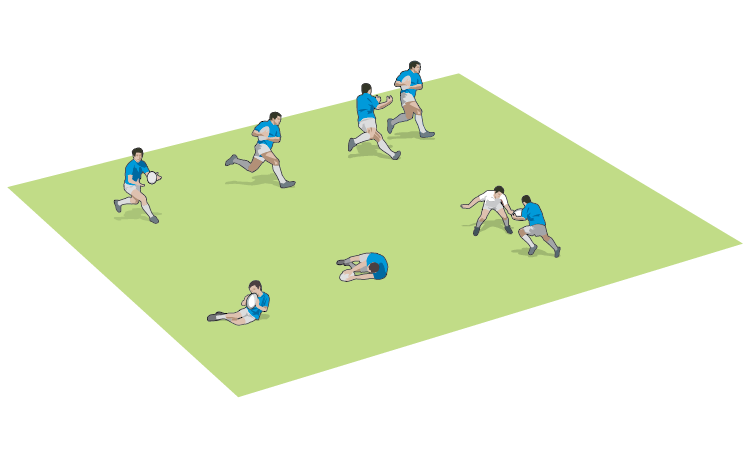
GAME 1: Play a normal game of touch (or tackling) rugby. For touch, it’s a two-handed touch and the ball carrier has to pass afterwards. Allow five touches (or similar) before a turnover. Score as normal. However, if a team scores in the narrower area, they get to keep the ball. That means you restart the tackle count and start from where they scored. Note that a player can run through the wide area and score in the narrow area. Have a deadball line of about 5m, though.
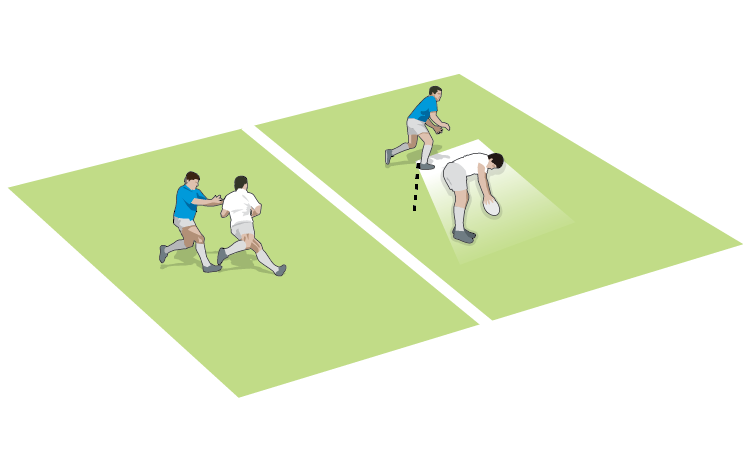
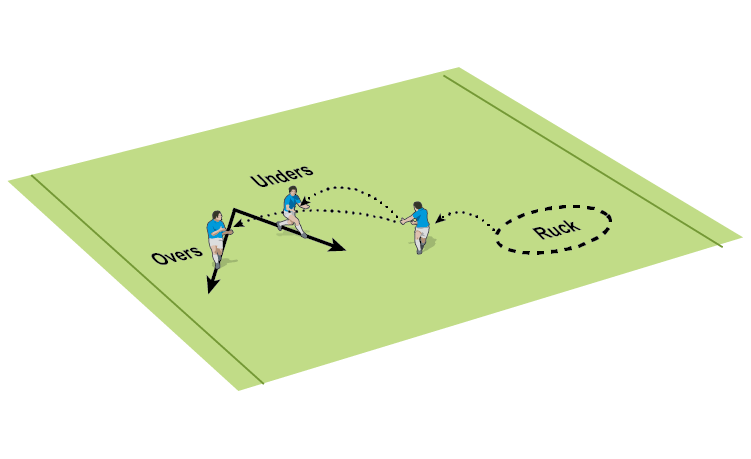
GAME 2: Play touch rugby, but the rules are different for each team. The team scoring in the wide area passes behind them when they are tackled. They have a limit of six touches before a turnover. The team scoring in the narrow area have three seconds to pass, or it’s a turnover. When a try is scored, the ball is left on the ground and the other team picks it up to play. That can mean a long or short distance to go to score a try. When an infringement occurs, put the ball on the ground and count down three seconds before the attacking team starts with a pass off the ground.
Game 1

- Normal touch rugby. If the attack scores in the ‘keep ball’ zone, they retain possession and attack the other way
- Additional rule: Players can run through the wide area and touch down behind the ‘keep ball’ line. Include a deadball line though!
- Play first to five to add some frisson to the game
Game 2 - blue attack
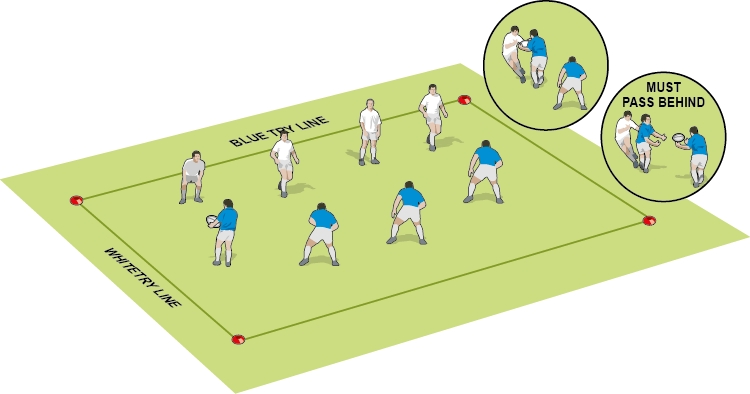
- Blues attack the wide line
- If touched, they pass behind them. They have a limit of six touches before a turnover
Game 2 - white attack
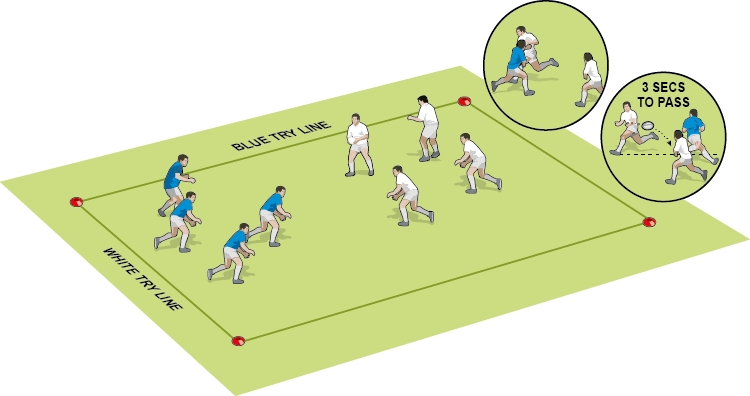
- Whites attack the narrow line
- If touched, they have three seconds to pass – they can keep running but cannot score if touched
- After a score, the team who scored leave the ball on the try line, and the defenders pick it up to play
Be a more effective, more successful youth rugby coach
- Win more games, without sacrificing the crucial element of fun
- Develop every player, regardless of vast differences in ability
- Run a respected, professional programme - even with a full-time job and limited time
Subscribe for full access
Or register and unlock 2 free articles,
receive our weekly newsletter, and
get a FREE coaching e-book.
Or if you are already a subscriber login for full access.

Dan Cottrell

Latest Issue

Subscribe Today
Subscribe Today
Newsletter Sign Up

Coaches Testimonials

Colin Shaw

Gary Lee Heavner
Subscribe Today
Latest Issue
Be a more effective, more successful rugby coach
In a recent survey 89% of subscribers said Rugby Coach Weekly makes them more confident, 91% said Rugby Coach Weekly makes them a more effective coach and 93% said Rugby Coach Weekly makes them more inspired.
Get Weekly Inspiration
All the latest techniques and approaches


Rugby Coach Weekly offers proven and easy to use rugby drills, coaching sessions, practice plans, small-sided games, warm-ups, training tips and advice.
We've been at the cutting edge of rugby coaching since we launched in 2005, creating resources for the grassroots youth coach, following best practice from around the world and insights from the professional game.
