
 close
close


 LOGIN
LOGINRugby Coach Weekly is the largest digital resource for youth coaches, trusted by 15,000+ coaches, teachers and parents every month.
-
Coach with confidence
-
Improve your teams faster
-
Run great sessions with less effort
- Expert coaching advice from TOP Coaches
- Training sessions for players from U6 to U17+.
Changing up 3 v 2s


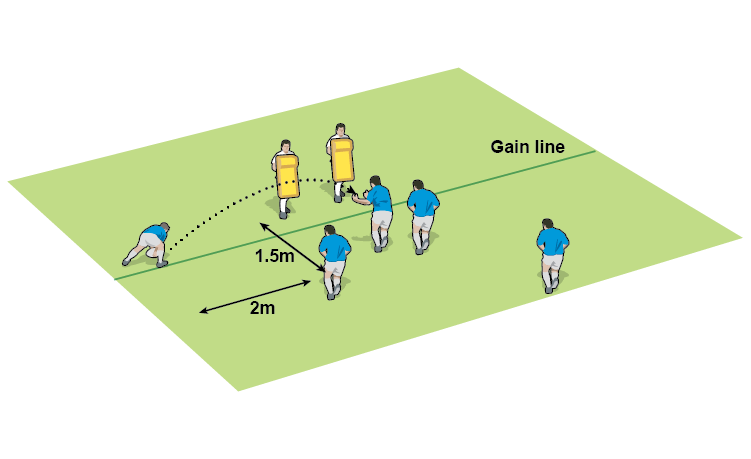
Create 3v2 situations in a training context that disrupt the attack and defence enough to make them concentrate on good skills rather than “gaming” the scenario.

Gaming the scenario means players manipulating the rules and setup to win the game in a contrived manner rather than using the natural order of rugby.
For example, a 9v6 game constrains the defence and provides opportunities for the attack. Players should use the natural order of rugby to score tries by fixing players, and the defenders need to use a sliding defence with plenty of communication to stop that.
However, if you set up decision-making exercises which only have one or two decisions, then the players robotically perform the skill. The best example is a 2v1 exercise. If the defender comes from a fixed point against the attackers who come from pretty much a fixed point, the ball carrier has only to run in one direction. He can pass if the defender is attracted to him or dummy pass if the defender drifts over. The rest is just good technique.
The canniest players “game” it by running an exaggerated line at the inside of the defender. In a real game, another defender would probably step across to fill that gap.
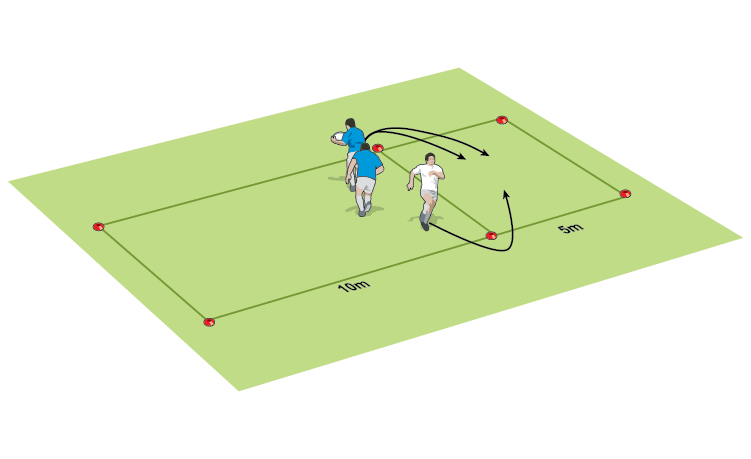
Better 2v1 exercises mix up the starting points, so the attackers must constantly reassess their running lines based on where the defender is coming from.
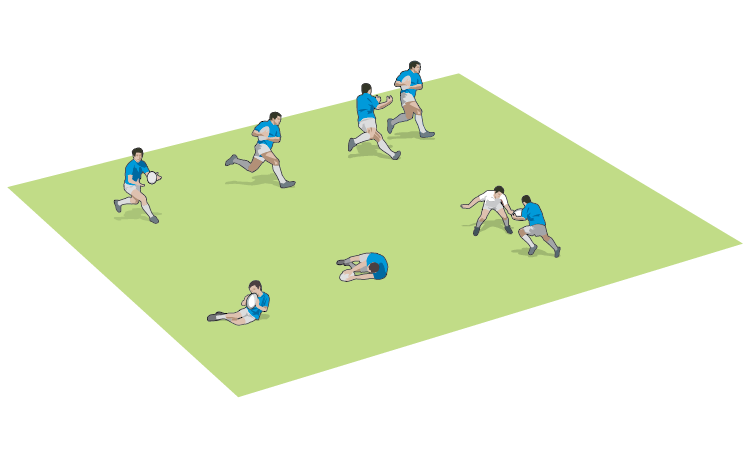
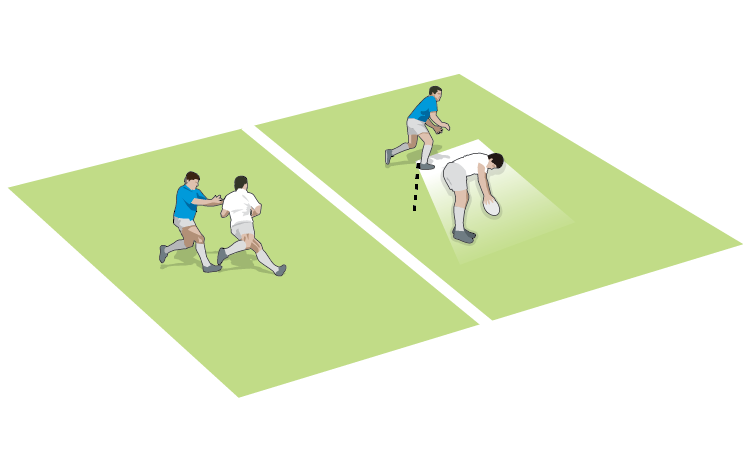
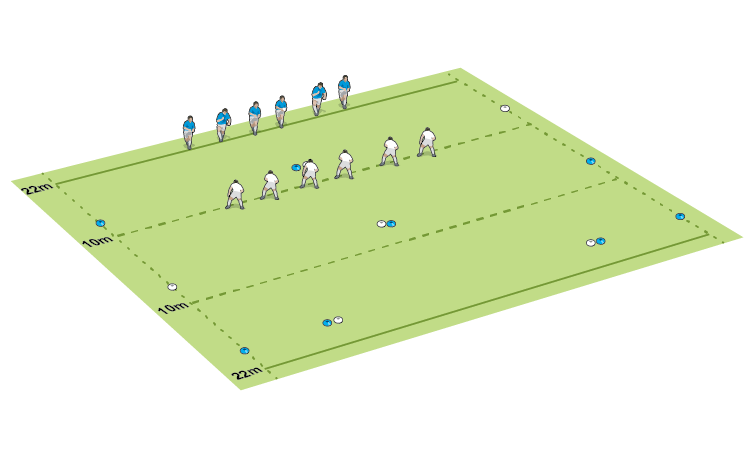
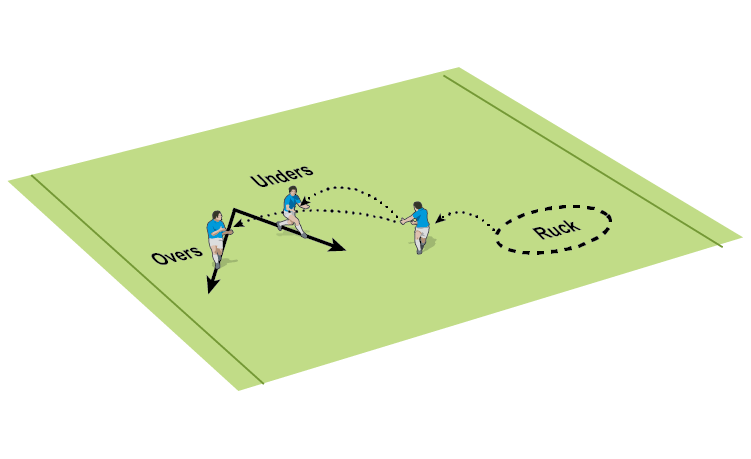
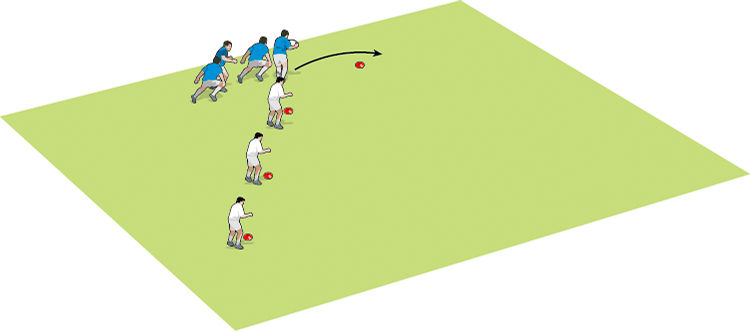
Take this into a 3v2 situation, and any way you can create a little piece of chaos helps create more dynamic and challenging exercises. Mark Calverley’s exercise , Isolate and split for 3 v 2 success is always a favourite of mine. There’s enough change to make the players consider many options. Also, Damian McGrath’s 4v3 exercise has the same effect.
Effectively, in both exercises, the players don’t have much opportunity to plan ahead. More than one option opens up, so they can’t simply stick to one plan which works every time. By more dynamic, we mean changing all the time, so one run through will rarely look like another.
By running these exercises, you can build up the players’ skills base to fix defenders and pass accurately to break the defensive line. When I coach these exercises, I’m encouraging the first receiver to do the following:
- Demand the ball as early as possible. The more time they have with the ball, the more time they have to manipulate the defence.
- Attack a defender, not a space. Counterintuitively that means to attack a space first then attack the defender. Initially, the attacker runs hard to a space. Once the defender moves towards that space, the ball carrier attacks the defender. The defender now must focus on the ball carrier and can’t leave the corridor they were in.
- Run hard, pass soft. That mindset, in these situations, allows the ball carrier to fix a defender and then feed a pass into the space where the next support player is running into. Passing soft often puts the ball in front of the supporting player. Passing hard tends to pass the pass at the supporting player.
- Always look to beat a defender first. The supporting players adjust accordingly, read the situation and are ready for a pass.

Dan Cottrell
Latest Issue

Subscribe Today
Subscribe Today
Newsletter Sign Up
Coaches Testimonials

Colin Shaw

Gary Lee Heavner
Subscribe Today
Latest Issue
Be a more effective, more successful rugby coach
In a recent survey 89% of subscribers said Rugby Coach Weekly makes them more confident, 91% said Rugby Coach Weekly makes them a more effective coach and 93% said Rugby Coach Weekly makes them more inspired.
Get Weekly Inspiration
All the latest techniques and approaches


Rugby Coach Weekly offers proven and easy to use rugby drills, coaching sessions, practice plans, small-sided games, warm-ups, training tips and advice.
We've been at the cutting edge of rugby coaching since we launched in 2005, creating resources for the grassroots youth coach, following best practice from around the world and insights from the professional game.
