
 close
close


 LOGIN
LOGINTracking to tackle
A good tackle starts with good positioning before contact. If the feet are too far away from the ball carrier, the tackler cannot make effective contact.
Start with tracking
From a young age, Australian players are taught how to track the ball carrier. It goes before tackle technique. Tracking gains the correct field and body position to execute a tackle.
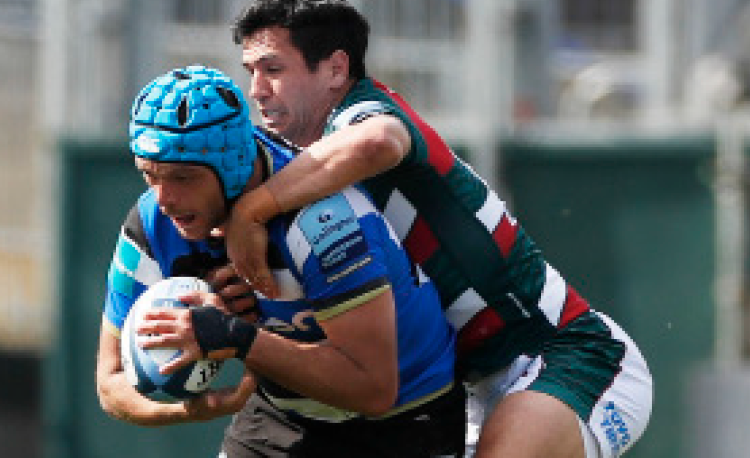
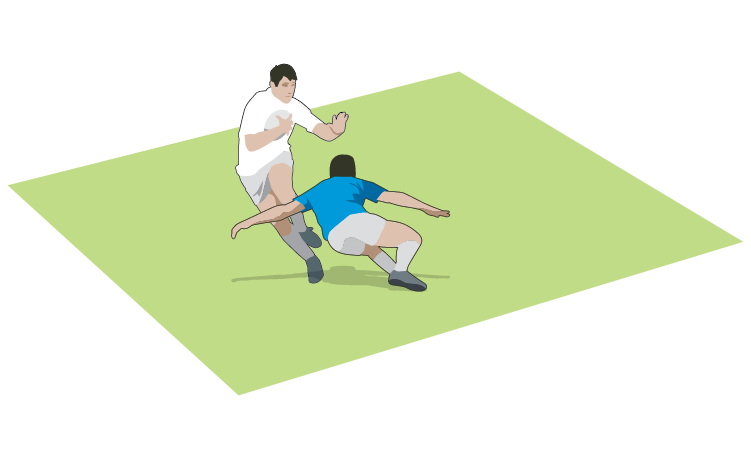
When this tackle is made, the defender needs to be close enough to hit with his shoulder and utilise leg drive to maximise impact. Tracking also involves taking up the attacker’s time and space, pressurising him into errors.
A good defensive system might turn over the ball even before it has had to make a tackle. A lot of tracking training focuses on balance and stability. Therefore, we work on foot speed, agility, core stability, rotational strength and reaction time through introducing shadowing exercises and wrestling drills that require pushing and resisting movements.
Good technique
Good technique in these exercises starts from the ground up. Feet should be shoulder-width apart, moving from wide to wider to preserve stability under force, with one foot in front of the other depending upon which direction you are applying or resisting force. The player keeps his weight on the balls of his feet and bends at the hips and knees when lowering his centre of gravity.
These exercises are applicable from Walla rugby (the youngest age group in Australia) through to the senior international teams. The top team coaches use balance and stability exercises with their teams. This is so fundamental that I make sure my teams are doing a couple of these activities at every session they attend.
Teach tracking

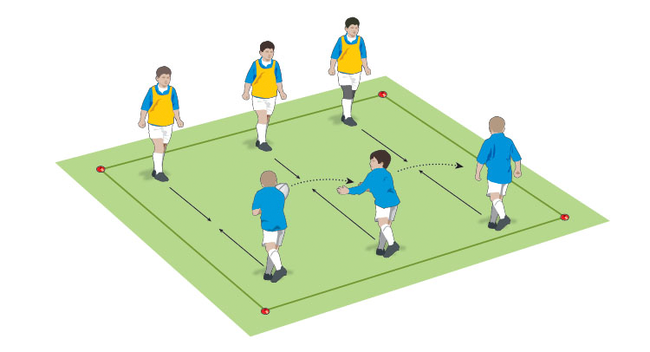
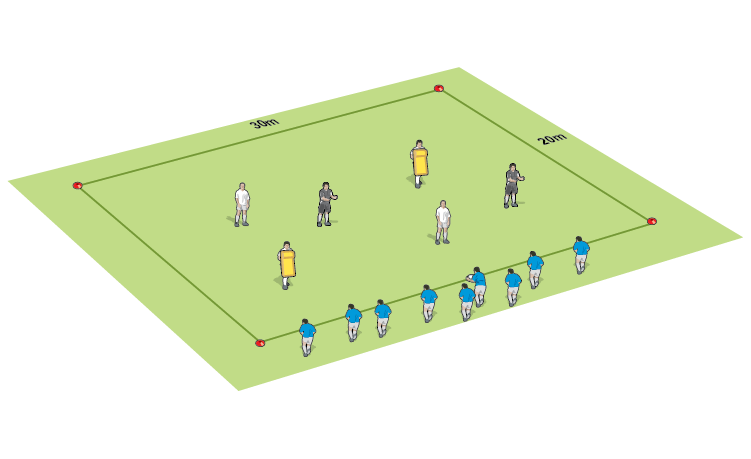
- In a 5m square, a ball carrier jogs diagonally with a defender shadowing him.

- The defender aims to stay slightly on the inside to get both hands on the attacker’s hips.
DEVELOPMENT

- As the attacker ups his pace and starts in the middle of the square, the defender changes his own starting point.
- Now he himself is also moving quicker, his feet should be a shoulder-width apart and he may have to move backwards to keep the attacker on the inside.
Be a more effective, more successful youth rugby coach
- Win more games, without sacrificing the crucial element of fun
- Develop every player, regardless of vast differences in ability
- Run a respected, professional programme - even with a full-time job and limited time
Subscribe for full access
Or register and unlock 2 free articles,
receive our weekly newsletter, and
get a FREE coaching e-book.
Or if you are already a subscriber login for full access.

Dan Cottrell
Latest Issue
Subscribe Today
Premium Books
Subscribe Today
Newsletter Sign Up
Coaches Testimonials

Colin Shaw

Gary Lee Heavner
Subscribe Today
Latest Issue
Be a more effective, more successful rugby coach
In a recent survey 89% of subscribers said Rugby Coach Weekly makes them more confident, 91% said Rugby Coach Weekly makes them a more effective coach and 93% said Rugby Coach Weekly makes them more inspired.
Get Weekly Inspiration
All the latest techniques and approaches


Rugby Coach Weekly offers proven and easy to use rugby drills, coaching sessions, practice plans, small-sided games, warm-ups, training tips and advice.
We've been at the cutting edge of rugby coaching since we launched in 2005, creating resources for the grassroots youth coach, following best practice from around the world and insights from the professional game.
