
 close
close


 LOGIN
LOGINRugby Coach Weekly is the largest digital resource for youth coaches, trusted by 15,000+ coaches, teachers and parents every month.
-
Coach with confidence
-
Improve your teams faster
-
Run great sessions with less effort
- Expert coaching advice from TOP Coaches
- Training sessions for players from U6 to U17+.
Why passing skills are tough to coach
Handling is more than being able to catch and pass; it’s knowing when to pass and which pass to use, says Phil Mooney, Wests Bulldogs’ director of rugby.


Coaches should be careful not to run drills for the sake of covering an area of the game.
They must see there is a real transference of the skills into matchdays. Contact skills are easy to see, but catch-and-pass, which goes with decision-making, needs more thought.
To do this in training, I am creating situations where the players should recognise when, and when not, to pass.
If there is an opportunity to pass, and the player does not pass, there are two principle reasons:
- The player lacks the ability to make the pass required, so holds onto the ball.
- The player doesn’t see that they should be making the pass, due a to lack of vision.
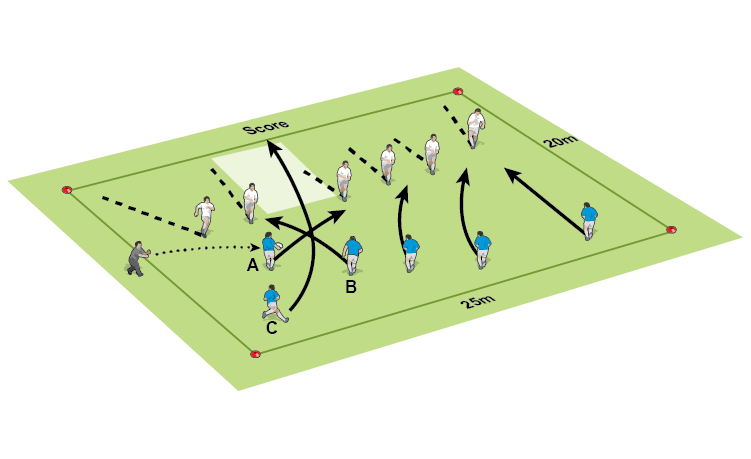
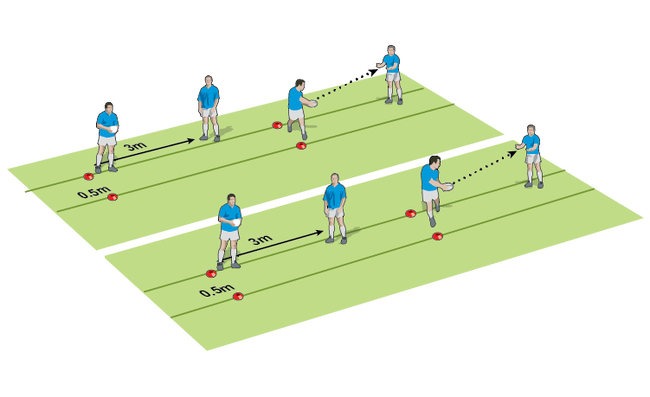
We can work on passing skills in isolation, but we need to develop the players’ ability to use the right pass on the right occasion. An example of how we do this is where we use simple 3v2 drills.
By changing the parameters of where and when the defence pressurises the attack, we can force players into making passing decisions.
Initially, by having each defender marking the first two players, the passing decisions are obvious. By reducing the time and space, and by changing where the defenders start from, the decisions are less obvious.
We can use 3v2 drills as part of our warm-up or primer for the main session. We might then develop this into a 12v8, and finally a 10v10.
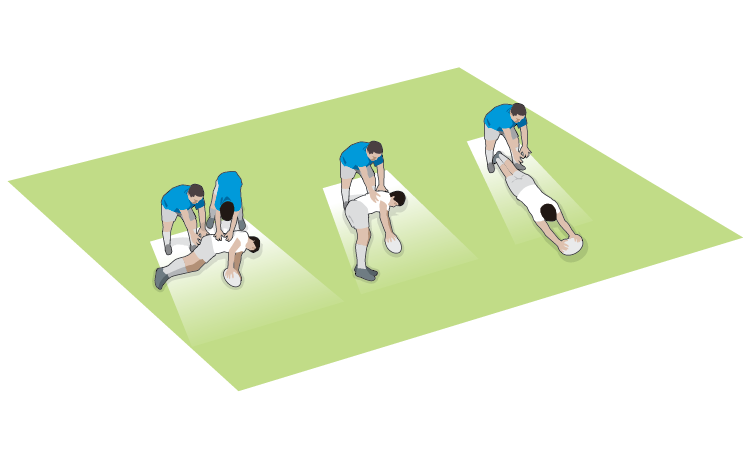
If we create front-foot fast ball (by efficient rucks from go-forward ball), we are going to chew up defenders.
With these defenders on the ground or out of position, there is a good chance to create the 3v2s that we have been practising earlier.
Front-foot fast ball
With our catch-and-pass decisions heightened, the challenge is to create 3v2s in matches so we can exploit our skills.
Excellent execution of contact skills allows us to have front foot (that is going forward) fast ball.
The philosophy is simple. We want the ball carrier, if they are going to take contact, to be tackled side-on, or only with the defender using their arms. Therefore, in training, I spend time on ball carriers developing the ability to move based on simple cues.
To do this, the ball carrier should be running square at the defensive line, and then, at the right moment, change the running line.
The simplest cue is seeing the defender ’plant’ prior to the tackle. A defender will dip their body to make the tackle, which means they stop their momentum temporarily.
At this point, the ball carrier can move off the original line – the line the defender is prepared to tackle – and attack the ’weak shoulder’. If the defender has planted to drive in with their right shoulder, the ball carrier steps towards the other shoulder.
Developing decision-makers

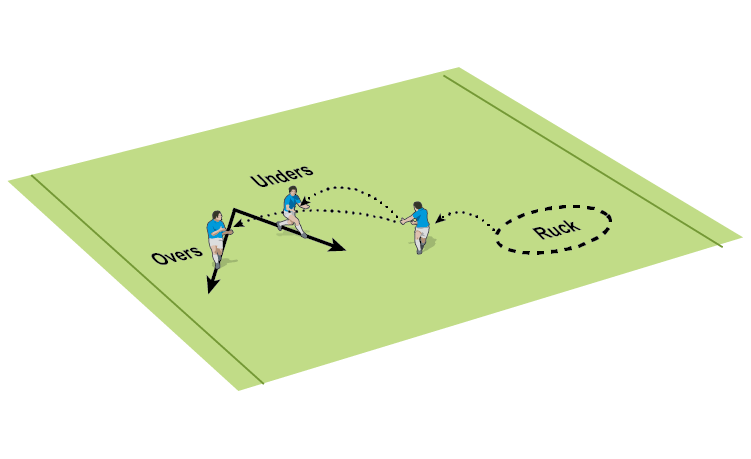
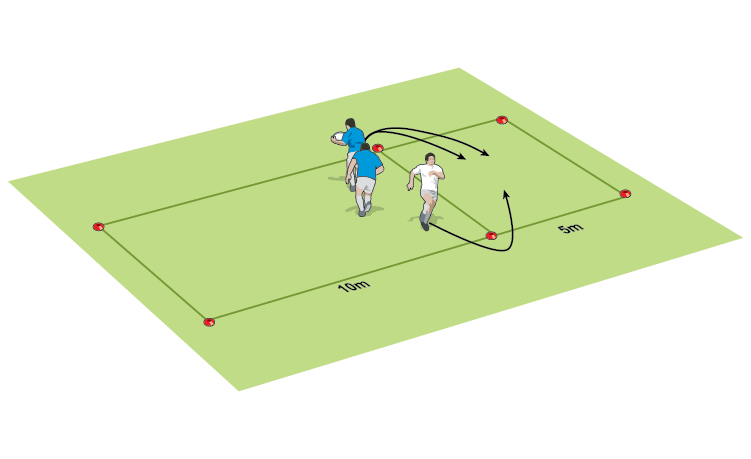
The basic exercise has three attackers take on two defenders. The defenders focus on the first two attackers. Then, we can develop it by changing which attacker the defenders will mark.
Changing the parameters
The 3v2 exercise can be changed quickly to increase the decision-making pressures.
The size of the area can be made smaller or larger. The defenders can come from different angles and distances.
Planting the defende
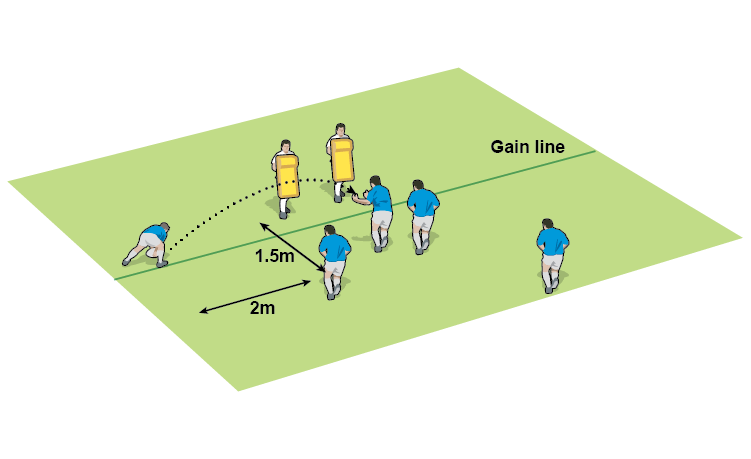
If the ball carrier expects to take contact, they can create more go-forward if they can plant the defender
- The carrier runs straight at the defender.
- As the defender ’plants’ to make the tackle, they step to the side.
- The attacker can now either break the tackle, or be in a position to free their arms to offload the ball.
Related Files
Latest Issue

Subscribe Today
Subscribe Today
Newsletter Sign Up
Coaches Testimonials

Colin Shaw

Gary Lee Heavner
Subscribe Today
Latest Issue
Be a more effective, more successful rugby coach
In a recent survey 89% of subscribers said Rugby Coach Weekly makes them more confident, 91% said Rugby Coach Weekly makes them a more effective coach and 93% said Rugby Coach Weekly makes them more inspired.
Get Weekly Inspiration
All the latest techniques and approaches


Rugby Coach Weekly offers proven and easy to use rugby drills, coaching sessions, practice plans, small-sided games, warm-ups, training tips and advice.
We've been at the cutting edge of rugby coaching since we launched in 2005, creating resources for the grassroots youth coach, following best practice from around the world and insights from the professional game.
