
 close
close


 LOGIN
LOGINEnd-To-End
What you need for this game
- 12 Players
- 6 Balls
- 8 Cones
Set-up
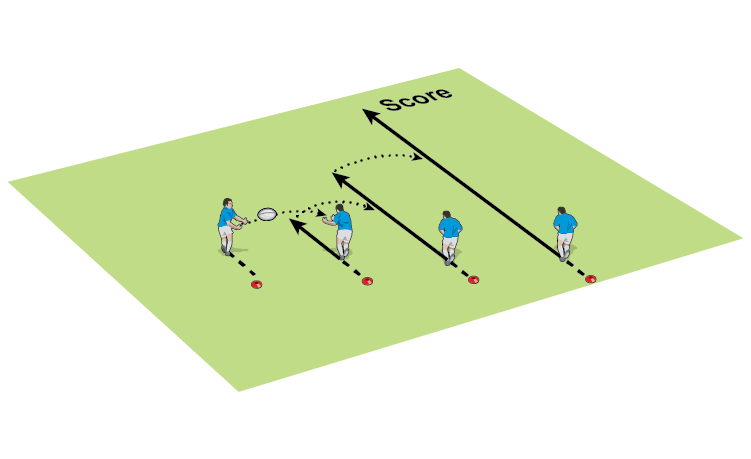
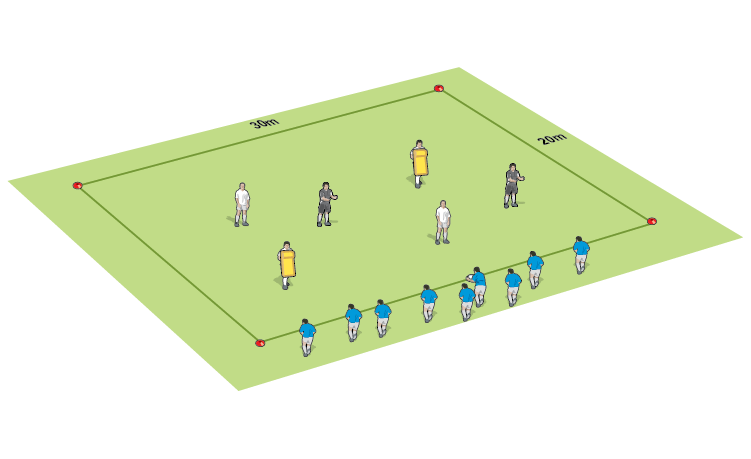
Use the cones to measure out a playing area measuring 30m x 50m. Use more cones to mark out a 10m central zone. Both ends will be try lines, as shown 1.
Rules
Play two-handed touch rugby.
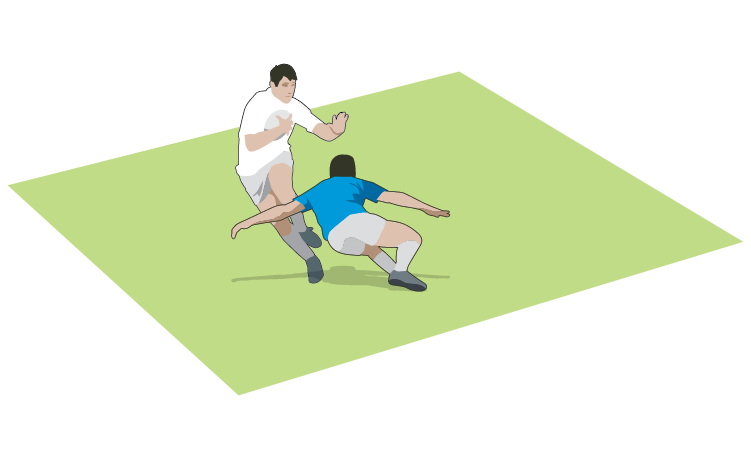
Each play ends when either a try is scored, the defenders take possession of the ball or the player in possession is tackled by a defender.
In this game you may stop an attack for an incorrect grip or carry, a poor pass, or a catch that hits the receiver’s shirt. Any of the above should count as a breakdown in play.
What you do as coach
1. Position a group of three defenders at each end of the playing area and six attackers in the 10m central zone. Place three balls on the ground on each side of the central zone.
2. Pass a ball to the attackers from the sideline to start the game. The aim is for the six attackers to attempt to score over the try line at one end of the playing area – they can decide which end they want to attack first. The defenders can move only once the attackers have left the central zone.
3. When a try is scored, or the attack breaks down, the attackers turn, collect another ball from you in the central zone and attack the opposite try line. Again, the defenders at that end can’t move until the attackers have left the central zone.
The game continues until all six balls have been used. Attackers and defenders then rotate and the game continues.
How you can progress the game
Make the game tighter by decreasing the size of the playing area. This will put the players’ skills under greater pressure. Prolong the game by adding more balls. This will test the players’ skills when they are fatigued.


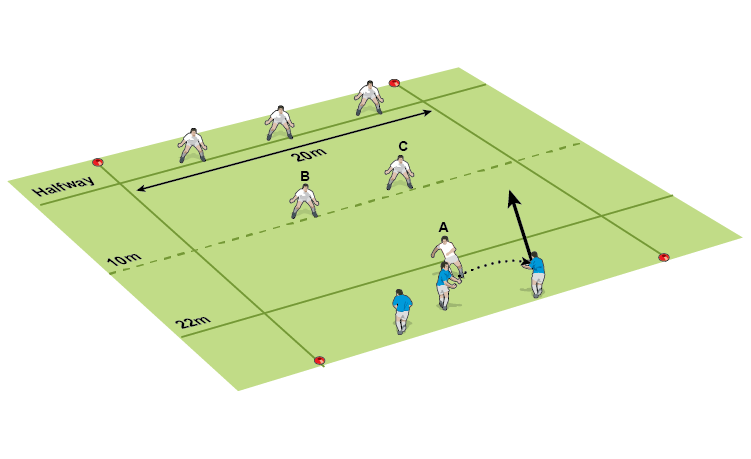
- Three defenders on each try line.
- Six attackers in 10m zone.
- Three balls each side.
- Warn: Let the attackers know they must pass in front of the receiver, who should have his hands up ready to catch in front of his body.

- Pass the ball in.
- Attackers advance.
- Defenders wait until attackers pass 10m line.
- Observe: The attackers should be running at pace, with heads up scanning the movement of the defenders. Are your players doing this?

- Attackers head for opposite try line.
- Defenders wait until attackers pass 10m line.
- Suggest: Attackers should vary their running lines to penetrate gaps or overlaps in the defenders’ line. Suggest that your players do this.
Be a more effective, more successful youth rugby coach
- Win more games, without sacrificing the crucial element of fun
- Develop every player, regardless of vast differences in ability
- Run a respected, professional programme - even with a full-time job and limited time
Subscribe for full access
Or register and unlock 2 free articles,
receive our weekly newsletter, and
get a FREE coaching e-book.
Or if you are already a subscriber login for full access.
Latest Issue
Subscribe Today
Subscribe Today
Newsletter Sign Up

Coaches Testimonials

Colin Shaw

Gary Lee Heavner
Subscribe Today
Latest Issue
Be a more effective, more successful rugby coach
In a recent survey 89% of subscribers said Rugby Coach Weekly makes them more confident, 91% said Rugby Coach Weekly makes them a more effective coach and 93% said Rugby Coach Weekly makes them more inspired.
Get Weekly Inspiration
All the latest techniques and approaches


Rugby Coach Weekly offers proven and easy to use rugby drills, coaching sessions, practice plans, small-sided games, warm-ups, training tips and advice.
We've been at the cutting edge of rugby coaching since we launched in 2005, creating resources for the grassroots youth coach, following best practice from around the world and insights from the professional game.
