
 close
close


 LOGIN
LOGIN100 Passes
What you need for this game
- 10 Players
- 1 Ball
- 4 Cones
Set-up
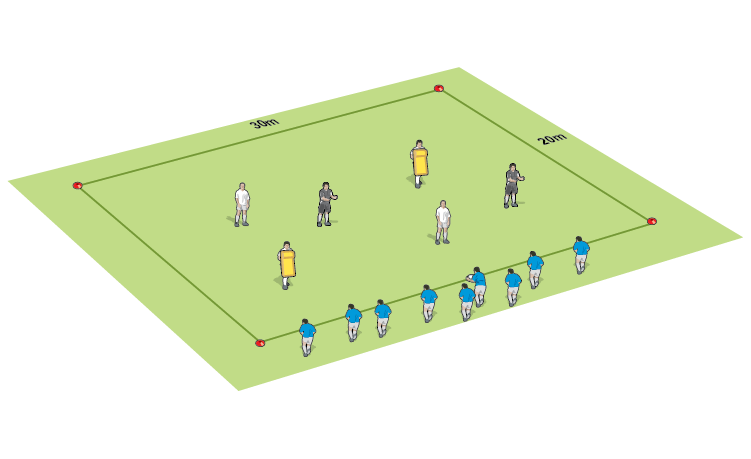
Use cones to mark out a playing area measuring 20m x 30m, as shown 1.
Rules
Players attempt to make 100 passes as fast as possible. Any errors and the count restarts from zero.
What you do as coach
1. Divide your players into two groups of five and line them up in the playing area as shown. The first player in the first line (1a) begins with the ball.
2. On your whistle, player 1a runs forwards, supported by the other players in his line. They pass at speed to player 1e at the end of the line. Having made a pass, each player returns to his starting position then moves down a place (i.e. 1a moves down to 1b, 1b moves to 1c, etc.).
3. When he reaches the side line, player 1e passes the ball to the first man in the second line, player 2a, and waits to take his position. The second line then runs and speed passes in the same way. As before, each player returns to his starting position then moves down a place (2a moves to 2b, etc.). Player 2e passes to the first player in the first line and takes his position, and the drill continues until the players have completed 100 consecutive passes without error.
How you can progress the game
Change the dynamics of the game by increasing the size of the playing area. This will give the players further to run, which will be more tiring and force them to make longer passes.


- Line the players up as shown above.
- Player 1a starts with the ball.
- Inform: Explain to your players that good communication is key in this game as they need to organise themselves quickly and effectively.

- First group run and pass ball at speed.
- Players return and move down one place.
- Observe: This is a great exercise for testing out core skills at pace in a tight area. See whose handling, passing and catching stand the test.

- End player passes to first player in other group and replaces him.
- Play repeats.
- Pressurise: If you think your players’ skills need a bit of a harder workout, call out to them to complete several plays running flat out.
Be a more effective, more successful youth rugby coach
- Win more games, without sacrificing the crucial element of fun
- Develop every player, regardless of vast differences in ability
- Run a respected, professional programme - even with a full-time job and limited time
Subscribe for full access
Or register and unlock 2 free articles,
receive our weekly newsletter, and
get a FREE coaching e-book.
Or if you are already a subscriber login for full access.
Latest Issue

Subscribe Today
Subscribe Today
Newsletter Sign Up


Coaches Testimonials

Colin Shaw

Gary Lee Heavner
Subscribe Today
Latest Issue
Be a more effective, more successful rugby coach
In a recent survey 89% of subscribers said Rugby Coach Weekly makes them more confident, 91% said Rugby Coach Weekly makes them a more effective coach and 93% said Rugby Coach Weekly makes them more inspired.
Get Weekly Inspiration
All the latest techniques and approaches


Rugby Coach Weekly offers proven and easy to use rugby drills, coaching sessions, practice plans, small-sided games, warm-ups, training tips and advice.
We've been at the cutting edge of rugby coaching since we launched in 2005, creating resources for the grassroots youth coach, following best practice from around the world and insights from the professional game.
