
 close
close


 LOGIN
LOGINMaking your players 'Contact Confident'
From landing safely to ensuring player and coach buy-in, an introduction to World Rugby’s new resource from one of its key drivers, DR ANNA STODTER.
The Contact Confident resource on World Rugby’s website was developed to create evidence-informed coaching activities that promote confidence, physical competence and safety in the contact area.
It is about managing the body as a ball carrier in the tackle, and works for players who have not played before, haven’t played much or have taken a break from the game.
It is also suitable for more experienced players who might have had a bad game, need a boost in confidence or want to improve their technique.
A contact-confident player is safe and effective in contact situations. This comes through good coaching, developing a player’s understanding of which technique to use and being able to do it under pressure.
The programme was inspired by research into head impacts. These were measured using instrumented mouthguards.
The evidence gathered by Dr Elisabeth Williams at Swansea University found that some of the biggest impacts came from players hitting their heads off the ground in a whiplash manner.
It is probably more pronounced in the women’s game because of the wider range of experiences and training ages. I started playing at 25 and no-one taught me to tackle before my first game of full-contact rugby.
As a coach, you can use the Contact Confident principles as a template to check whether even experienced players use strong and safe techniques.
There are so many varied pathways, with different coaching ideas, that there may be something a player needs to catch up on.
A coach has two detailed resources available from World Rugby - Tackle Ready and Contact Confident - which give them the tools for safer, stronger and more effective players.
Ground contact detail
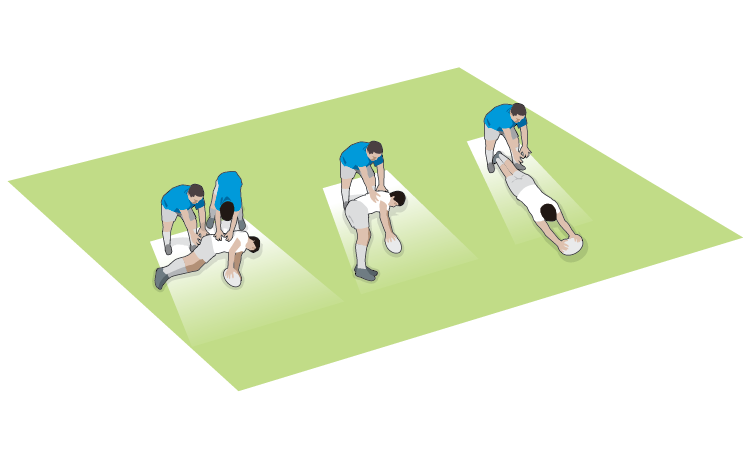
A ball carrier needs to understand how to fall and land safely.
It may be that they are bouncing off and out of a tackle or they are grappled to the ground by the tackler.
The first key point in doing this safely is that the faller needs to create a big surface area when they land. A small surface area, like putting a hand out, will cause problems.
This should be remembered by the ball carrier as they are tackled. If they have just offloaded the ball, they may think, "That’s my job done" - but the full job is to land safely, preventing the whiplash effect, so they can participate in the next phases of play.
The falling ball carrier should focus on preventing a sudden jolt when the ground impact happens.
It can be likened to the elasticity of a bobble on a bobble hat. To avoid ’bobbling around’, players should be braced as they fall, tucking in their chin (like making a double chin) while keeping a neutral neck and back position.
Be a more effective, more successful youth rugby coach
- Win more games, without sacrificing the crucial element of fun
- Develop every player, regardless of vast differences in ability
- Run a respected, professional programme - even with a full-time job and limited time
Subscribe for full access
Or register and unlock 2 free articles,
receive our weekly newsletter, and
get a FREE coaching e-book.
Or if you are already a subscriber login for full access.

Dr Anna Stodter
Latest Issue

Subscribe Today
Subscribe Today

Newsletter Sign Up

Coaches Testimonials

Colin Shaw

Gary Lee Heavner
Subscribe Today
Latest Issue
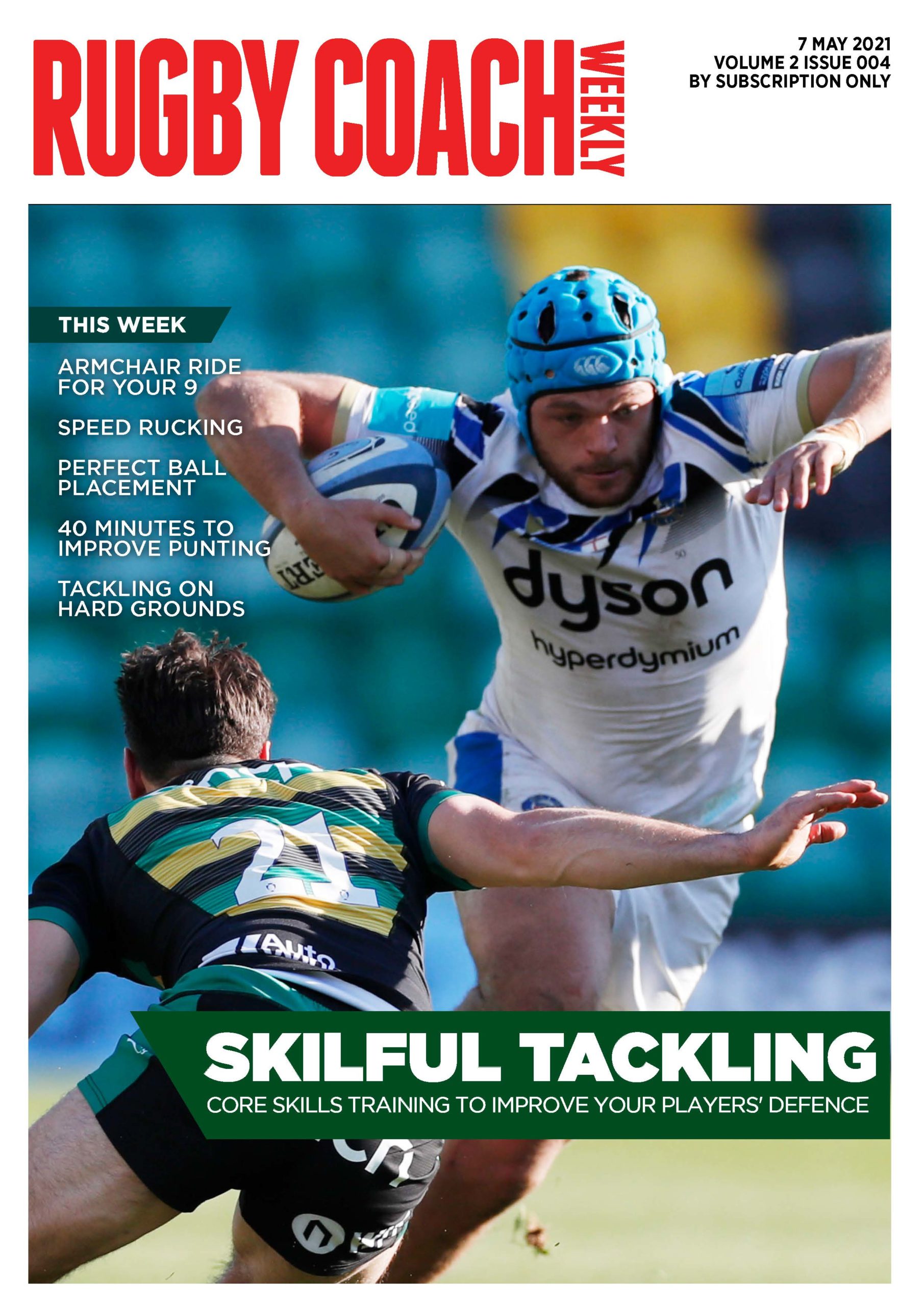
Be a more effective, more successful rugby coach
In a recent survey 89% of subscribers said Rugby Coach Weekly makes them more confident, 91% said Rugby Coach Weekly makes them a more effective coach and 93% said Rugby Coach Weekly makes them more inspired.
Get Weekly Inspiration
All the latest techniques and approaches


Rugby Coach Weekly offers proven and easy to use rugby drills, coaching sessions, practice plans, small-sided games, warm-ups, training tips and advice.
We've been at the cutting edge of rugby coaching since we launched in 2005, creating resources for the grassroots youth coach, following best practice from around the world and insights from the professional game.
