
 close
close


 LOGIN
LOGINRugby Coach Weekly is the largest digital resource for youth coaches, trusted by 15,000+ coaches, teachers and parents every month.
-
Coach with confidence
-
Improve your teams faster
-
Run great sessions with less effort
- Expert coaching advice from TOP Coaches
- Training sessions for players from U6 to U17+.
Overcoming the fear of tackling the Uncle Gunny way


DOR: Gunny, a Mum came to me recently saying her son loves his rugby. However, he ‘needs’ to overcome his fear around tackling and contact. Thoughts?
Gunny: 11 hey? And you say, he’s been with the club for four years. It’s not his ‘fear’. It’s the coaching.
But here is some of my work to give you a clue.
This is all about physical competence and confidence and needs to be revisited every session.
DOR: Ok.
Gunny: ‘Maslow before Bloom’… The ‘real’ learning never begins to live to potential unless there is psychological safety.
Then Dan shared this question with me from a U9s coach.
“…when it came to questions about the physical preparation of players. In the context of unknown unknowns, I was just wondering if there were any things a coach needed to think about in addition to skills to get kids ready for rugby as tackling, rucks, etc. get added. Put another way, for these age groups, is the best physical preparation to be safe and successful at age-grade rugby playing age-grade rugby and rugby-related games or is something else required?”
Gunny: YES! In fact anyone who has dabbled in wrestling, Judo etc knows that this all can and should be taught from an early age. They should be doing more of this below, but they don’t have to get into a Dojo.
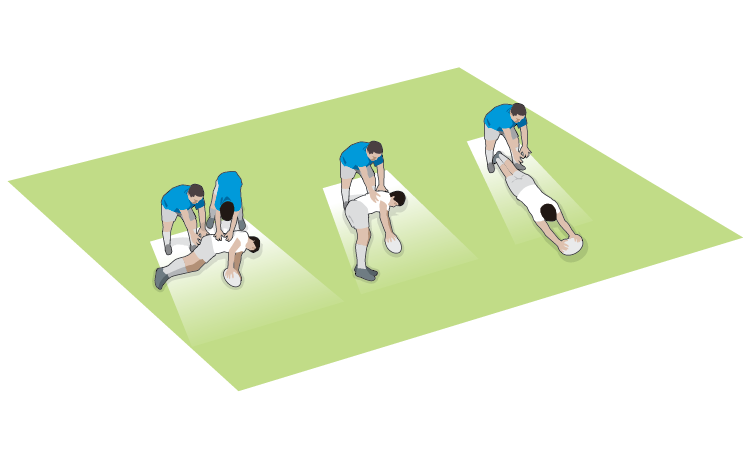
But the missing link is the ‘engagement’ piece. Get them on the ground through engagement activities. They are getting their body’s central nervous system ready for developing confidence and competence of ‘contact’ implicitly. Without them even knowing it.
Like in this French Rugby video.
The key messages: movement, maximal opportunities to fall, fun, getting dirty, backyards, role models, carnival atmosphere and still about contact sport.
To work out how to scaffold this and indeed the other physical competencies and confidence development involved look below.
Grassroots coach: The RFU’s latest community update appears to be suggesting that now all age-grade groups should be doing their Activate program, not just U13+.
Gunny: The Activate program is impressive. It breaks it into age groups and sports in Australia like AFL have plagiarised from it wilfully. Unfortunately, they don’t have coaches capable of delivering it. Thus it’s incumbent of us at the grassroots to actually do it.
Grassroots coach: It just got me wondering if rugby-related warm-up games are sufficient to build whatever strength, stamina, flexibility, etc. was needed. I know our understanding of youth physiology has improved a lot since I was a kid and I’m trying to get smarter on that subject.
Gunny: Great point. Depends on the coaches again. Anyone who is confused by the ecological dynamics around ‘self-organisation’ OR ‘ditch those drills’ has not taught proper Physical Education. That is, Australian or, Queensland physical education… Scaffolding is very important.
SUMMARY
What she/he (the grassroots coach) is getting at here is sports specific strength and conditioning which I find that most recent strength and conditioning graduates and sports coaches struggle with. For example, having coached right around the UK or Ireland in 2019 and 2020 pre-covid and hearing about the ‘Tower of Power’ I was not shocked to see how poor young people’s cores were, nor that many coaches were struggling. However, with young people not as rough and tumble anymore it requires some scaffolding as Uncle Gunny tries to do from a very young age.
Step one: get them ‘dirty’ and embracing the ground at every opportunity. To do this you need some scaffolding tricks from Uncle Gunny. These are also ‘engagement’ tools or ways to hook your learners before the more ‘technical’ safety conscious preparation begins. You have seen already some Gunny ways but let me show how you can and must do this with all of your learners.
To prove it, I chose Aussie gals AFL. The reason is simple, they don’t do this at all. It is an unsafe sport as a result. Contact outside of shoulder charge called a ‘bump’ see here:
Contact training is very foreign to them in training. As I introduce it all to them, it’s the opposite of the ‘Get Hard’ scene where Will Ferrell is doing Capoeira ‘dancing’. They, like many contact sports around the world have been given the weapon, the shoulder. What we need to revise every session and build upon are the dance moves: physical competence and confidence.
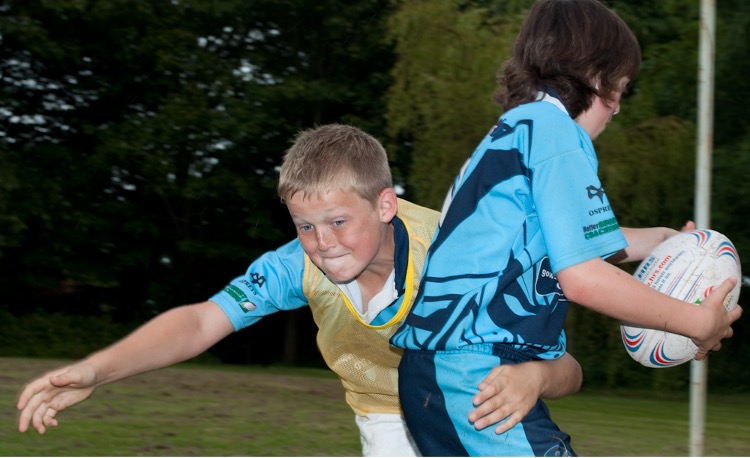

Craig Gunn
Latest Issue

Subscribe Today
Subscribe Today
Newsletter Sign Up
Coaches Testimonials

Colin Shaw

Gary Lee Heavner
Subscribe Today
Latest Issue
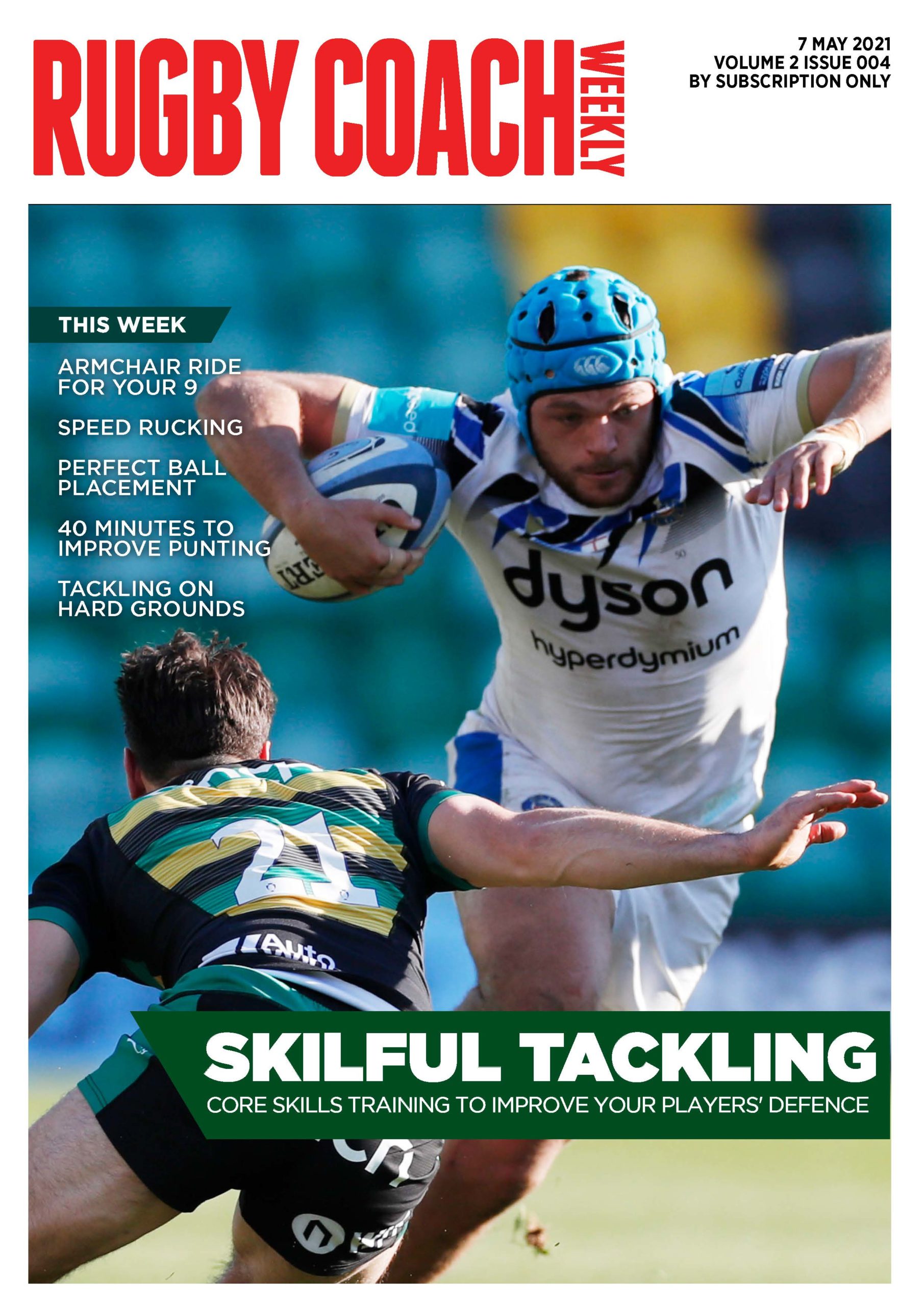
Be a more effective, more successful rugby coach
In a recent survey 89% of subscribers said Rugby Coach Weekly makes them more confident, 91% said Rugby Coach Weekly makes them a more effective coach and 93% said Rugby Coach Weekly makes them more inspired.
Get Weekly Inspiration
All the latest techniques and approaches


Rugby Coach Weekly offers proven and easy to use rugby drills, coaching sessions, practice plans, small-sided games, warm-ups, training tips and advice.
We've been at the cutting edge of rugby coaching since we launched in 2005, creating resources for the grassroots youth coach, following best practice from around the world and insights from the professional game.
