
 close
close


 LOGIN
LOGINFour simple ways to introduce contact
Need to build up players’ contact confidence, or create more physical sessions in pre-season? Here are some tried-and-tested methods.
1. ROUGH TOUCH RUGBY
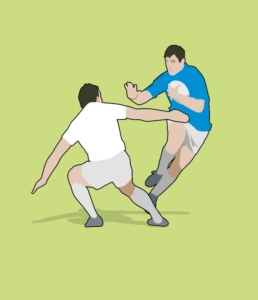
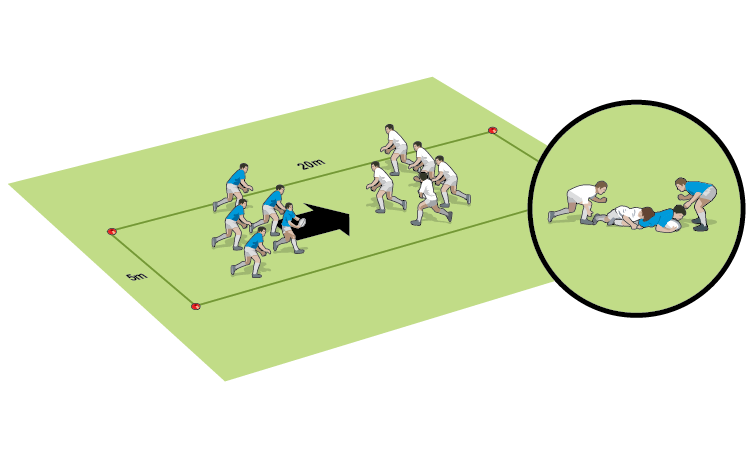
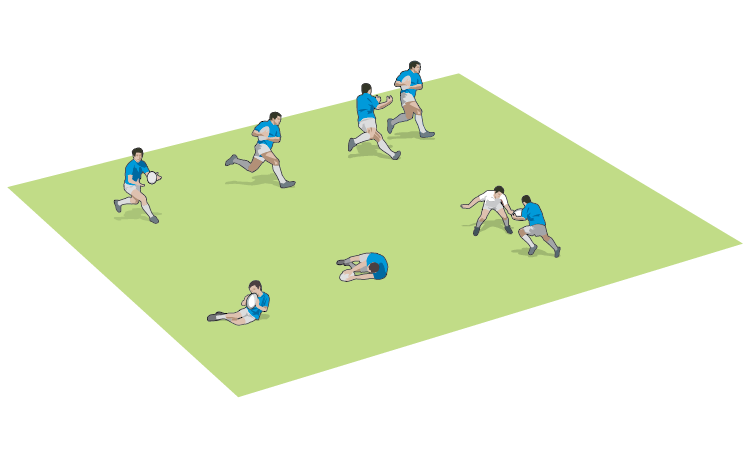
Ball touch: only a turnover if the ball is touched. No ’touch’ tackles
Touch rugby is about as non-contact as basketball or netball. Players constantly bang into each other in those – it’s the same in touch rugby, especially in a fast game.
Rough touch rugby is just an extension of basic touch rugby, with added incentives.
You don’t call it ’rough’, you just set out some more constraints. These aim to test the players’ ability to avoid being touched, with the added bonus for the defending team that they can force a turnover by being a little more physical.
Try not to tell the players how to improve their chances – let them discover for themselves. Here are some examples:
- Three second touch: The ball carrier has three seconds to release the ball once they are touched. If they don’t, it’s a turnover. Eventually, the defenders will start to grab and hold the ball carrier.
- No-mistake touch: The attacking team has an endless number of tackles to score a try. If they make a mistake, it’s a turnover. When there’s a touch, the ball carrier must put the ball on the ground before it’s passed. This creates an offside line. The teams will get more physical as they battle to get over the gain line.
- Ball touch: There’s no touch-tackles. Other than the normal offences for a turnover (like a knock-on or forward pass), the only way the defence can gain a turnover is by touching the ball. The defenders will start to grab and hold the attackers, as they manipulate the ball away from being touched.
2. ALTERNATIVE PADS
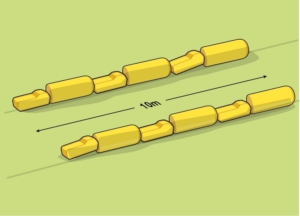
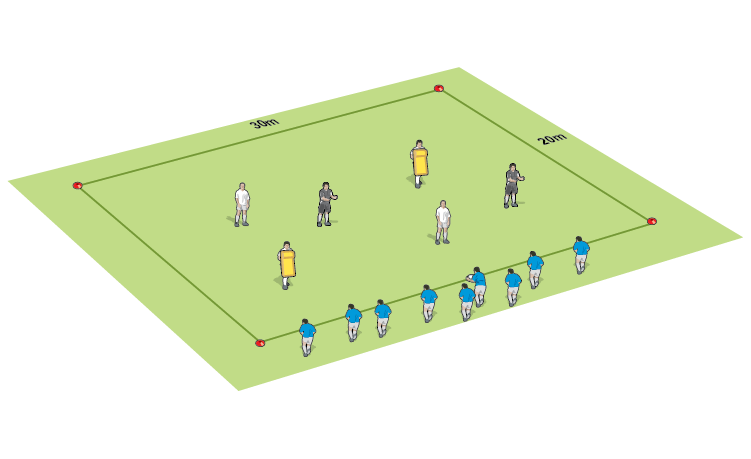
Bound in the players with an element of fun should they be driven out of the corridor
Running into tackle tubes or ruck pads held by players won’t add much to the players’ appreciation of how to brace themselves for contact. In fact, it’s possible it can be counterproductive.
Why not use them to create a soft corridor? The ball carrier and a support player move through the soft corridor, and two defenders aim to drive back out and over the pads.
The lure of a soft landing has a strange effect on the players, who think more about the soft corridor than contact.
You can use this with more players. You can also score more points if a player is driven out onto a tube rather than a ruck pad.
It doesn’t make much difference, other than creating another element of fun into a contact environment.
Of course, you can make the corridor a triangle, too.
3. ROLL REVERSAL
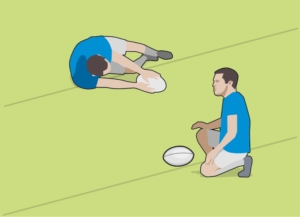
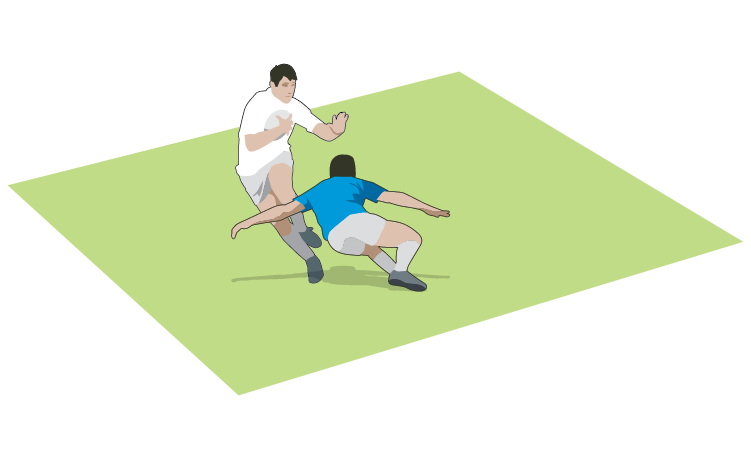
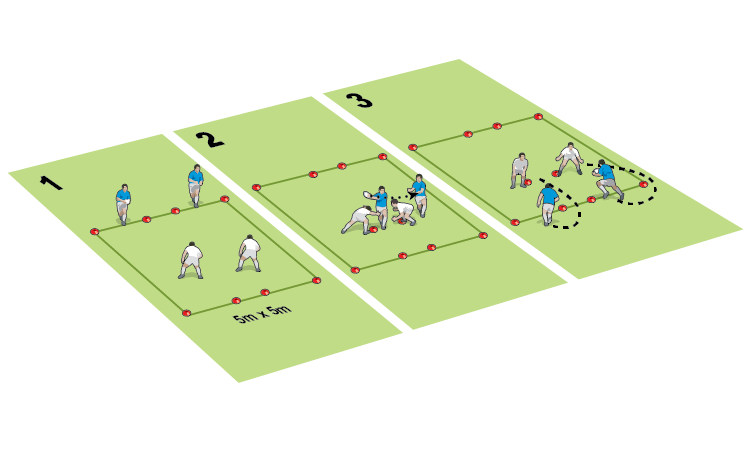
The ball carrier picks up the ball from a kneeling position and rolls over the line to present it
A lot of contact injuries happen because players don’t land properly. They tend to put an arm to break their fall or don’t brace themselves properly.
Rolling on the ground with a ball or another player helps overcome some of these problems.
With a ball, a player starts on one knee, one metre from a line. They should roll forward and over the line and then get to their feet. You can make this a race.
Alternatively, two players hug each other, with their right arm over the left shoulder of their opposite number and their left arm under the right arm.
On their knees, they either have to roll left or right one metre, depending on your command.
Use colours as a call – left and right won’t make sense!
4. RIPPER RUGBY
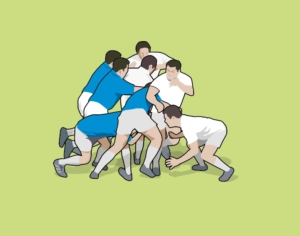
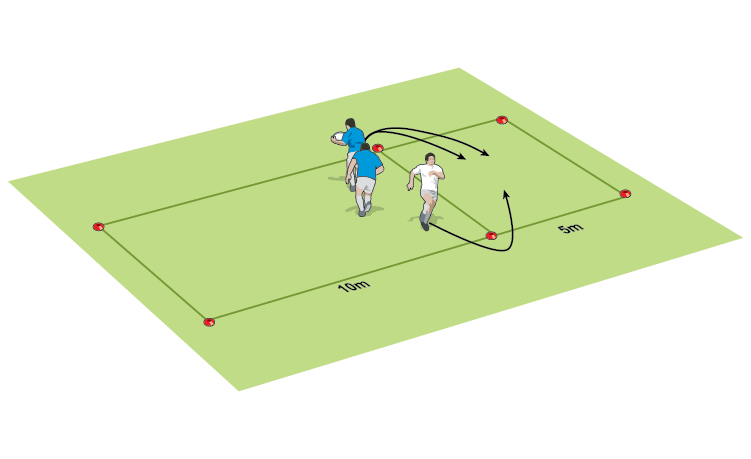
Ripper rugby, version two: In a narrow corridor, a team has to progress forward without passing the ball
One of my favourites, ripper rugby has two versions.
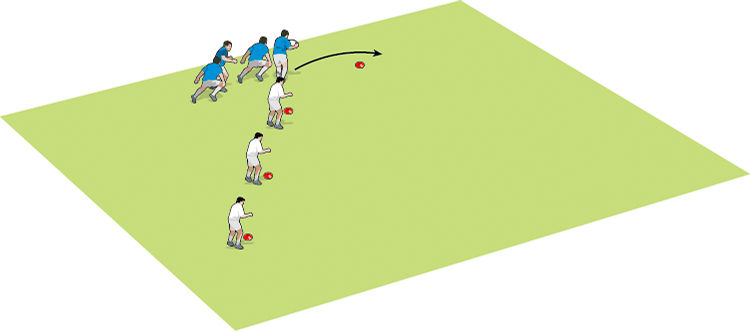
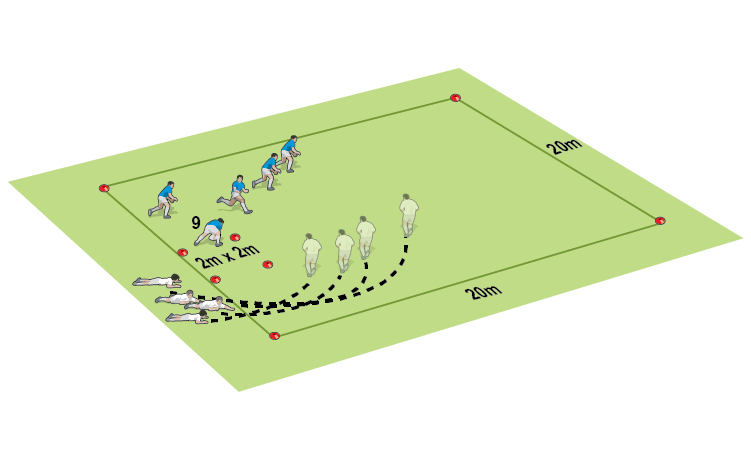
The first has three players in the middle of a 10m box, each with a ball. Six other players have 15 seconds to get the balls outside the box.
They can’t tackle the ball carriers to the ground, or lift them off the ground. They should drag, push or pull the player, or simply rip out the ball.
The other version pits 4v4 in a narrow corridor – perhaps try the soft corridor.
The attacking team aims to score without passing. There are not leg tackles, just one massive maul.
Be a more effective, more successful youth rugby coach
- Win more games, without sacrificing the crucial element of fun
- Develop every player, regardless of vast differences in ability
- Run a respected, professional programme - even with a full-time job and limited time
Subscribe for full access
Or register and unlock 2 free articles,
receive our weekly newsletter, and
get a FREE coaching e-book.
Or if you are already a subscriber login for full access.

Dan Cottrell
Latest Issue

Subscribe Today
Subscribe Today
Newsletter Sign Up
Coaches Testimonials

Colin Shaw

Gary Lee Heavner
Subscribe Today
Latest Issue
Be a more effective, more successful rugby coach
In a recent survey 89% of subscribers said Rugby Coach Weekly makes them more confident, 91% said Rugby Coach Weekly makes them a more effective coach and 93% said Rugby Coach Weekly makes them more inspired.
Get Weekly Inspiration
All the latest techniques and approaches


Rugby Coach Weekly offers proven and easy to use rugby drills, coaching sessions, practice plans, small-sided games, warm-ups, training tips and advice.
We've been at the cutting edge of rugby coaching since we launched in 2005, creating resources for the grassroots youth coach, following best practice from around the world and insights from the professional game.
