
 close
close


 LOGIN
LOGINRugby Coach Weekly is the largest digital resource for youth coaches, trusted by 15,000+ coaches, teachers and parents every month.
-
Coach with confidence
-
Improve your teams faster
-
Run great sessions with less effort
- Expert coaching advice from TOP Coaches
- Training sessions for players from U6 to U17+.
The rabbit in the blitz rugby drill


Pressure
The blitz defence is about pressure.
A successful defence will cut off a section of the attack, snuffing out the movement of the ball before it goes beyond the outside centre (13), or his channel.
The banana to trap the outside ball
Blitzing teams often employ a "banana" style alignment. The inside players move up quickly, but the players who are marking the centres run up faster, making for a curved line. The attack is therefore prevented from passing wider.
However, this style of defence requires a more sophisticated organisation and hence is more prone to gaps in the defensive line.
The rabbit into the line
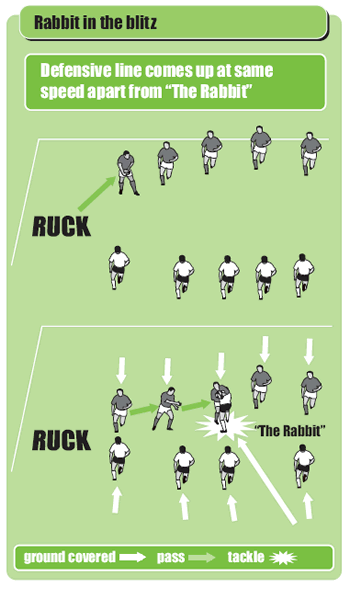
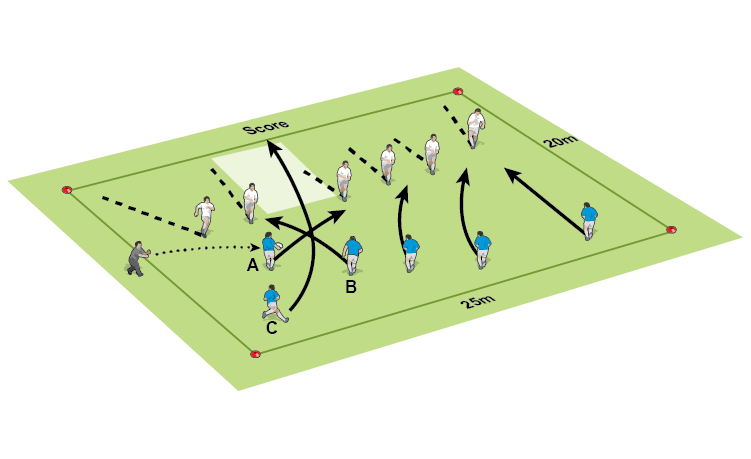
We use a "rabbit" in our blitz defence. This player's role is to sprint up in the outside centre (13) channel, aiming to cut off the section.
Because we mainly use the blitz from second phase ball, the "rabbit" is usually a loose forward, or certainly a quick forward, so we don't disrupt our standard back line defence.
Behind the "rabbit" the rest of the defence comes up in a straight line. The line must keep its discipline, moving up at a consistent speed. If we are going to run the blitz, then it must be done properly.
The blitz tackle
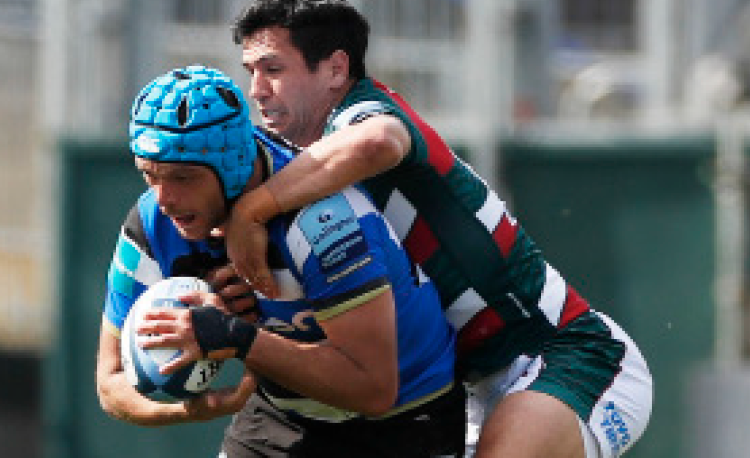
When the blitzing player or "rabbit" makes his tackle, it must be "man and ball". That means he prevents the ball carrier offloading by targeting the ball in the tackle.
Maintain the pressure in their 22
In their own 22, most defences are likely to kick the ball when they get possession. We don't therefore need to cut down their outside options. We concentrate on charging down their kicks instead.
Our back line still needs to maintain a consistent line, so we send in a loose forward to challenge the kicker.
No blitzing inside our 22
Inside our own 22 metre area we don't use the blitz, concentrating more on man-to-man defence. Here the players mark their opposite man, numbering off from the side of a ruck or maul.
The closer to the ruck, the more aware your players need to be of potential runners coming into the line, like the blindside winger (11).
This tactic still requires good line discipline, to make sure there are no gaps or doglegs (where one player gets in front of another in the line).
To get more great free drills and skills like the "Rabbit in the Blitz" click here to sign up to the Better Rugby Coaching E-Newsletter today.

Dan Cottrell
Latest Issue
Subscribe Today
Subscribe Today
Newsletter Sign Up
Coaches Testimonials

Colin Shaw

Gary Lee Heavner
Subscribe Today
Latest Issue
Be a more effective, more successful rugby coach
In a recent survey 89% of subscribers said Rugby Coach Weekly makes them more confident, 91% said Rugby Coach Weekly makes them a more effective coach and 93% said Rugby Coach Weekly makes them more inspired.
Get Weekly Inspiration
All the latest techniques and approaches


Rugby Coach Weekly offers proven and easy to use rugby drills, coaching sessions, practice plans, small-sided games, warm-ups, training tips and advice.
We've been at the cutting edge of rugby coaching since we launched in 2005, creating resources for the grassroots youth coach, following best practice from around the world and insights from the professional game.
