
 close
close


 LOGIN
LOGINTips to create space for your fly half (10)
STAND DEEP OR STAND FLAT
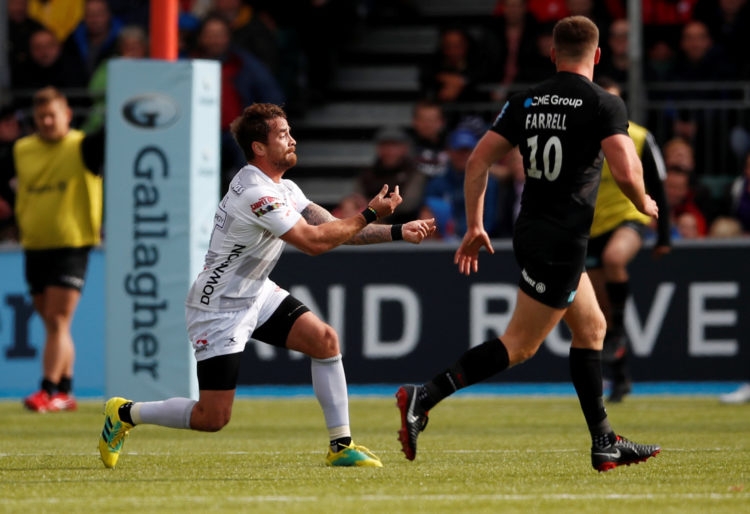
By standing deep I mean how far back from the "gain line" (the line across the pitch where the restart is) a fly half stands. The nearer they are to the gain line, the flatter the fly half is.
Basically, the flatter the fly half stands, the greater the risks involved and the lesser the space available.
STANDING DEEPER
- There is more time for the back line to pass the ball wide.
- It's more useful if the team wants to attack with a backs move using the openside winger or outside their outside centre (13).
- It's better for passing off the wrong hand, that is passing left by right handed players. (Alternatively, the player could turn themselves around and throw a spin pass.)
- Defenders have further to travel. If they don't come up at the same speed, it can create "dog-legs" in the defensive line, meaning that one defender is in front of the line and so leaves a gap.
- The fly half can more easily see what's in front and so has options to change the move.
STANDING FLATTER
- This is excellent for attacking short, because the ball is delivered closer to the gain line.
- There is less time for defenders to react to moves.
- There is less opportunity for the defence to drift and so there may be more space available wider out.
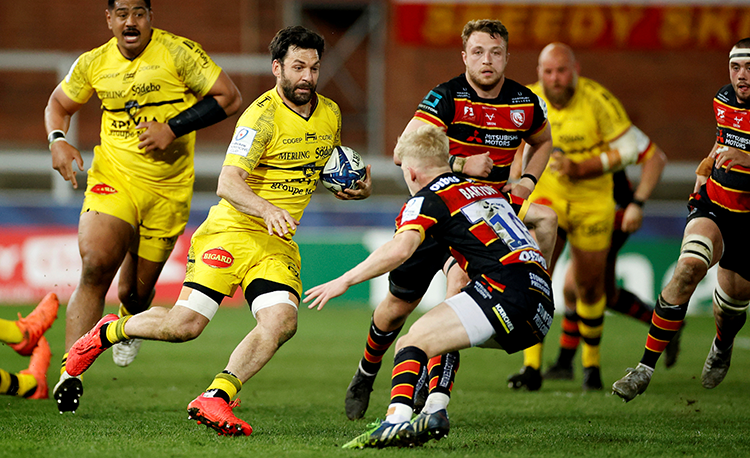
My tip is to have your fly half vary the depth they stand. If the ball needs to go wider, stand deeper. It's always useful to keep the defence guessing as much as possible anyway.
RECEIVING THE BALL
The speed of the fly half
Varying the fly half's speed is an under-utilised tip to create space.
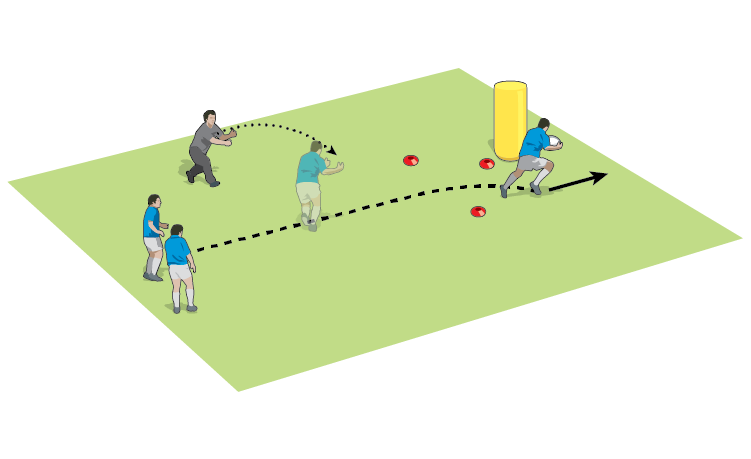
In most games, a defensive back line tends to come up at the same speed. By taking the first ball up quickly, the fly half makes the defence expect this will happen again. A slower pace in the next move could then give the fly half vital moments to execute a more complicated manoeuvre.
Varying the pace the fly half comes onto the ball can be helped by varying the way the fly half receives the ball.
Standing or moving
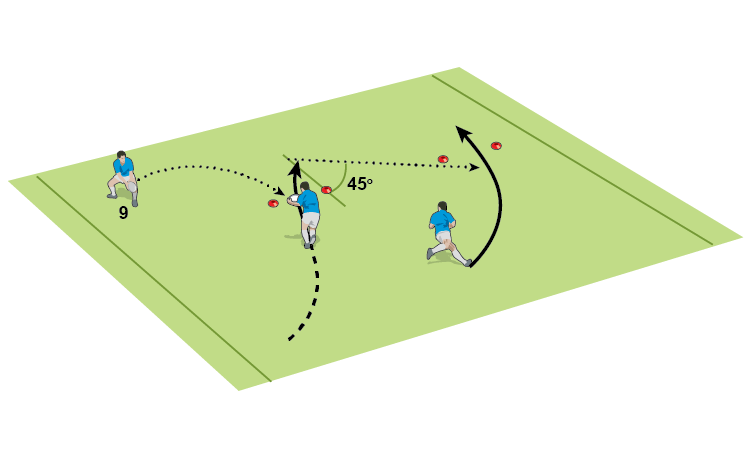
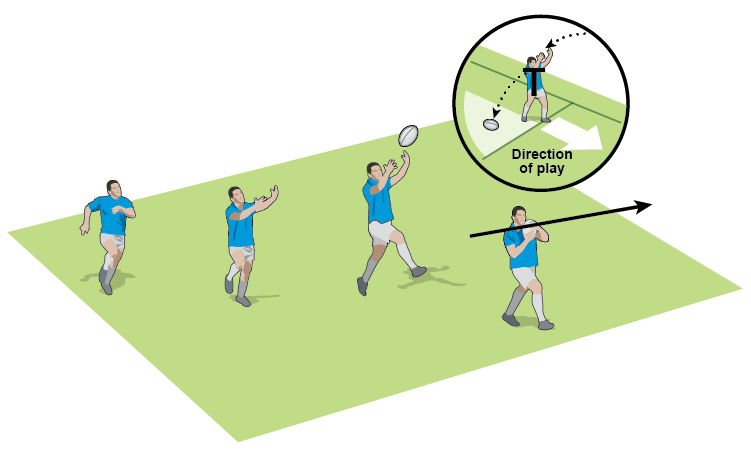
Speed can also be varied by the fly half choosing to take the ball standing still or running on. The safest pass for a scrum half (9) is to a fly half standing still. This means that the fly half does not use up too much of the space between themselves and the defenders.
Running onto the ball can often use up vital yards as the fly half gathers the ball and looks to pass. This puts players outside them under more pressure since more of the space is taken up. The fly half therefore needs to communicate to the scrum half whether they are moving or not.
Be a more effective, more successful youth rugby coach
- Win more games, without sacrificing the crucial element of fun
- Develop every player, regardless of vast differences in ability
- Run a respected, professional programme - even with a full-time job and limited time
Subscribe for full access
Or register and unlock 2 free articles,
receive our weekly newsletter, and
get a FREE coaching e-book.
Or if you are already a subscriber login for full access.

Dan Cottrell
Latest Issue
Subscribe Today
Subscribe Today
Newsletter Sign Up
Coaches Testimonials

Colin Shaw

Gary Lee Heavner
Subscribe Today
Latest Issue
Be a more effective, more successful rugby coach
In a recent survey 89% of subscribers said Rugby Coach Weekly makes them more confident, 91% said Rugby Coach Weekly makes them a more effective coach and 93% said Rugby Coach Weekly makes them more inspired.
Get Weekly Inspiration
All the latest techniques and approaches


Rugby Coach Weekly offers proven and easy to use rugby drills, coaching sessions, practice plans, small-sided games, warm-ups, training tips and advice.
We've been at the cutting edge of rugby coaching since we launched in 2005, creating resources for the grassroots youth coach, following best practice from around the world and insights from the professional game.
