
 close
close


 LOGIN
LOGINRugby Coach Weekly is the largest digital resource for youth coaches, trusted by 15,000+ coaches, teachers and parents every month.
-
Coach with confidence
-
Improve your teams faster
-
Run great sessions with less effort
- Expert coaching advice from TOP Coaches
- Training sessions for players from U6 to U17+.
Teach it or let them find it?
How to balance explicit and discovery coaching for powerful learning outcomes. By Sam Hickery, Dalhousie AC University Women’s 7s head coach and Riverlake RFC seniors’ coach.


Coaches are, by nature, teachers. We see a problem, we correct it. We see a technical flaw; we fix it. That instinct has value in rugby, particularly when dealing with the mechanics and safety of the game.
But one of the quiet challenges of modern coaching is knowing when to teach directly and when to allow players to uncover solutions for themselves.
Recently, Dan Cottrell posed a simple but powerful question to me: What skills can you explicitly coach, and which ones must players discover themselves?
It’s a question worth exploring because not all rugby skills live in the same learning environment.
Some demand clear instruction. Others only truly develop when players face the chaos of the game and learn to read it. The real skill of coaching is recognising the difference.
Explicit coaching: Clear, direct, purposeful
Explicit coaching is what most of us default to. It involves clear instruction, structured progression, and transparent explanation of technique.
In rugby, we explicitly coach skills where:
- Safety matters
- Mechanics matter
- Consistency matters
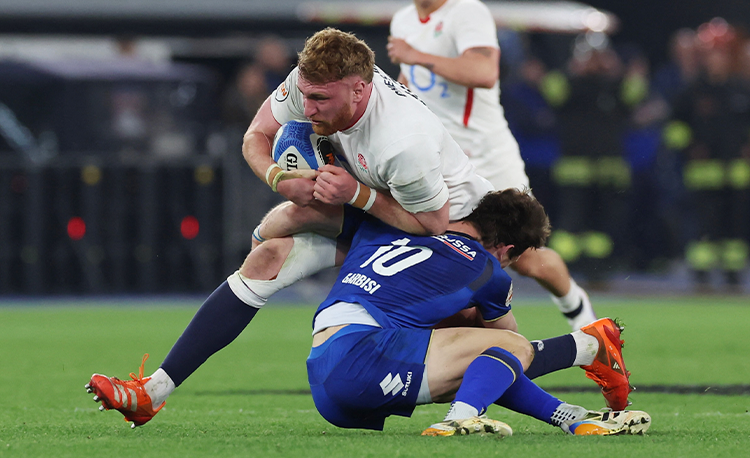
Take the tackle. Poor technique isn’t just inefficient; it can be dangerous. So, we coach head placement, shoulder contact, leg drive and body height directly. We break the movement down, we repeat it, and we refine it.
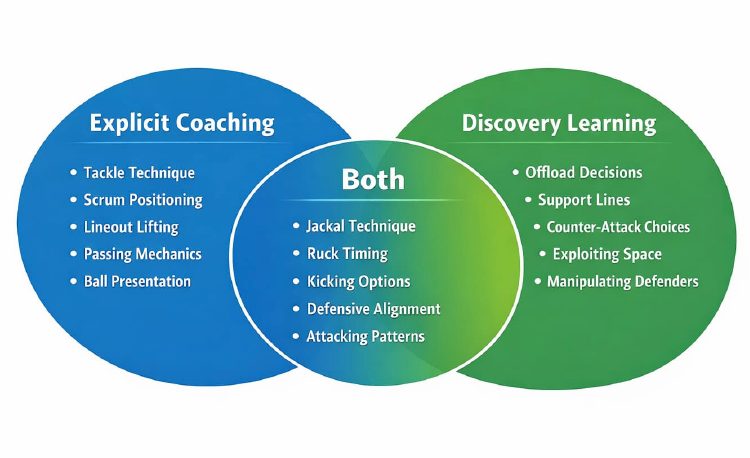
Other examples include:
- Passing mechanics
- Ball presentation after the tackle
- Scrummaging body position
- Lineout lifting technique
- Cleanout entry at the ruck
These skills benefit from clarity. Players need to know what good looks like and how to achieve it.
The advantages of explicit coaching are straightforward:
- Speed of learning – players acquire a technical foundation quickly.
- Clarity – everyone understands the standard.
- Safety – critical movements are taught correctly.
- Consistency – teams can operate with predictable technical quality.
However, explicit coaching has limits.
If we attempt to coach every moment of the game with instructions, players can become overly dependent on direction. They start looking to the sideline for answers rather than reading the situation themselves and rugby is far too unpredictable for that approach.
Discovery coaching: Learning through the game
Some skills cannot be fully scripted.
They rely on reading space, interpreting pressure, recognising support, and reacting to defenders. These are skills that emerge through experience rather than instruction.
Offloading is a classic example.
You can teach the mechanics of keeping the ball alive, but the decision to offload is rarely technical. It’s contextual. It depends on body position, support lines, defensive pressure, and timing.
A coach can explain the concept, but the moment itself must be recognised by the player.
Discovery-based coaching places players inside environments where those moments appear naturally.
Rather than telling players what to do, we design exercises that force them to solve problems.
Small-sided games are particularly effective here because they increase:
- Decision frequency
- Spatial awareness
- Pressure recognition
- Creativity
Players begin to connect perception with action. They learn not just how to perform a skill, but when it makes sense to use it.
This is where rugby intelligence grows.
Does discovery create flair?One of the interesting debates around discovery-based coaching is its relationship with creativity.
Some of the most exciting attacking players in rugby aren’t simply technically excellent—they’re instinctive. They recognise opportunities others miss.
Flair rarely comes from instruction alone.
It often emerges when players feel confident enough to explore solutions in the moment.
That doesn’t mean chaos.
Structure still matters. Players need technical competence and tactical awareness. But within that framework, discovery allows individuality to develop.
The goal isn’t to remove coaching. The goal is to avoid coaching the thinking out of players. |
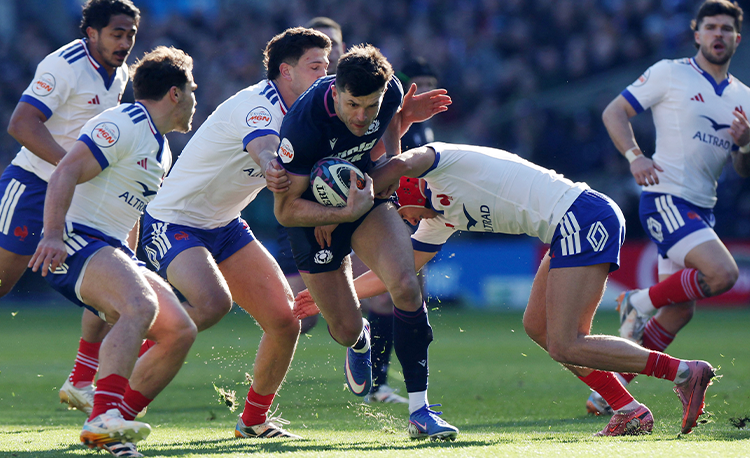
Explicit v discovery in a scenario
Here’s an example of how you might mix the two approaches.
|
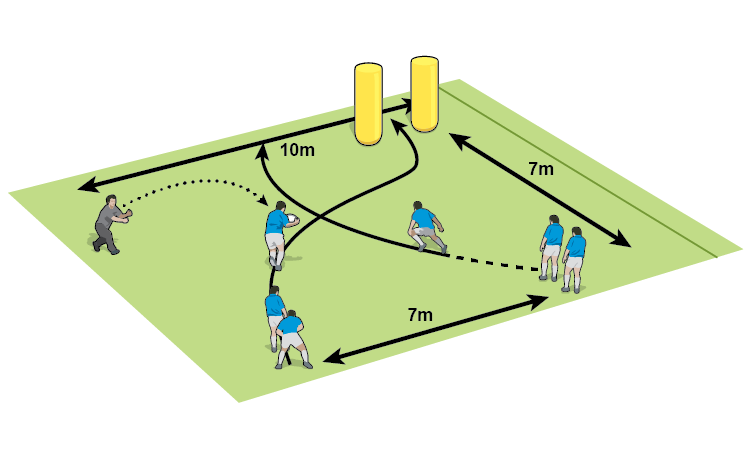
Scenario Your team is attacking.
You’ve earned a penalty inside the opposition’s 22. Your scrum-half taps quickly and goes. Momentum is with you.
10 metres from the tryline, the ball carrier is tackled. The defence is scrambling and out of shape.
There is a three-on-two situation.
Two support players are outside the ball carrier and both are free. |
Coaching thoughts
From a coaching perspective, the outcome seems obvious: get the ball to the open player and score.
But the question is not the outcome; the question is how the player recognises the moment and executes the solution.
Do we coach the answer explicitly? Or do we allow players to discover it?
ONE: Explicit solution
An explicitly coached approach might look like this:
- Identify the overlap
- Pass early to create width
- Fix the nearest defender
- Deliver the ball to the free runner
This approach provides clarity. Players understand the pattern and can replicate it. But rugby rarely unfolds exactly the same way twice.
What happens if the defender drifts early? What if the ball carrier turns their shoulders in contact? What if the support line is slightly deeper?
These are variables that cannot be fully scripted.
TWO: Discovery approach
A discovery-focused environment might approach the same situation differently.
Instead of explaining the exact solution, the coach creates a game scenario in which overlaps occur regularly.
For example:
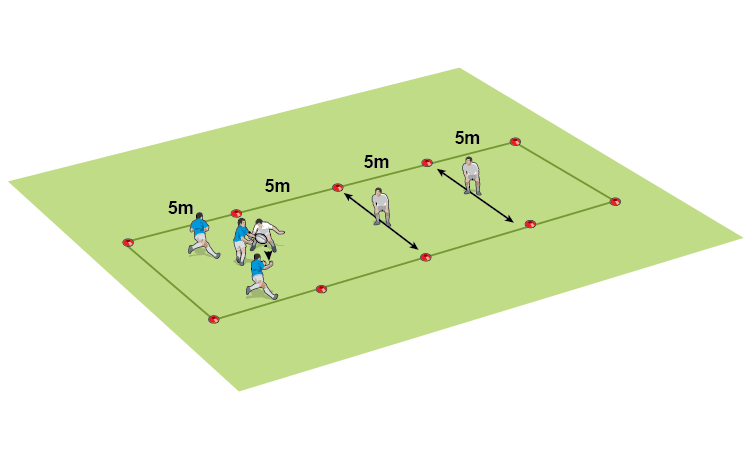
- 3v2 attacking games inside the 22
- Limited time or phases to score
- Defenders encouraged to scramble and recover
- Players encounter the problem repeatedly.
Over time they begin to experiment:
- Early passes
- Delayed passes
- Offloads
- Changes of running line
Eventually they learn what works and what doesn’t. More importantly, they learn how to recognise the opportunity! The outcome remains the same, scoring the try, but the learning process belongs to the players.
The overlap between teaching and discovery
In reality, the best coaching environments combine both approaches. Players still need explicit instruction in certain areas:
- Passing accuracy
- Ball handling under pressure
- Communication
These provide the tools.
Discovery then provides the context in which those tools are used.
You might teach the mechanics of a pass directly, but the decision to pass in a three-on-two must come from the player reading the defence.
That is where rugby becomes intelligent rather than mechanical.
The coach’s role
The challenge for coaches is not simply deciding what to teach. It is deciding how players will learn.
- Explicit coaching provides structure and technical competence.
- Discovery-based coaching develops awareness and creativity.
Both are necessary.
If we rely only on instruction, we risk producing players who wait to be told what to do.
If we rely only on discovery, we risk players lacking the technical skills required to execute their ideas.
The best environments sit somewhere between the two.
Players are given clear foundations but enough freedom to recognise the game unfolding before them. Because ultimately, rugby is not played on the whiteboard. It is played in the moment.
Related Files

Five things coaches can try1 Separate technique from decision Identify whether the skill is technical or decision-based. Teach technique explicitly, but allow decision-making skills to develop through game situations.
2 Create problems, not just drills Set up scenarios, such as a 3v2 in the 22 and let players find the solution. The aim is to encourage recognition and decision-making, not simply rehearsed patterns.
3 Use constraints to guide discovery Shape learning by adjusting space, numbers, or time. Simple constraints can push players to explore solutions without the coach giving the answer.
4 Pause and ask questions Stop the game briefly and ask players what they see. Questions help players read the game rather than relying on instructions from the sideline.
5 Reward the right decisions Encourage players to attempt the correct option even if execution isn’t perfect. Confidence to make decisions is what ultimately creates better attacking play. |

Samual Hickery
Latest Issue

Subscribe Today
Subscribe Today

Newsletter Sign Up
Coaches Testimonials

Colin Shaw

Gary Lee Heavner
Subscribe Today
Latest Issue
Be a more effective, more successful rugby coach
In a recent survey 89% of subscribers said Rugby Coach Weekly makes them more confident, 91% said Rugby Coach Weekly makes them a more effective coach and 93% said Rugby Coach Weekly makes them more inspired.
Get Weekly Inspiration
All the latest techniques and approaches


Rugby Coach Weekly offers proven and easy to use rugby drills, coaching sessions, practice plans, small-sided games, warm-ups, training tips and advice.
We've been at the cutting edge of rugby coaching since we launched in 2005, creating resources for the grassroots youth coach, following best practice from around the world and insights from the professional game.
