
 close
close


 LOGIN
LOGINRugby Coach Weekly is the largest digital resource for youth coaches, trusted by 15,000+ coaches, teachers and parents every month.
-
Coach with confidence
-
Improve your teams faster
-
Run great sessions with less effort
- Expert coaching advice from TOP Coaches
- Training sessions for players from U6 to U17+.
Line-breaking moves
By changing running angles, centres can leave gaps for wingers. Use ’ins’ and ’outs’ to create gaps and release the blindside winger.


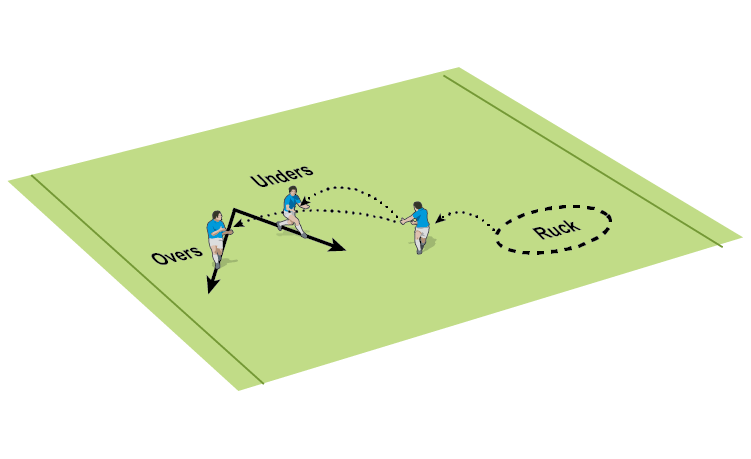
The terms ’ins’ and ’outs’ are also known as ’unders’ and ’overs’.
They refer to the running line of a potential receiver. This is, for example, when the inside centre (12) runs out and then in, or vice versa, to open a hole in the defence.
An in (or under) is an out-to-in run, while an out (or over) is an in-to-out run.
On their own, these changes of direction can be a very effective way of exploiting space.
Defenders have to move laterally to cover the attackers, potentially unbalancing them before attempting the tackle.
When combined with a set move with the blindside winger following a scrum, these can be a lethal attacking weapon.
Putting ’ins’ and ’outs’ into practice
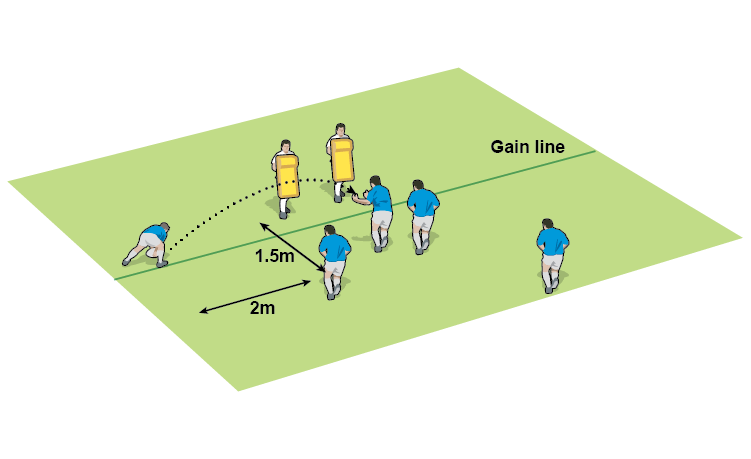
Set up your backs as shown in the illustration below - they are in the blue shirts. Your blindside winger (11) should be standing behind the 12.
More like this...


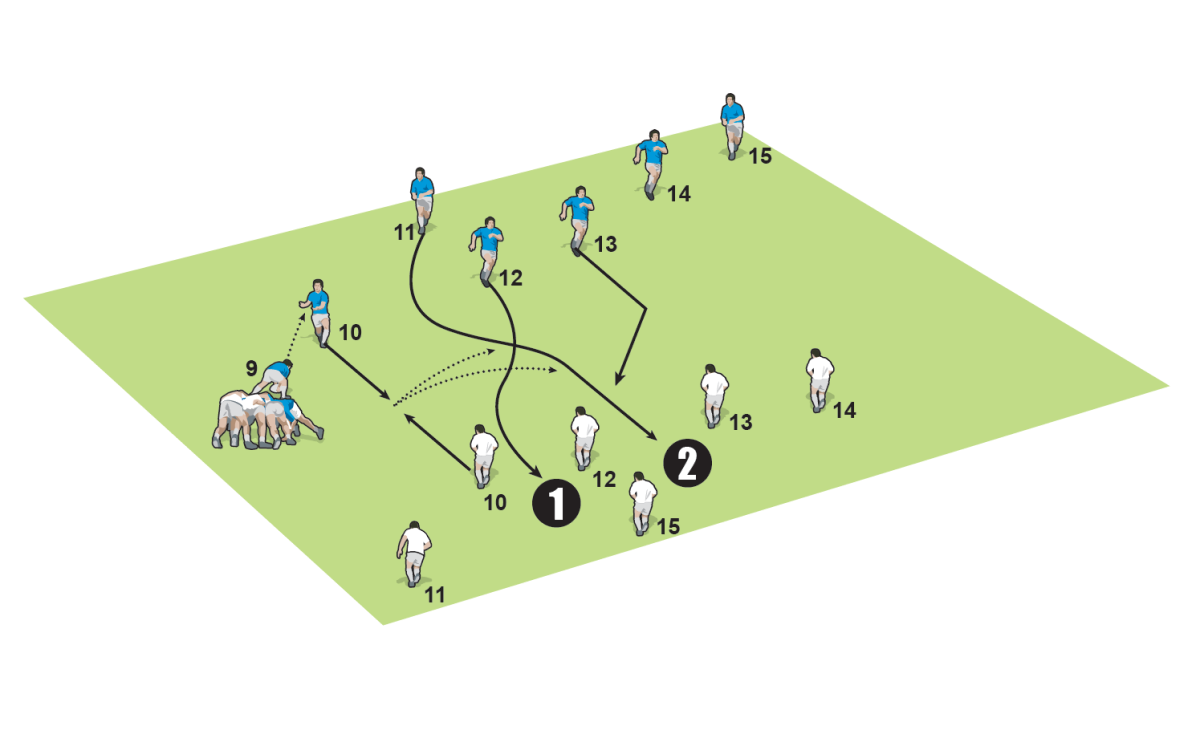
- 10 attacks the line before using one pass to 12 or 11
- 13 supports the line break
- 12 attacks the gap outside the defending 12 before stepping hard into the gap between 10 and 12
- 11 attacks the space outside 12
The opposition is not able to move its own 11 across, because this would leave the white blindside undefended at the scrum and at the mercy of a pick-and-go down that channel by the 8.
The fly-half (blue 10) runs forward to draw their defender after securing the ball from the scrum-half (blue 9).
The blue 12 runs the line for an ’in’ ball while, just behind them, the 11 runs an ’out’ line. The 10 can then pass the ball to either of the two.
This has created a 2v1 situation against the white 12. If the blues now break through and carry on supporting each other, they will have a similar 2v1 against the white full-back.
If the 11 is quick enough, they don’t need to start near the 12, but should wait until they go into the scrum before wandering around into position. The 12 and 13 should maintain a good spacing to keep the opposition defence fairly spread.
Why this works so well
- Adds an extra player to midfield in order to create a 2v1 situation
- Once beating the first defender, a second 2v1 can evolve with continued support from the back line
- Putting a winger into the centre position brings extra pace to the attack
Keys to running a good line
- The player must drift onto the first line, either in or out. This can be at half pace or more
- At the moment the ball is passed from the scrum and the defence looks in, the runner has to still be moving in that direction
- But, in the next step, the runner turns sharply and attacks on the next line with conviction
- Whether or not they think they will receive the ball, they must always expect it
Related Files
Latest Issue

Subscribe Today
Subscribe Today


Newsletter Sign Up

Coaches Testimonials

Colin Shaw

Gary Lee Heavner
Subscribe Today
Latest Issue
Be a more effective, more successful rugby coach
In a recent survey 89% of subscribers said Rugby Coach Weekly makes them more confident, 91% said Rugby Coach Weekly makes them a more effective coach and 93% said Rugby Coach Weekly makes them more inspired.
Get Weekly Inspiration
All the latest techniques and approaches


Rugby Coach Weekly offers proven and easy to use rugby drills, coaching sessions, practice plans, small-sided games, warm-ups, training tips and advice.
We've been at the cutting edge of rugby coaching since we launched in 2005, creating resources for the grassroots youth coach, following best practice from around the world and insights from the professional game.
