
 close
close


 LOGIN
LOGINRugby Coach Weekly is the largest digital resource for youth coaches, trusted by 15,000+ coaches, teachers and parents every month.
Get access to
- 2000+ drills and games
- 350+ ready-made practice plans
- Expert coaching advice
- Training sessions for players from U6 to U17+.
Create winners – keep scores for everything
Why not make winning the centre of your coaching philosophy this season? Forget the politically correct nonsense of “development before winning” by focusing on what I call “coach-wins”.


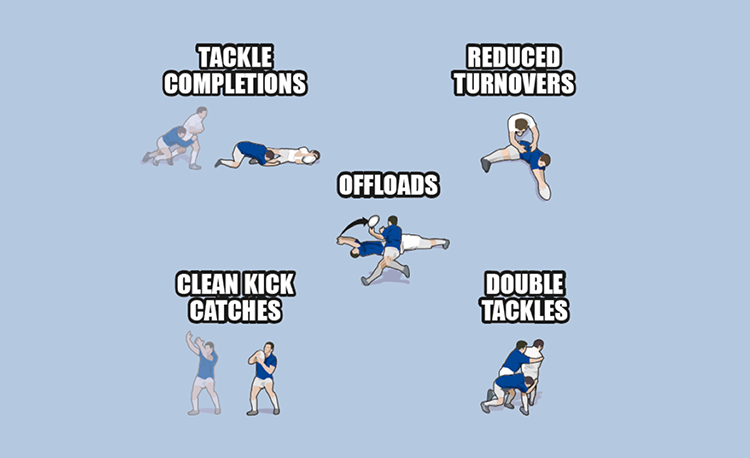
A coach-win is a specific coaching objective where you either beat yourselves or the opposition.
- Beat yourselves by setting a target to achieve a certain number or percentage - such as 80% - of tackle completions.
- Beat the opposition by scoring more points, conceding less turnovers, or winning the kicking game.
Set out these objectives before the game and make them “everything”. The beauty of this approach is that it makes lots of types of winning possible. Not just winning a game but also improving and developing.
Give the players the analogy of a second tier in world rugby, or even soccer. They know they will never win the World Cup or the Premiership but they can still enjoy a successful season by being better players and a team unit as a result.
If you have a young team, you can get the parents to help count the numbers. I’ve seen this done very successfully with a couple of teams. It brought the parents closer to the process of their child’s learning, and they were able to share their journey in a positive way.
Of course, sometimes, the players won’t hit their targets. They shouldn’t be easy to attain. You can use these as a focus for the next game. For example: “We made 10 offloads in the last game, and we were aiming for 15. Do you think we should set the target lower or need to change the way we train, or just try to make the offloads?”
You can also build in effort-errors. You could say we attempted 15 offloads, just didn’t complete all of them. That’s a positive, because the players were moving in the right direction.
Be real
Sometimes your targets are unrealistic. This is because you can’t always estimate your team’s ability, or on the match day, the weather conditions or how the opposition will play.
Don’t make excuses for underachieving. Instead, put the results in the right context. For example: “It was a wet day, so though we set a target of 80% clean catches from kicks, I think that 60% was a good result, so well done.”
You can also use “level-up targets”. These are ranges, where you set a minimum level and then outline bonus numbers. For example, with offloads, the minimum might be four in the game. Eight would be good, and 12 would be outstanding. The players can come up with names for the levels.
Five simple areas you can work on coach wins
Tackle completion
Every time a player makes a tackle, do they bring the ball carrier to the ground?
This is a great a one to measure the success of better tacklers who will enjoy topping the stats table. Simply count the tackles attempted in the game and then say how many were completed. You need to be aiming for well above 80% if you are serious about defence. However, you can give weaker players a lower percentage to give them a starting point.
Turnovers
We normally measure a turnover as a steal in the tackle area. However, you could easily add in penalties, knock-ons in the tackle, lost lineouts and kick backs. In fact, you measure anything where the opposition is forced to give you back possession.
You can then compare your turnover figure against theirs. This helps take into account the pitch and weather conditions and the way the game was reffed.
Double tackles
If your defence is working hard you should be able to double team in the tackle. This shows good teamwork and communication. It’s also a real team target, rather than relying on one individual to make the tackles.
Clean catches from kicks
Think about: Kick-offs, dropouts, high balls and box kicks.
You could add in the percentage of your kicks your team managed to disrupt the catch or crush the catcher.
Offloads
A good way of judging how well contact, handling and support skills are progressing is to look how many offloads you do in a practice game or match.
Obviously, some offloads will be limited depending on the defensive tackle. But, you can say you want to increase the number of offloads per possession and vary the kind of offload such as in the tackle or off the ground. They don’t need to be completed offloads either. The attempt could be enough.
Related Files

Dan Cottrell
Latest Issue
Subscribe Today
Subscribe Today
Newsletter Sign Up

Coaches Testimonials

Gerald Kearney, Downtown Las Vegas Soccer Club

Paul Butler, Florida, USA

Rick Shields, Springboro, USA

Tony Green, Pierrefonds Titans, Quebec, Canada
Subscribe Today
Latest Issue

Be a more effective, more successful rugby coach
In a recent survey 89% of subscribers said Rugby Coach Weekly makes them more confident, 91% said Rugby Coach Weekly makes them a more effective coach and 93% said Rugby Coach Weekly makes them more inspired.
Get Weekly Inspiration
All the latest techniques and approaches


Rugby Coach Weekly offers proven and easy to use rugby drills, coaching sessions, practice plans, small-sided games, warm-ups, training tips and advice.
We've been at the cutting edge of rugby coaching since we launched in 2005, creating resources for the grassroots youth coach, following best practice from around the world and insights from the professional game.
