
 close
close


 LOGIN
LOGINRugby Coach Weekly is the largest digital resource for youth coaches, trusted by 15,000+ coaches, teachers and parents every month.
-
Coach with confidence
-
Improve your teams faster
-
Run great sessions with less effort
- Expert coaching advice from TOP Coaches
- Training sessions for players from U6 to U17+.
Better ruck placement
Get your players used to stretching and placing the ball as far back as possible after a tackle to make it more difficult for the defence to reach over and steal or disrupt it.


WHY USE IT?
After the tackle is made, the farther away your player can place the ball from the defence, the harder it is for the opposition to disrupt it. Encourage good placement habits with these exercises.
Set up
One ball and three cones per player. A ruck pad for the development.
HOW TO DO IT
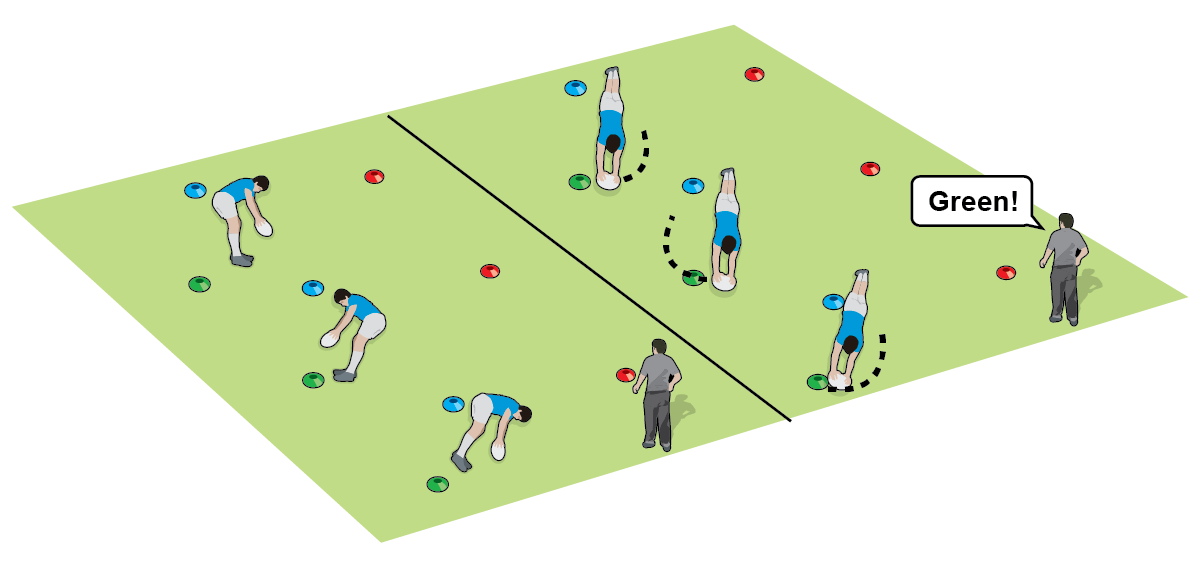
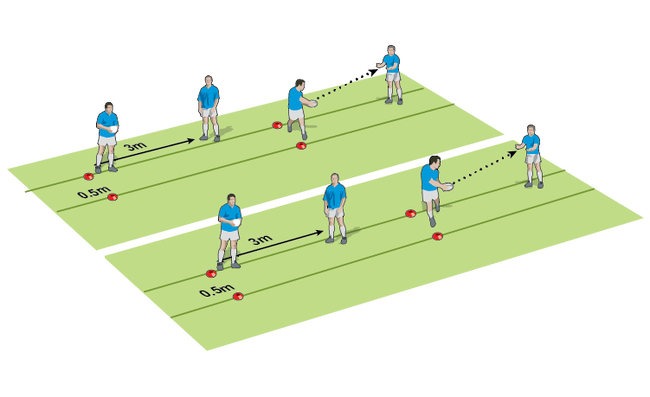
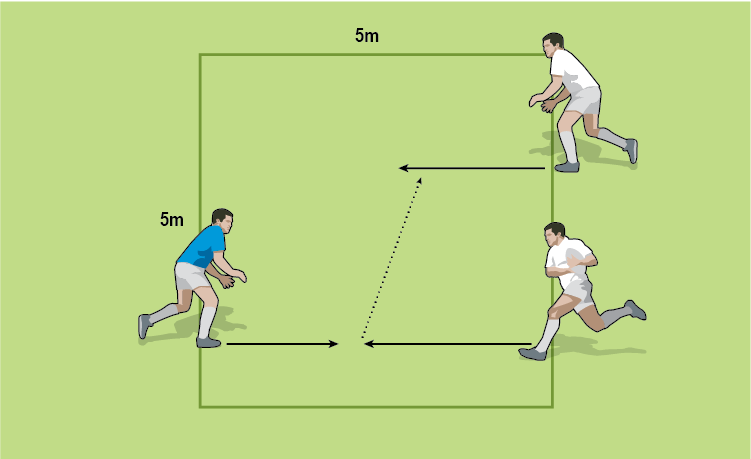
Get players to lie between three different-coloured cones. You call out a colour and the ball carrier uses their core to shift the ball to that cone (see middle picture).
Spread the cones out at different distances, so some placements are stretches.
TECHNIQUE
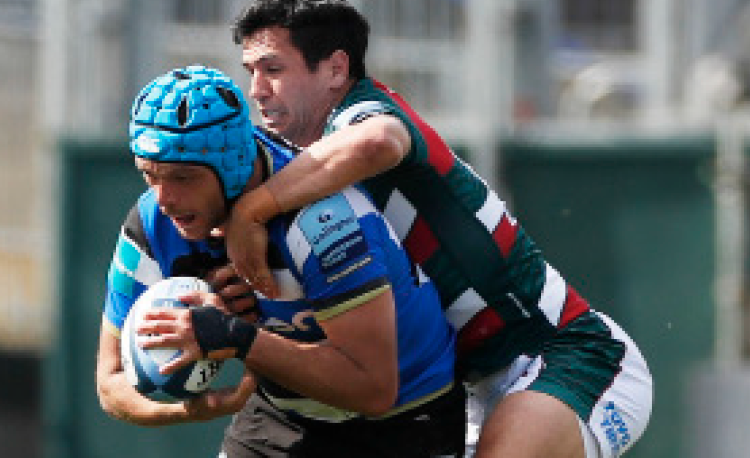
Having gone to ground, the tackled player looks to place the ball long, as far from the defenders as possible and reducing the width of the tackle gate. Use of the core (middle of the body) is vital.
DEVELOP
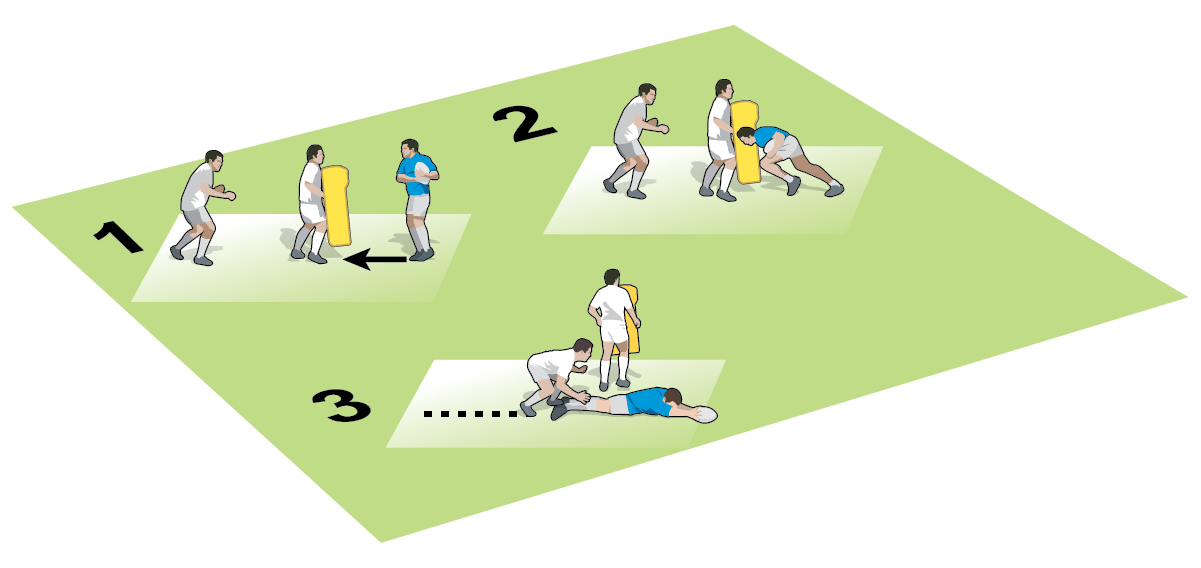
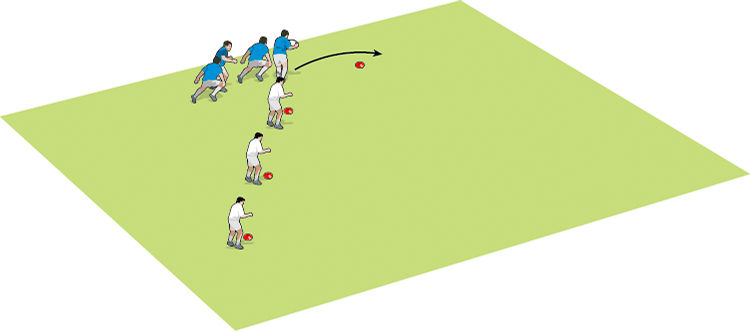
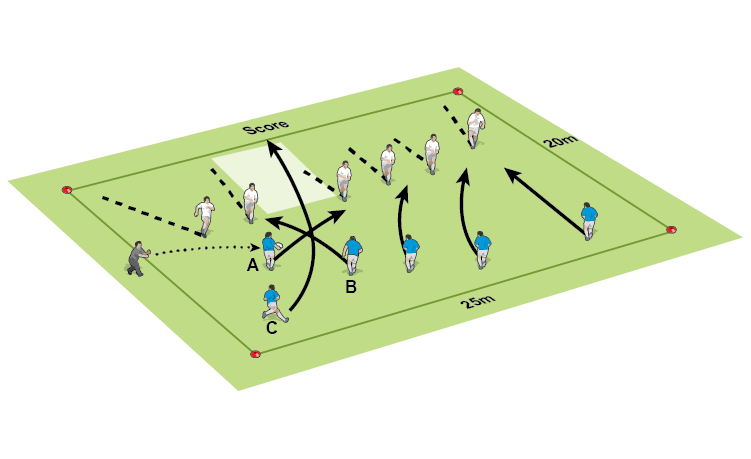
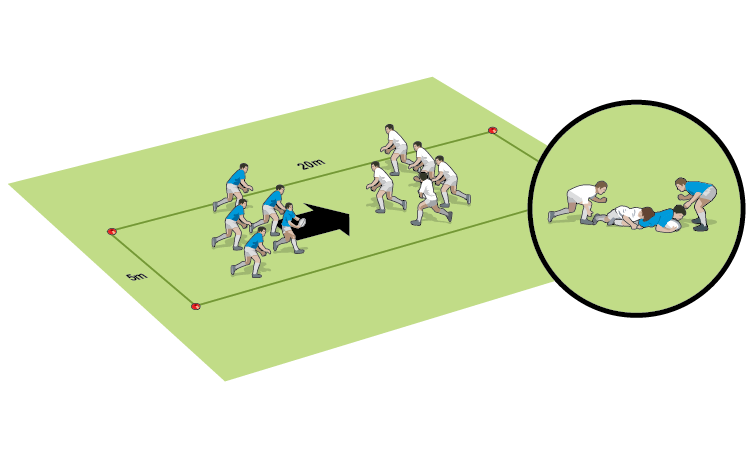
Once players are used to placing the ball, get a ball carrier to run into a ruck pad holder, drive them back 0.5m, go to ground and place the ball as far as possible from the support defender (see bottom picture).
-
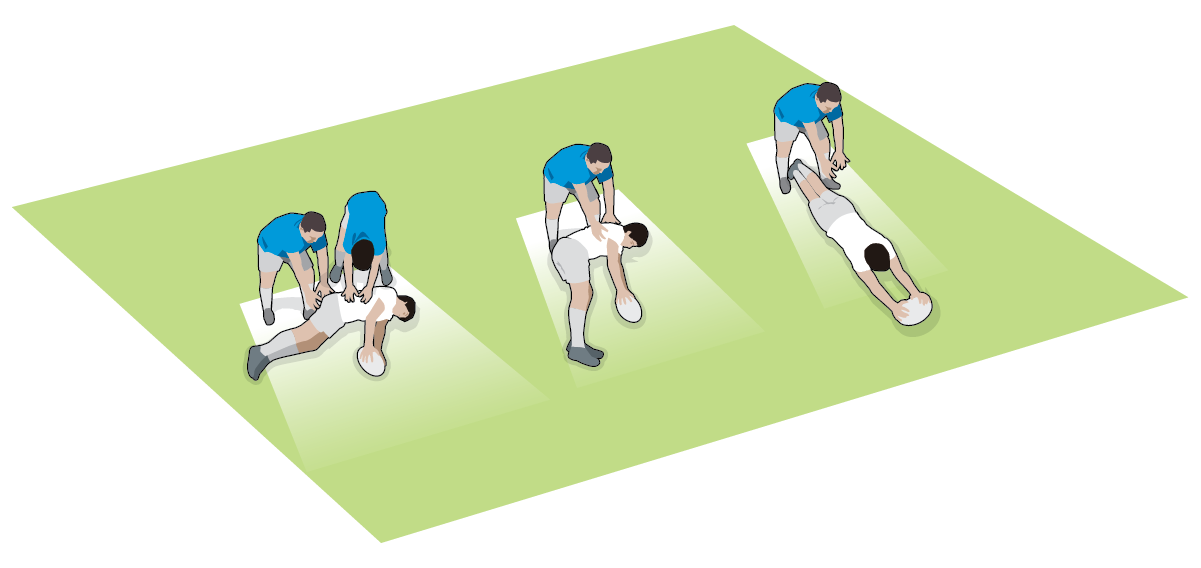
Sideways placement: Easy for more than one defender to come through the tackle gate and steal the ball but quickest placement and good if your team win the race to the ball
-
Jack knife placement: Narrower gate and more likely to be safe if the tackled player is held by the tackler. Quicker thean long placement
-
Long placement: The best, with the ball placed farthest from the defence, but can be slow and push the ball away from the gain line
Related Files
-
A ball carrier lies between three coloured cones in any direction
-
Call out a colour
-
The ball carrier has to use their core (middle) to shift around so they are placing the ball towards the called cone
-
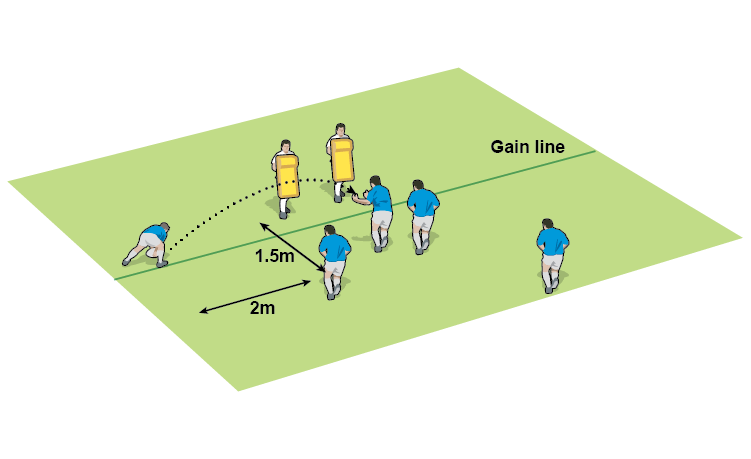
The ball carrier moves forward into the ruck pad
-
They drive forward 0.5m
-
The defender moves forward to reach for the ball
-
The ball carrier goes to ground and presents the ball
-
The ruck pad holder moves away

Eamonn Hogan
Latest Issue
Subscribe Today
Subscribe Today
Newsletter Sign Up
Coaches Testimonials

Colin Shaw

Gary Lee Heavner
Subscribe Today
Latest Issue
Be a more effective, more successful rugby coach
In a recent survey 89% of subscribers said Rugby Coach Weekly makes them more confident, 91% said Rugby Coach Weekly makes them a more effective coach and 93% said Rugby Coach Weekly makes them more inspired.
Get Weekly Inspiration
All the latest techniques and approaches


Rugby Coach Weekly offers proven and easy to use rugby drills, coaching sessions, practice plans, small-sided games, warm-ups, training tips and advice.
We've been at the cutting edge of rugby coaching since we launched in 2005, creating resources for the grassroots youth coach, following best practice from around the world and insights from the professional game.
