
 close
close


 LOGIN
LOGINYou are viewing
1 of your 2 free articles
Flow state: making learning more captivating


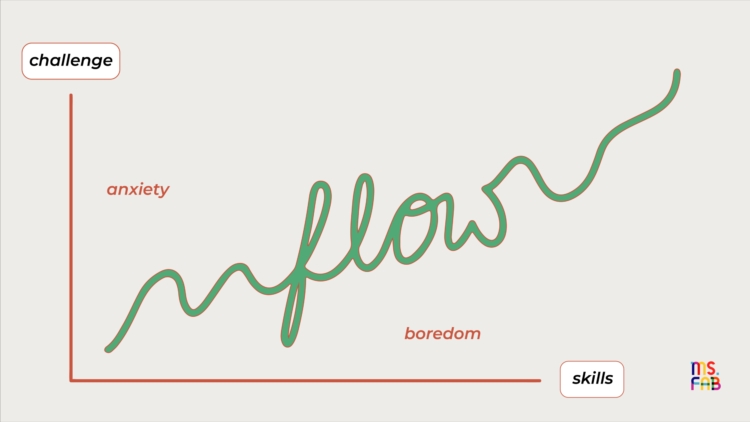
Video games have unlocked the secrets of flow state. Let’s talk about flow, video games, and how we can make learning more captivating. Ana Lorena Fabrega, educator and EDUprenuer explains more from a school context.
Jane McGonigal, PhD game designer, explains that games engage us because they put us in that “perfect state between feeling bored and feeling overwhelmed.”
“You are always playing on the very edge
of your skill level, always on the brink of
falling off. When you do fall off, you feel
the urge to climb back on.”
In other words, games put us into flow, a psychological state discovered by Mihály Csíkszentmihályi.
Csíkszentmihályi grew up in Europe during World War II. He was struck by how many adults struggled to live a normal, satisfying life after the trauma they experienced during the war. As a result, he decided to study what contributes to a life worth living.
In order to do this, Csíkszentmihályi pioneered a new kind of research called the Experience Sampling Method.
He asked people to record their activities, emotions, and other metrics at random intervals throughout the day. Through extensive study of this data, Csíkszentmihályi found that everyone described the same experience when at the height of enjoyment.
He called this experience “flow.”
In flow, we’re entirely absorbed in a single task. We’re totally aware of the present. We feel in complete control. We go into the zone. Time melts away.
Flow is the main reason why we all love games.
Game designers work hard to develop experiences conducive to flow. They want to make it easy for players to feel “in the zone.”
To go into flow, you need three things: Clear goals; unambiguous feedback; a “Goldilocks” challenge—not too easy, not too hard.
Most importantly, you can’t go into flow if you’re doing it for money or attention. You need an activity that you find intrinsically rewarding.
Game designers use these tactics to focus all of the attention of payers on the game. We tend to think focus is solely about raw willpower, but as game designers show us, it’s more about designing a context where your brain can go into flow.
This has huge implications for education! Think about it.
Kids learn extremely complicated skills in video games. Why, then, do so many of them struggle to learn in class?
Unlike games, classrooms aren’t designed for flow:
- Goals aren’t obvious to kids, even with great lesson plans.
- Feedback is ambiguous; they see displeased teachers, but they’re not sure why.
- Challenges feel forced and arbitrary, not inherently interesting.
GAMIFICATION MISTAKES
Sadly, a new trend has made things worse: teachers give points, rank kids on leaderboards, and award prizes.
They call it “gamification,” but it’s really “pointsification”. This hurts flow because it focuses on status and rewards instead of the task at hand.
Points aren’t always bad though. We use them at Synthesis for example, but to define goals and provide feedback, not to motivate kids.
If your “educational game” motivates players with points, it won’t create flow. Flow requires challenges that players find inherently interesting.
So, how do we design great learning challenges?
DESIGNING THE LEARNING CHALLENGE
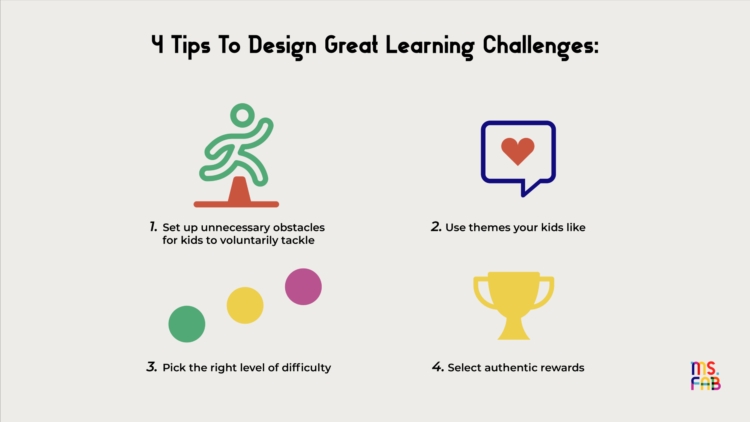
1 SET UP UNNECESSARY OBSTACLES FOR KIDS TO VOLUNTARILY TACKLE
According to Jane McGonigal, this is the defining feature of games, and the difference between work and play.
Consider how you’d frame a creative writing challenge.
Work: Finish your story by noon or you’ll lose iPad time!
Play: Let’s see who can write the craziest story about grandma and turtles!
The second will likely induce flow because it’s an invitation with unnecessary obstacles.
A rugby example:
Work: If you concentrate on this passing drill for the next 10 minutes, we will have a game at the end.
Play: I’m looking forward to seeing the weirdest ways to pass and if they work too!
The players will be interested in experimenting but also checking to see if they are successful too.
2 USE THEMES YOUR KIDS LIKE
This one is so simple but so important. If your kids prefer their best friend over grandma and trains over turtles, then change things up!
Kids need genuine interest in the challenge to go into flow.
A rugby example:
Use superheroes who perform similar tasks in their comic book adventures. For example, Spiderman for great crawling, The Hulk for powering through the tackle.
3 PICK THE RIGHT LEVEL OF DIFFICULTY
For the creative writing challenge, you could adjust the required length, number of characters, or vocabulary words to make sure kids feel the right balance of challenge and empowerment.
A rugby example:
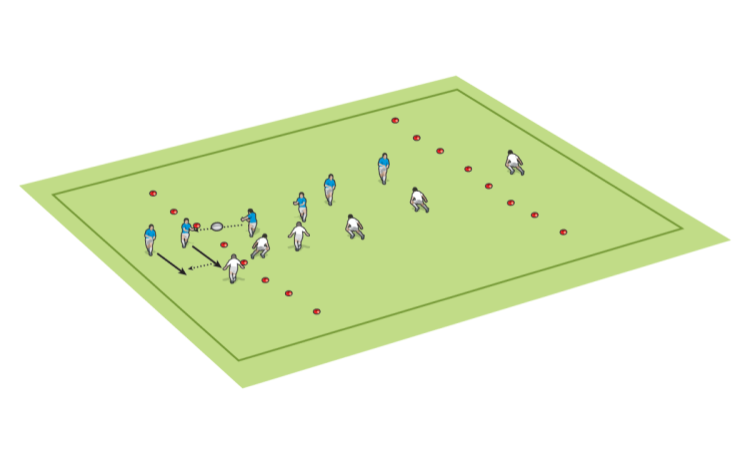
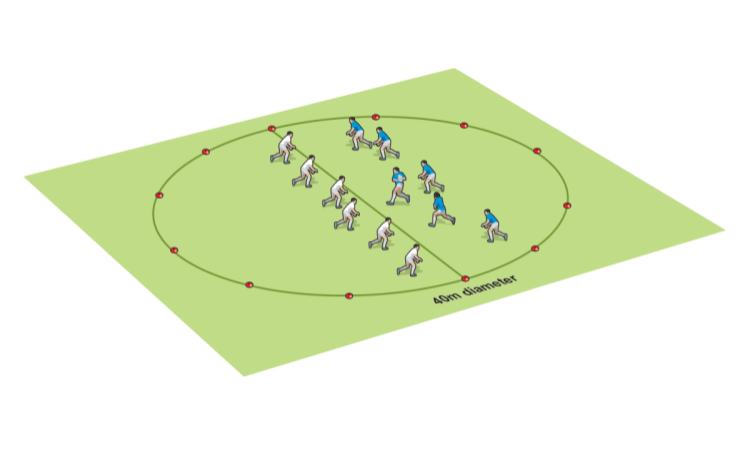
Adjust the space the players have, the pressure they are under from attack or defenders (the numbers in the exercise) or the time they have to complete the task. You move these up and down for the whole group, or just for particular players.
4 SELECT AUTHENTIC REWARDS
For example, an extra 20 minutes of iPad time or a trip to see grandma and read your story to her.
Be careful, rewards can backfire against flow! Make sure they focus kids on the challenge itself, not on what they get if they succeed.
A rugby example:
You might say you will play their favourite game at the end, or you might extend the game time. As long as it relates to rugby as a reward, and you can deliver it when you say you can, then it is authentic.
TRUE GAMIFICATION

Jane McGonigal, PhD game designer, says a true game has four defining traits:
- A goal or specific outcome that provides players with a sense of purpose.
- Rules that place limitations on how players can achieve the goal—these are unnecessary obstacles that players choose to tackle with their whole heart.
- A feedback system that tells players how close they are to achieving the goal—this lets players know that the goal is definitely achievable and provides motivation to keep playing.
- Voluntary participation. All players must know and willingly accept the goal, the rules, and the feedback—players should be able to enter or leave the game at will to ensure the experience is safe and pleasurable.
With well-constructed learning challenges, we can create experiences that help kids use the best of their brains. The benefits are massive: more focus, more enjoyment, and more empowerment. All it takes is stepping into the shoes of a game designer.
FOR MORE VISIT ANA LORENA FABREGA, Miss Fab blog

Ana Lorena Fabrega
Latest Issue

Subscribe Today
Subscribe Today

Newsletter Sign Up
Coaches Testimonials

Gerald Kearney, Downtown Las Vegas Soccer Club

Paul Butler, Florida, USA

Rick Shields, Springboro, USA

Tony Green, Pierrefonds Titans, Quebec, Canada
Subscribe Today
Latest Issue
Be a more effective, more successful rugby coach
In a recent survey 89% of subscribers said Rugby Coach Weekly makes them more confident, 91% said Rugby Coach Weekly makes them a more effective coach and 93% said Rugby Coach Weekly makes them more inspired.
Get Weekly Inspiration
All the latest techniques and approaches


Rugby Coach Weekly offers proven and easy to use rugby drills, coaching sessions, practice plans, small-sided games, warm-ups, training tips and advice.
We've been at the cutting edge of rugby coaching since we launched in 2005, creating resources for the grassroots youth coach, following best practice from around the world and insights from the professional game.
