
 close
close


 LOGIN
LOGINRugby Coach Weekly is the largest digital resource for youth coaches, trusted by 15,000+ coaches, teachers and parents every month.
-
Coach with confidence
-
Improve your teams faster
-
Run great sessions with less effort
- Expert coaching advice from TOP Coaches
- Training sessions for players from U6 to U17+.
Realistic turnover training


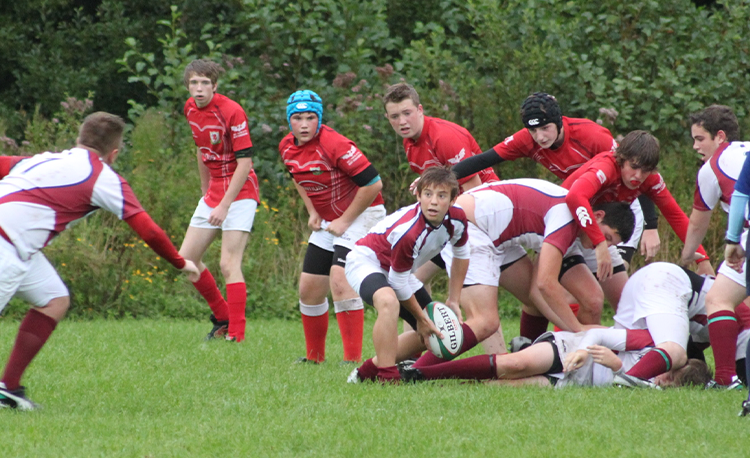
Turnover ball in a match is a pleasant surprise. But in training, it’s difficult to replicate that quick change in possession. Here’s how you can maintain the art of suspense to help players react appropriately.
We know we should try to replicate game-like scenarios in training. Some are easier than others. But one I always find challenging to create the right sort of reactions to turnover ball.
Turnover ball happens in open play, perhaps from a dropped pass or a steal in the tackle. The defence is now the attack and has to change its mindset.
How can we translate this into a training scenario? From a skills point of view, that’s relatively straightforward. The players need to realign from defensive positions. We can mix up the starting points for the players. We can also mix up who might be the first receiver and where the defence is coming from.
In Turnover: One, two - attack! , I’ve got a session that works well from this point of view. I’ve also put it into a game situation, where there’s likely to be a turnover. But changing the on-the-spot mindset is more difficult. It’s the unexpected nature of the turnover that’s hard to copy. Here are some solutions.
TWO BALL ATTACK
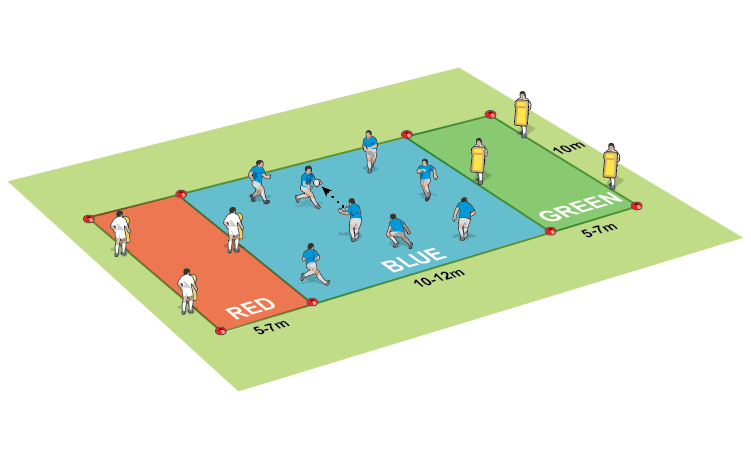
Play a normal game, either touch rugby or contact. Carry a second ball. At any point during the game, put the ball down. As soon as it goes on the ground, it becomes the new ball in play. The other ball gets discarded.
Where you put the ball will dictate whether it’s a clear turnover, or might still be a contest. That is, a ball thrown behind the defence is definitely theirs, but a ball that is rolled out towards them might still be retained by a switched-on attacker.
To make this most effective, use it at most sessions where you have a game. You may never put the ball down, or you may do it a lot.
The discarded ball should be retrieved when you have a chance. Normally, another coach can pick up the “old” ball and then put it down when they want to.
DOUBLE-CROSS
Before a training game, nominate a double-crossing player. That player can, at any stage in the game, claim possession for the other team. They have to be in possession of the ball. Once they claim it, they fall on the ground and the next nearest player on their new team play the ball.
The biggest challenge I find is nominating the player. One way is to do it before training starts. Just go up to a player and say that when you say double-cross, they have to listen most carefully because it will be them. But they are not allowed to tell anyone. For more than one player, give them a number.
No doubt you will come up with some good ways to do this too.
Related Files

Dan Cottrell
Latest Issue

Subscribe Today
Subscribe Today
Newsletter Sign Up
Coaches Testimonials

Colin Shaw

Gary Lee Heavner
Subscribe Today
Latest Issue
Be a more effective, more successful rugby coach
In a recent survey 89% of subscribers said Rugby Coach Weekly makes them more confident, 91% said Rugby Coach Weekly makes them a more effective coach and 93% said Rugby Coach Weekly makes them more inspired.
Get Weekly Inspiration
All the latest techniques and approaches


Rugby Coach Weekly offers proven and easy to use rugby drills, coaching sessions, practice plans, small-sided games, warm-ups, training tips and advice.
We've been at the cutting edge of rugby coaching since we launched in 2005, creating resources for the grassroots youth coach, following best practice from around the world and insights from the professional game.
